
In my last blog article, I described God’s obvious love of great variety and the fact that no scientific or biblical evidence is to be found for the common view of race. But with those facts in mind, what should we do about it? The answer to this question is a simple one but far from being easy to put into practice. We who are white must start getting educated about the world the Black person is living in and then act upon what we are learning, especially as it relates to our relationships in the church. The world is broken and will never be fixed, since it under Satan’s control, but Christ is the head of the church and can fix us if we will allow him to do it. One thing is for sure, he wants us to love our fellow brothers and sisters in his family and to demonstrate that love in every way possible.
Scores if not hundreds of verses could be quoted which show us the ways our love should be expressed in our spiritual family, but here are two. “Carry each other’s burdens, and in this way you will fulfill the law of Christ” (Galatians 6:2). “Rejoice with those who rejoice; mourn with those who mourn” (Romans 12:15). I cannot help carry another’s burdens without first knowing what they are. I cannot mourn with those who mourn without knowing the source of their grief and its depth. When I was a kid growing up in the Jim Crow days of Louisiana, America was totally controlled by white people. Honestly, it still mostly is. Our Black brothers and sisters (and others of color) have learned to adapt to our world. They have a very difficult time letting us know what that world is really like to them—unless we start asking.
When I almost died in the hospital in the early part of 2022, large numbers of people were asking about how I was doing and praying for me. They were asking my wife and other family members how they were feeling. When someone we know has a severe financial crisis, like having their house burn down, we want to know what they are feeling and facing. We want to help. When a fellow disciple loses a loved one, we want to find out how they are feeling and comfort them. We want to feel their pain with them and help bear their burdens in any way possible. You get the point, right? In many areas of emotional or physical or financial pain, we want to discover what others are experiencing and feeling about those experiences. Why do we not have the same concern for those who live in a world that stereotypes them very negatively in both obvious and subtle ways without even thinking about it?
Back in 2016, I started a blog entitled, “Black Tax and White Benefits,” to start trying to help educate my fellow white disciples and to encourage disciples of color to handle their challenges in the racial realm spiritually. The genesis of my efforts traces back to ten days after a tragedy occurred in Dallas on July 7, 2016. Two black men had recently been killed by white policemen, one in Minnesota and another in Louisiana. A protest march was taking place in Dallas when a heavily armed Black man, Micah Xavier Johnson, opened fire on police officers, killing five and wounding nine other officers and two civilians.
On July 17, I was asked to speak in the SW Region of the DFW church, a Region composed of a half white and half non-white membership and served by a ministry staff of the same racial ratio. Mark Mancini, the leader of the Region, asked me to come and speak to the group on the subject of racism and the Bible. Although I had addressed the subject many times in sermons for decades, it was the first time I had preached an entire sermon on the topic. As others heard about the sermon or listened to a recording of it online, I received requests to preach the same lesson in a number of places, inside and outside Dallas. I began to get educated quickly and deliberately from that point and decided to start my blog soon afterwards.
The term “Black Tax” came from a movie I watched in which a Black woman described it as having to do her job twice as well as a white person to be given the same credit, and her role in the show demonstrated the point quite well. The origin of the term, “Black tax” refered to the financial burden borne by Black people who have achieved a level of success and who provide support to less financially secure family members. But one of at least two secondary definitions is what I learned from a movie and have met Black people who were quite well acquainted with this definition. Amazingly, Delta airlines helped me explain the issue very clearly just prior to starting the blog. Here’s a quote from the second post on this blog.
Two blatant examples took place within days of each other last month (October) involving black female doctors flying on Delta Airlines. Two medical emergencies occurred, prompting flight attendants to ask for help from medically trained passengers. In both cases, the black doctors reportedly tried to answer the call to help, only to be rebuffed by the flight attendants because they couldn’t picture black women being doctors.
In a talk with my African American neighbor recently, she added that the term “black tax” is also commonly used within the Black community to describe the stresses that Black people feel in most settings, knowing that they are being stereotyped negatively by White people any time they are out in public settings. These stresses are not only real; they are dangerous to the health of Black people. The statistics are undeniable. Being Black in America means that your health and longevity may well be affected. A brief examination of pregnancy complications or heart disease of the Black population makes the point, in addition to other maladies. Black people don’t say much about this type of black tax they are paying because they know they have to fit in or suffer consequences that they are trying hard to avoid.
The term “White Benefits” started off in the title of my blog as “White Privilege,” but one of my advisors recommended avoiding that term in the title because of the political environment and reactions to the term. That said, I didn’t avoid using the term as a title for one of my blog posts, explaining it like this:
White privilege is not so much what you have; it is what you don’t have – stereotypical treatment of the worst kind. A fairly recent segment of “Dr. Phil” was devoted to showing what white privilege is. He is quite in tune with the topic, as were his panelists. As Michael Burns puts it: “White privilege does not mean that you did not have obstacles and challenges in life; it means that your skin color or culture wasn’t one of them.” That’s the bottom-line issue.
As a White person deeply concerned for the “world” in which my Black brothers and sisters live, I have talked to hundreds of Black people inside and outside the church about their experiences, challenges and feelings. I have read extensively from materials about the topic from those who know more than I do about it. I have watched many video podcasts on YouTube especially and also a number of documentaries on TV. Recently, I asked to meet with one of my Black brothers from my ministry group and gave him the following questions to think about in advance and then to address when we met.
-
- As a Black person, what would you like your White friends to know about what hurts you? Please break these down into deep hurts and those less hurtful but still painful. Maybe number them by depth of pain, starting with the worst to you personally.
- Second, by prioritizing again, what things would you most like to see change in your White disciple friends? Break this one down into their attitudes and their actions.
- Those are WPQs (White person questions). Is there a better way to come at this from a Black person’s perspective?
- What do I (Gordon) do that does or could hit a Black person the wrong way. Since I am trying to learn, Black people appreciate that and likely cut me some slack. Those of us who are trying to learn are the ones who shouldn’t be given slack. I don’t want a free pass. I want to learn.
As it turned out, he didn’t address each of the questions. But they stirred his thinking and feelings enough to take advantage of the opportunity to express what was really on his heart. I made sure he did address #4, which was very helpful to me as I continue to learn more about myself. Just recently at church, I talked to a sister about doing the same thing with her and her husband. I yet have much to learn despite how much I have already learned. The starting place is the decision to get started, don’t you think?
For us White people, we are long past the point of being able to claim innocence through ignorance. It is way past time to face the facts, stop accepting the “spin” given on the topic by White people, especially politically oriented ones, and start obeying God’s directions given in verses like I quoted earlier. I’m simply asking you, in the name of Christ, to get involved in caring, learning, conversing and loving. We cannot love in generalities, so let’s start showing our love in the specifics—the ones described in this lesson. God bless us all to demonstrate his love to all of our fellow disciples in every realm, the racial one for sure. In his name, let’s eradicate every vestige of Black tax in the family of God. Amen! I love you!
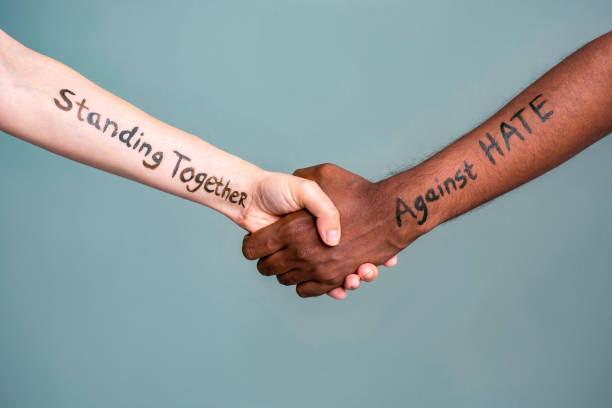
As promised, this is an introduction to a five-part series of blog articles written by my friend, Tony Chukes. Like me, Tony will focus on interracial relationships in the church. The world is broken and unless people develop God’s perspective and imitate his heart, it cannot be fixed. Hopefully it can be improved in some ways, but the world is the world is the world – and always has been. The church is a different matter. It is the family of God, with each person in it a part of God’s family and equally important to him. We cannot control how those in the world think and act, but we must strive to help those of us who profess Christ to become more like him. Any positive effects we can have on the rest of the world are an added bonus.
Although I do believe that racial issues are real and really significant, I also believe that open, blatant racial discrimination in our society has been lessened outwardly to a considerable degree. How much hearts have been changed is another question whose answer is difficult to ascertain. Outward actions can be legislated, but attitudes cannot. I also know that Satan is very adept at taking something positive and pushing it to extremes until it becomes negative. For example, in America one can lose their job by using racial language openly (even if it starts out in a private setting and is later exposed).
Further, it may just be a comment, or a single word used in ignorance or perhaps only the result of accidentally misspeaking, a slip of the tongue, and that too can result in dire consequences. A news anchor in Mississippi lost her job by quoting a phrase used by Snoop Dogg, assumedly done in ignorance. Do we really think that the White people in the public eye are going to feel more positive toward Black people when they live under the stress of knowing that one verbal mistake could damage or possibly ruin their careers? A good concept taken to extremes can have bad results. Something to think about there.
About here, a Black person might well say, “It’s about time they know what it feels like to live under the stress of what the consequences might be if you simply make a mistake unknowingly!” I understand why you would feel that way. At times we all wish others could feel the pain we face and feel. My issue here is that we would be better off seeking solutions instead of giving in to the temptation of wanting some form of vengeance, even in a roundabout way such as I just described.
Opinions Vary
In my talks with Black friends, different opinions abound regarding the desire for, or the value of, interactions and relationships between Blacks and Whites. These different opinion groups might be divided up into three main categories. One would be those with a desire to not just talk about racial issues with those of a different race, but for different reasons than might be assumed. Those who have assimilated into the world as it is and have done well in their careers and finances often just don’t want to rock the boat. Life is not ideal for them, but good enough to live with the status quo.
Another group doesn’t want to talk about these issues either, but mainly out of fear that it will make things even worse. They have essentially given up on the possibility of making meaningful progress between Blacks and Whites. Then the third group, representing the majority most likely, would be comprised of those who definitely want to talk about their experiences and those of their fellow people of color with White folks.
Most in this larger group have some level of anger about the racial injustices which they have experienced or observed in the lives of others. Some are able to control their anger when they do engage in discussions with those of a different race, some are at the opposite end of the spectrum, and the rest fall somewhere in-between. Since I started speaking and writing about racial issues, I as a White person have been at times been frustrated at my inability to get my White friends to engage the discussion and have no doubt allowed myself to become too edgy. That really doesn’t improve the situation, but I do understand the temptation to “just say it!”
I cut some slack for my Black friends who sometimes really need a place to vent, not just to their fellow Black friends but to White friends as well. I’m good with that. If you have read the Psalms, you know that God understands that we humans need to vent at times, and he allows it. We too must learn to do the same in many different situations, such as with our own children when their emotions are boiling over, an obvious example.
Back to My Title
One of my church friends, someone I have known for decades, has been one of my advisors when I have written about racial issues. He is a disciple of Jesus, a good-hearted brother and very bright. I call him my “militant advisor,” because he has really strong feelings about racial injustice and feels free to express those feelings to me as an understanding friend. I find it sad that he has said at times that I am the only White brother with whom he feels comfortable just saying it as it flows out of his heart without having to worry about my reaction.
I not only want to hear the content, but I want to hear the feelings behind that content as well. Otherwise, you don’t really get the other person’s heart. Friends should be able to hear each other when emotions are aroused as a part of helping the other person figure out what is behind those emotions and then be able to receive some help. That is friendship. This is, in the words of Proverbs, “iron sharpening iron” (Proverbs 27:17) with a few sparks flying!
I asked Tony to write five articles containing the issues from his perspective that are most hurtful to him in relationships between races in the church. Tony Chukes has not only advised me, but he has written an article for this blog as well (“Understanding the Foundation of Institutional Racism—Blog 14”). I suggest you go back and read it. Tony knows Black history very well and understands the principles at play which have made this history what it is.
A part of his frustration comes from his broad-based historical knowledge of the inner workings of that history and how it has played out in the development of our nation. At any rate, I will be talking with Tony and together with him, doing some editing of his articles to make them the most helpful they can be with White audiences primarily in mind.
One reason I have not written much for a time on this blogsite is that others writing on the topic are better at it than I am. They understand the topic better. That said, I have my own influence and should be using it as best I can. I am going to do that, as evidenced by this article. Another reason for my lapse in writing on the topic is that I believe more people of color should be given the opportunity to speak from their perspective in firsthand fashion. This article introducing the series by Tony will help accomplish that goal.
Like Tony, I don’t understand why us Christian White folks aren’t more interested in the experiences and feelings of our Black brothers and sisters in Christ. We are very interested in knowing how others feel when they have experienced illnesses and losses and are quick to ask those who are hurting how they are doing. We genuinely want to know and want to help carry their burdens (Galatians 6:2).
Why is it then that we wouldn’t want to know how our Black brothers and sisters feel when they face hurtful things pretty much on a daily basis because of the color of their skin? The Black person’s world has been radically different from that of the White person’s world in our country’s history, and this history has radically affected who we are as a people of all colors up until this present day. Let’s listen with our minds and hearts totally engaged as Tony tries to help us see what we are not yet seeing. Christian love should demand no less. Help us, Tony.
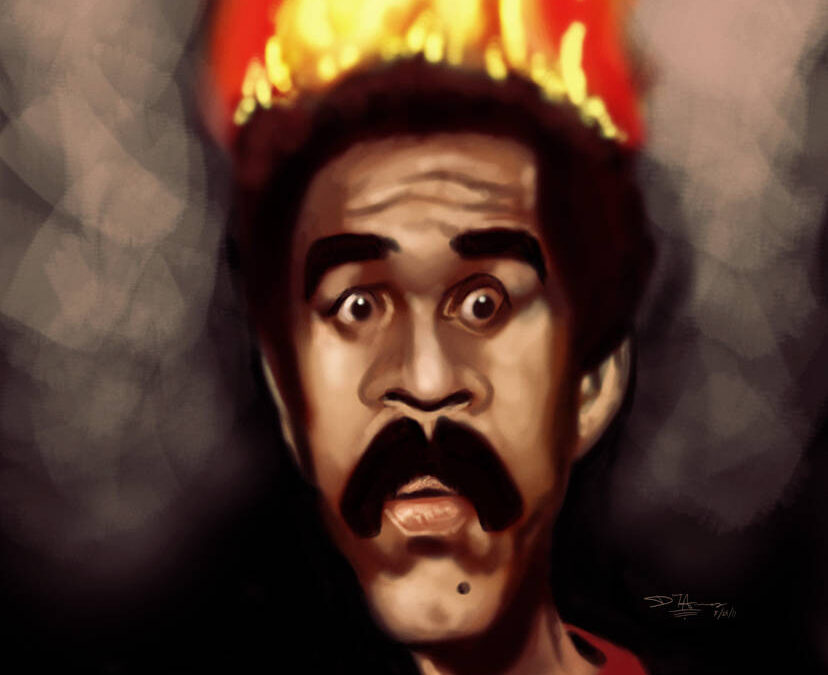
Many of you don’t know who Richard Pryor is and the ones who do are thinking he was dirty and inappropriate for Christian consumption. I’m not writing this to fight that rather universal assumption. I want to tell you a little about this man so you can better understand me and those like me.
Richard Pryor was born in Peoria, Illinois in 1940. His grandmother ran a brothel. His mother was a prostitute, and his dad and mom were divorced when he was a child. One thing Richard learned from his father was to be honest. I’m not talking about just telling the truth. I’m talking about telling the world how he saw things. Richard unabashedly told the truth about how he saw the world.
When he started his career, he performed on the Ed Sullivan show, Johnny Carson, and the like. You know, places where you had to be politically correct. He performed to almost exclusively White audiences. Can you imagine not being able to be yourself and not seeing anybody that looks like you while you are working?
This was the end of the golden age of Capitalism, when even Black people were making some gains in society. America did not want to hear about Richard’s unsavory upbringing. We liked Black men like Bill Cosby who were clean, made us laugh, but rarely made us feel uncomfortable or think outside the box. (Now that name brings up an entirely different feeling.)
Now Let’s Move to My Story
I’m a 63-year-old disciple who’s been a Christian for 41 years. I remember being told about how our movement was going to win the world for Christ. This gave me pause because I knew most of the world is yellow, Black, or brown and we were a White dominant movement. Many had and have great hearts, but are sorely lacking in the ability to understand the non-White world.
I was awestruck as I read the Bible and saw Jesus embrace the woman at the well, Paul giving up his privileges and rights as a Jew to win over a Gentile world, and to see the Holy Spirit speak in specific languages in order to make people feel special and win them over to Christ during Pentecost. These events make me see that this race thing can be conquered.
For the first 10 years of my Christian life, I felt much like Pryor. I could not be myself and should thus keep my opinions to myself, and lastly, never make White people feel uncomfortable about race. The turning point for me was seeing the movie “Malcolm X” in 1992. I decided, coming out of that theater, that I was going to talk about the things I see concerning race “by any means necessary.” This did not make me popular among my White brothers and sisters. Most of them either blew me off or tried to minimize what I was saying.
There’s a Fire That Burns Within Me
Do you know when Richard Pryor became the most relevant? Answer—when he set himself on fire. Sometimes I feel like I need to set myself on fire to be heard. I don’t free-base or do any drugs, but I often wish there was something to take away the pain inflicted by the silence of my brothers and sisters during a racial firestorm. I know I matter to God, but sometimes I think people just want me to shut up and go to Bible Talk. I’m sorry I no longer operate on that frequency. I’m going to be a spiritual “hell-raiser” until the day I die by refusing to be silent on a topic that is my world. I live in it every day. It will never be my intention to hurt another individual with the truth, but from now on I will speak my truth and hopefully it will set some people free.
I agree with Gordon about the fact that we cannot change the world and their views and actions in the racial realm. That is not my goal and not the audience to whom I am addressing this article or others to follow. I am asking my brothers and sisters in Christ to recognize that most of those with my skin color often feel like we are on the outside looking in, even in the church. I just need for you to recognize what my world looks like and feels like and to try to understand both my world and me as a Black individual living inside it. I’m not going to go Richard Pryor except in one way—telling you honestly what is inside my heart and asking you to engage with me in trying to understand. I think that is what the Bible calls love.

Let me first address this notion that race is a political issue, and so we can’t talk about it. That is one of the most asinine statements on many counts. I’m wondering where in the Bible it says thou shall not talk about politics. First, do you think the Egyptians discussed what to do with the Jews during the plagues God brought on them? How about Joshua leading the people into the promised land and deciding who would get which territory? Can we get a shout out for the selection of the twelve disciples which included a zealot and a tax collector? And finally, the handling of Jesus from crucifixion to burial. All these situations had political ramifications. Did you know that every church by law must have a Board, which includes a President, Vice President, and Treasurer? Do those positions sound familiar? We need to stop throwing politics in the middle of racial conversations as an excuse to dismiss the subject.
Let me give you an example of a period that was very contentious and uncomfortable for most people to talk about. On August 23, 2005, one of the worst disasters of this brief century reared its ugly head. Its name was Katrina. A prominent Black figure said, “George Bush does not give a damn about Black people.” Once that racial statement came in, my White brothers and sisters went to their quiet place. White people spoke to other Whites and Black people spoke to other Blacks, but the two did not come together. I remember going on many diatribes. Most of them were directed at my teaching colleagues as that was my job at the time. I was surprised at how many of them listened to me and agreed with what I was saying.
I was hurting and I needed to be heard, but my White brothers and sisters did not know what to say so they said nothing. This is like a person who does not know how to swim watching someone drown and rationalizing it by saying he should have stayed in the shallow end. While that assumption seems logical, it lacks a big piece of common sense. and that is how did he get in the deep end? Maybe someone pushed him. Maybe he slipped and fell in the pool, or maybe he lost his sense of direction. The point is that he is now drowning, and somebody should do something to save him. I can’t remember a single White disciple asking me how I was doing or providing a platform for discussion. This one fell squarely under the umbrella of the uncomfortable.
I never got a full death toll, but I know that an old lady in a wheelchair died virtually on television. The city knew the levies would not hold the water back from the city. It knew that all neighborhoods would see damage, but the poorest Black neighborhoods would be destroyed. These souls, who were called refugees by the national media, were left with no homes, food, or clean drinking water.
Let me share one fact that most people uneducated about the poor would miss. Since these were some of the poorest people in New Orleans, they were most likely on public assistance. Nationally, public assistance comes on the first of the month. I remembered hearing disciples saying, “Why didn’t these poor Blacks listen to the advice given to evacuate?” Now you know that by the 23rd of the month, they were almost out of money, a fact that I thought was sorely missing from most newscasts. Poor Blacks were portrayed as hard-headed and rebellious. The fact was that most of them did not have the means to follow the advice to evacuate even if they wanted to capitulate. I was angry during this time, and I had very few White disciples that were willing to discuss this subject. Most of them were in their racial basements. You know, that place where they can go to weather a racial firestorm. I need that basement to be refinished with human kindness and a willingness to experience discomfort.
Help for the Hurting
A real brother is one who is there for you especially when you are hurting. There has been a lot of pain in the Black community over the last 20 years. I’m used to being neglected, but I really got upset when undocumented Mexicans faced the threat of being separated from their children. It does not matter where you stand in the politics of undocumented workers. There are Christians that felt totally justified that our government was separating children from their parents. I’m not telling a person how they should feel about any political issue. However, I can’t see Jesus approaching a hungry person and asking to see their papers before he feeds them. I think the story of the Good Samaritan illustrates my point.
When I’m hurting, I need someone to respond to my pain instead of making an excuse of why they don’t have to consider my situation. When I tell you something personal that really hurts me, the last thing I want to hear is, “I don’t feel comfortable talking about that subject.”
Can you imagine if Jesus had let comfort be an issue? I’m sure he had his moments, but there is no doubt we would not have had the cross. The whole crux of Christianity gone and all for the fear of discomfort. If we are to call ourselves brothers and sisters, we are going to have to learn how to discuss uncomfortable topics. If we fear saying the wrong thing, maybe we should listen instead of talking. We must learn to deal with discomfort, or we can never be the brothers and sisters we need to be for each other.

Have you ever had the talk with your kids? No, not that talk. How about being stared at by the store security from the minute you walk into a department store, or just plain ignored by the person at the check out counter. The talk I’m referring to is the one most people of color and especially Black people have with their children on how to act if pulled over by a police officer. I’m not saying all police are bad, but I think it is safe to say we have a problem that has never been solved.
In this article, I would like to juxtapose a suburban White kid to an urban Black kid. Black people have been legally separate from White people for 60 years. In 1896, the Supreme Court heard the case of Plessy vs Ferguson. This decision legalized segregation if things were equal. Those things included schools, recreation centers, hospitals, public parks, swimming pools, and the like. A 1960 census report showed that 80% of White people believed everything was equal between Blacks and Whites. This staggering assumption came on the heels of 75 years of forced segregation. That means White people believed things were equal with no empirical evidence. Very few White people had ever been to a Black neighborhood.
I’m going to share a recent experience with you. I’m a baseball umpire and I went to a city named Longmont to do a tournament. It conjured up thoughts of my baseball career which started in the 1960’s. I can remember players like Willie Mays, Henry Aaron, Roberto Clemente, Frank Robinson, Joe Morgan, Willie Stargell, Bob Gibson, and many others. Baseball was America’s sport, and it was dominated by Black ball players. We recently had a World series with no American born Black players.
This did not happen by accident. Let me explain. The baseball establishment came up with the brilliant idea to privatize baseball. Instead of local teams playing in public leagues by location, we now have hand-picked teams or club teams. One must supply all their equipment, gloves, bats, uniform, administrative fees and traveling fees. These costs can get to several thousand dollars.
When I started organized baseball in 1971, it costs five dollars to play in the league and my dad bought me a five-dollar glove. The uniform was lent to you, and you returned it at the end of the season. Every team had a manager, and he had all the equipment needed to play the game. There was one trophy and that went to the coach of the winning team. There was no affirmative action to make sure everybody played. The best players played. One could sit on the bench the entire year and not play at all. If a player got hurt, he recovered as quickly as possible because we were on a time limit and our field had no lights.
The Rest of the Story
Oh, I forgot to tell you, I was in Longmont from 7am to 7pm. There were 8 teams at this tournament site. There were about 300-500 people circulating in and out of the park on that day. Not only did I not see any Black players, but I also did not see any Black people, or even a person of color. If a fan loses his mind and comes at me, I can’t really defend myself. Remember, I’m a six foot three 280-pound Black guy. If I become an angry Black man, I can go to jail or even worse. Living in Denver, I frequently find myself in these kinds of situations. I’m used to it, and I know how to navigate my way through it.
Let me ask you this, my White brother. When was the last time you were surrounded by people who didn’t look like you? Granted most of them were pleasant and had good things to say after the game. On the way home, I had to travel on several back roads before I reached the freeway. I must admit, I thought I might see some guys on horseback who might have a historical flashback.
The question is, why don’t you know this about me? Answer, you never asked. You thought that because we sat in the same church on Sunday morning, I was just like you. Guess what? I’m not.
