A few days ago, I posted articles twice on Facebook about the death of Ahmaud Arbery. Many others have posted similarly, generating many responses. Most responses indicate that more and more of us are starting to understand the depth of the problem and are looking for ways to help needed changes occur. A few respond in ways that are shocking and saddening to me, showing that they don’t understand the systemic nature of racism in our society. Whatever else may be said, any rationalization of two ordinary citizens taking the law into their own hands, complete with firearms, is absolutely indefensible – period!
This podcast by Michael Burns is one that I would love for every American to hear, especially all who identify as Christians. Michael does the best job of identifying all elements of biases, prejudices and racism of anyone I have ever read or heard from, and that as a white man. His insights are simply amazing, shown clearly through his books, “Crossing the Line: Culture, Race and Kingdom” and “All Things to All People.” I think these books are simply spectacular, must-read books for all Christians.
As you will discover in the podcast, Michael speaks as a true follower of Christ. Unlike many whose heightened emotions cause them to make valid points in an invalid, worldly manner, Michael shows genuine love for those who disagree with him and would consider themselves as his enemies. He is perhaps the finest example I know of one who speaks the truth in love – love that can be perceived in his manner. He is one of the rare ones who both understands and practices what 2 Timothy 2:23-26 commands.
2 Timothy 2:23-26
23 Don’t have anything to do with foolish and stupid arguments, because you know they produce quarrels. 24 And the Lord’s servant must not be quarrelsome but must be kind to everyone, able to teach, not resentful. 25 Opponents must be gently instructed, in the hope that God will grant them repentance leading them to a knowledge of the truth, 26 and that they will come to their senses and escape from the trap of the devil, who has taken them captive to do his will.
I understand all too well the challenge of addressing topics that are personal and emotional. I am emotionally based person and often have to repent of, and apologize for, allowing my temper to escalate and be expressed in ways that violate this Scripture. It has been a lifetime struggle for me, and although I have made significant improvements, it can at times still be a battle. The problem with not controlling our tempers in speaking or writing is that we both sin against other people and reduce the impact for good that we might otherwise have enjoyed.
I see this loss of impact often when people communicate about the topic of racism, especially if they are people of color themselves. Their insights and observations are spot on and very needed, but their manner turns off the audience they most want to affect (white people). To add to the problem, they may attempt to justify their manner by noting either their own personal experiences and the pain it has brought them or in showing the heinous nature of the issue itself. The content is valid in both cases, but the manner derails what might have been helpful.
On the other side of the coin are those who are defensive about the issue, trying to rationalize what cannot be rationalized. Biases, prejudices and racist attitudes – even if unconsciously held, are real, wrong and damaging. They hurt the ones holding them and they hurt the ones who are the object of them. On either side of this coin, when we don’t control our emotions in communicating, we drive each other further away from where we think they should be, for we are perceived as shedding more heat than light on the situation.
Let’s all please work on this in order to help ourselves and one another. Gentle instruction of those who oppose us is, after all, the will of God.
May you now listen to Michael and may God bless him to have greater and greater influence in an area that is so crucial to our nation and world.
What can Christians do against prejudice and hate? A perspective from Michael Burns, teacher in the Two Cities Church.
Posted by Michael Mbuso Burns on Saturday, May 9, 2020

Last semester I had the privilege to share work on a grad school class project with four men, all African American, three of them ministers. The entire class demographic was probably 2/3 men, and 2/3 Caucasian. When we were put into groups, I soon learned that I was the only female and the only white person in my group. I smiled to myself, knowing I was in for a treat. I was thrilled, because I sensed that working together with these men would be a wonderful learning experience. It was. Our assignment was part of a “fishbowl project.” I am still not sure why the professor labeled it a “fishbowl project,” except we were all swimming around together and the way we “swam together” was visible by what was produced.

We met together regularly (virtually) and worked on a common group goal—a project/video (thanks to one of our members who was a professional videographer) describing numerous ways Christians in the book of Acts responded to various crises.
I listened, learned, and contributed. In this group of men, I was shown tremendous respect and sought to show each of them the same. In the process of working together, I learned about their lives as they learned of mine. I came to appreciate them, the things they stood for, and ways they were striving to make a difference in lives around them as they ministered to primarily African American communities. One of the men (not a minister) was preparing for a kidney transplant, and we all tried to do extra for him so he would need to do only what his health allowed. I think they were all quite good at showing respect, mainly because respect and humility flowed from their hearts. What’s in our hearts flows out, as Jesus taught (Mark 7:20-23). I have seen this respectful response in many of my close African American brothers in the church. They, most often, do not speak from a place of power and privilege. Such atrocities that continue to come to the light most often happen when people with power lack love, respect, and humility. Then, the unthinkable happens. When humility is little, power corrupts. When love is absent, power is destructive.
The day after our project ended was the same day the events surrounding Ahmaud Arbery surfaced. I sent my “fellow fishbowlers” the following note, because I felt at a loss for an appropriate response. Should I organize something to show how I feel? Join a march? What can I DO? I long to imitate Jesus’ heart and actions that were so full of love and courage and sought justice for the oppressed. But my voice is so small. How can I be part of a solution? So, I wrote my fishbowl friends that question in the email below.
I have a question for which I would like your input. My heart is deeply grieved for yet another act of hateful violence in the latest account (of way too many accounts) of senseless shootings, this time of Ahmaud Arbery back in February. I cannot imagine how these things make you feel. I just want to say, with tears, how deeply sorry I am for what you likely all have to endure simply for being wonderful black men in America. I know that I am, through no choice of my own, part of the privileged. My question is this. How can I, as one with white privilege, best contribute to needed social justice? I don’t know, and I would like to know what you feel would be some way to contribute to change (other than living as a disciple and speaking up whenever I can). Thanks so much. With love and respect, Jeanie
I got a reply from one of my friends this morning, even though it had been a while since I had written the group. Likely, the wrongful death of George Floyd evoked his response. Though he says kind things to me in the email (because he is a kind person), his response tells me something I can do. I can ask, I can listen, I can pray, and I can sympathize. I noted his response of sympathize, because I cannot really empathize. I have not had to live like this. As a women, I have felt effects of power gone awry though an attempted rape, exhibitionism, groping (all by white men), and numerous inequities just because I am female, but I have never had to worry about dying because of the color of my skin. My adopted son has. In fact, shortly after 9/11, while he was in high school he was stopped, ordered to the ground, and had eight state trooper cars surround him with guns pointed, all because of a mistaken identity where his skin tone caused suspicion for a crime in another town. Frightening.
Here is what my fishbowl friend answered in his email response:
Sorry for such a slow response
Your compassion, sensitivity, and willingness to talk openly is a great start in response to your question. Our humility and awareness will incite change in areas of indifference and racism. Continue to stay educated about the reality we live with by listening to the right voices, preferably voices closest to you. Stay proactive in doing what you did in this email: ask questions, provide prayer, offer sympathy, and listen to our individual stories. You’ll go a long way in being a part of the change we so desperately need.
I pray to be part of a solution, which can only truly happen with the love of Jesus. I long for a day when unity and peace prevail as His will is done on earth, as it is in heaven. I hope by more intentional listening, I can indeed be part of “the change we so desperately need.”
Introduction
After the truth came out about the death of Ahmaud Arbery, I received a letter via Facebook from an older white sister in the Boston church of which I was a part for sixteen years. Here is her letter along with my reply to it. More and more white people, inside and outside the church, are asking questions and having dialogue about racial issues. I have been impressed and encouraged by the large majority (not all) of what I have personally heard from them. Although the circumstances that have led to this are horrific, many of the results are quite the opposite.
Dorothea’s Letter
Good morning, Gordon Ferguson. May this young man rest in peace and may we do “something” to help so this will stop. I only have heard about this on TV and although there are usually two sides to every story, this one reminds me of other cases that have been similar. Are we disobeying God by not getting involved to stop this or is prayer “enough?” I haven’t read everything you and Michael Burns have written but I’ve read enough to be led by God to seek your collective wisdom. Please invite Michael to comment if he would like to do so. It is so difficult for me to understand prejudice, since as a young child, I have never seen colorlines.
At 70, many of my early playmates, college buddies, co-workers, best friends, spiritual and secular advisors, prayer partners, and disciplers have been “of color.” Over the years, I’ve had two spiritual daughters live with me and one who called me Mom honored me by asking me to serve as mother of the bride at her wedding because her mom could not get here from Haiti. People of color? What IS that?
I have watched the Roots TV mini-series (I have also read the book), and read other books or seen other accounts on TV, radio, movie, and theater about the plight of our brothers and sisters. I still cannot fathom the rationale (greed, power, exclusivity, distorted thinking, etc.). Yet maybe that in itself is prejudice? I don’t know, but I pray humbly and contritely that is not true and, if it is, that God will show it to me.
Advice? New blog? Thank you in advance for reading this and for any wisdom you (and Michael?) can impart.
Love to you & Theresa 💕
My Response
Dear Dorothea (Dot),
Thank you so much for your FB post and for your permission for me to publish it on this blogsite as an article. Some letters raise more questions than they meant to; other letters answer the very questions they raise. Yours is in the latter category. Your post helps answer the question of what more we can do as individuals to help in the spiritual battle against racism, especially if we are white.
I happen to have this Blog on which I can speak up and speak out. Not many have that avenue available to them, so what can they do to avoid just sitting idly by in the midst of the ugly racism that is embedded in American culture in far too many ways – ways that we often don’t see even in ourselves? This is an incredibly important question and I thank you for raising it. Your letter gives us some important examples and insights into what the average white person can do (and should do). More could be said, but I simply want to concentrate on what I see from your example as described in this letter to me.
- Be willing to admit that there is a problem, a really serious one. Your letter acknowledges the existence of the problem, although you have avoided racism yourself as far as you are aware. Many white people do not want to admit or address the reality that is far too obvious to hide. Those in this category absolutely astound me! But due to this current situation which prompted your letter in the first place, the death of Ahmaud Arbery, a growing number of white people are waking up to the harsh reality of racism. More and more are now willing to ask questions, educate themselves and enter discussionse. May God add to their number, quickly!
- Be willing to make concerned comments on social media, which some are unwilling to do because of their fear of potential disapproval. They simply remain silent and find ways to rationalize their non-involvement at any level. I think of this passage in Proverbs 18:9: “One who is slack in his work is brother to one who destroys.” In other words, an idle person who fails to build is no better than the one who actively destroys what is already built. Edmund Burke’s famous quote reflects this biblical truth, as he stated that “The only thing necessary for the triumph of evil is for good men to do nothing.” People who keep ignoring this issue are not being ignored nor excused by God for so doing. Racism is hurting our brothers and sisters in Christ, our co-workers, our fellow citizens, and the list goes on. Enough is enough.
- Be willing to ask for help. You have specifically asked for advice, which is always a great act of humility and concern. I don’t see any of us thinking and living exactly like Jesus, which means that we ALL need help from others to keep learning, growing and changing. Those who are satisfied with the status quo of their present spirituality level do not have the heart of a disciple and clearly not the heart of Christ.
- Be willing to self-examine your own heart, along with asking for others to help you. You are asking serious questions of yourself – heart-probing, uncomfortable questions. God bless you for that! I once heard a white person state publicly that they were 100% prejudice free. He and I definitely had a frank discussion about that comment. None of us, regardless of color and culture, is entirely free of prejudices. Hopefully, that is our goal, shown by our actions. Striving toward that righteous goal begins with personal honesty of heart and a willingness for it to be examined by God and man. David put it this way in Psalm 139:23-24: “Search me, God, and know my heart; test me and know my anxious thoughts. 24 See if there is any offensive way in me, and lead me in the way everlasting.”
- Be willing to share your own experiences and thoughts about the issues. Wherever we happen to be in our own journey in this area, we can move forward further. I’m grateful for my good experiences, sorry for my bad ones, and determined to learn from both as I strive to keep improving. That seems clearly to be your heart in the matter.
- Be willing to educate yourself by reading books, articles, and by watching movies and documentaries on the topic. If every white person would do what you have done, it would be a different world already. We are all ignorant in many areas, but if we are Christ-followers, we cannot allow ourselves to remain ignorant in the areas that matter most to Him. I especially want my education to include a large dose of asking people of color what their experiences and feelings in the racial realm have been. I talk to people I know and people I meet in public places. I want to know more about their personal world. Therefore, I ask about it.
- Perhaps most importantly, have FRIENDS of color – real friends, like you describe. Many Christians interface with those of other races and cultures at church meetings of one type or another, but outside of those settings, the ones comprising their main circle of friends are the same color as they are. I have had friends of all races for decades – close ones. I love them; I want to be with them; I want to be seen with them; I talk about them with my other friends. My children dated those of other races, including African Americans. My son is married to a wonderful Asian disciple, my daughter by marriage. Although I don’t think much about color when I’m with my friends of color, my goal is not to be colorblind except in accessing our common value before our Creator. I want to be color aware and color appreciative.
Your example speaks volumes, Dot. Thank you for teaching us!
To my Black Brothers and Sisters in Christ
Three days ago, Roger Lamb posted a personal apology on Facebook about our failures as a church family (the ICOC) to address racism. I commended him for the post and posted it to my FB friends. He had called me a few days prior and shared with me his stricken conscience and deep convictions that he needed as an older, recognized leader in our churches to apologize publicly. As we talked, I was cut to the heart and tears began to fill my eyes. I knew immediately that I needed to also apologize personally and publicly.
When I shared that conviction with one of my closest white friends, he noted what I had done to confront racism in our fellowship through my teaching and writing (in my blog especially) and asked why I felt the need to apologize. Here is my answer to that question – to be followed by my apology.
Yes, in the past four years I have been teaching and writing about racial issues a lot. I started my blog (
blacktaxandwhitebenefits.com). I have served on our Diversity Group (the SCUAD – Social Cultural Unity and Diversity Team) for several years until just recently. But I was not the one who initiated this new focus in my life and ministry.
After a Black man killed five white policemen in Dallas, which happened four year ago tomorrow (July 7, 2016), Mark Mancini asked me to come to the Region of the DFW church that he and Connie lead and speak specifically about racial issues from a biblical perspective. After that, many doors started opening and my already present interests in the area quickly became a passion. But whatever else may be said, I cannot take credit for anything I have done in this area. It was God through Mark that got it started and God through many others to keep me going.
Here is why my heart was pierced in my talk with Roger. I didn’t think first about what good I may have done; I thought about the good I could and should have done but didn’t. I thought about my Black friends through the decades with whom I had shared so much of life – ones who had lived with us; ones with whom I had hung out with in virtually every way you can hang out (sports of all types, trips together, countless meals in each other’s homes, etc.) And I thought of all the opportunities I had let pass to ask those probing questions about what their life was really like as a black person, from birth to the present. Tears fill my eyes as I write this.
I am deeply grieved for my failures to be a better friend to my spiritual family of color. I am so sorry for not trying to get into your world with you as best I could to help you carry your burdens of living in a country characterized by systemic racism. I cared, but not nearly enough. I should have done more and done it much sooner. Please forgive me.
Many have thanked me for the work I have done in the past four years, and I have appreciated the encouragement. However, please do not respond to this apology with anything that would lessen the guilt I feel which has moved me to write this or try to console me. I don’t need consolation. I need, and ask for, your forgiveness, especially from those many close Black friends who have loved me through the years.
I thank God for using Mark to help get me into a spiritual battle that I wasn’t looking for. I thank God for using Roger to help me become aware of my own sins and to repent and apologize. As God would have it, in my very last post on my blogsite, I wrote this: “I think of this passage in Proverbs 18:9: ‘One who is slack in his work is brother to one who destroys.’ In other words, an idle person who fails to build is no better than the one who actively destroys what is already built.” When I wrote that, I was pointing fingers at others. Now God has led me to look in the mirror at myself and see my own failures – failures to do more, sooner. I am deeply sorry. Please forgive me.
Given the title, take into consideration that I’m a Christian black man living in the USA. I’m married to but one wife, with whom I have three beautiful children, and we belong to a diverse church home. And I am active in my community as a somewhat successful junior executive in corporate America, mentoring others in that role and in the church. Yet, even I have some racist tendencies, believe it or not. To be perfectly honest, before my conversion to Christ I viewed the white race in very negative ways. Some twenty plus years back when I was a teenager, one of my good friends (also African American) asked me this question:
“Was Jesus Black?”
This question hurled us down a shallow rabbit hole as we began to swiftly blame “the white man” for all the propaganda of a white Jesus. Fast forward to 2020, and I’m honestly humbled to consider my current situation. Beset with recent social injustice, pandemic woes, and political strife, I’ve wrestled to keep my faith in Christ as the center of my life. As much as I strive to love my neighbor, I still fight off that bitter root when it comes to many aspects of Western culture. Perhaps some of you can relate, or you at least may be able to understand a bit of my struggle described in this article.
When I was 18 years old, I began to study the Holy Bible. This led to me deciding to get much more serious about this whole Christian thing, and soon after I found myself repenting and getting baptized into Christ. At once I became overwhelmed with this unquenchable thirst for knowledge, wanting to know more about God’s Word, the history of Israel, and even what the deal was with Islam and Judaism. The more I studied, the more I learned. And one day a memory struck me, a memory from that pro-black Jesus dialogue was stirred as I viewed a DreamWorks movie called The Prince of Egypt.
What a fantastic movie! And I could not help thinking to myself, “Wow. These people are actually brown!” For the first time perhaps, I had a strong yet uneasy feeling in my gut telling me that something was wrong. Something was wrong with me! First off, whenever I had pictured mentally characters like Moses, or Jethro, or even the Egyptian Pharaoh, from childhood had always imagined these Biblical characters as being white. Certainly not brown – I mean they are Hebrews and Egyptians, right? Why were they brown? All the images I had ever seen of Biblical characters in every book, painting, play and movie up to that point were, well, white.
Painfully White
Then an opposite thought hit me soon afterwards. Thank God for geography and good ol’ ancient world history that pointed me to a map. I realized again (even though I had learned this in high school), that Egypt and Israel, along with many other countries listed in the Old Testament were located (and still are) in the Middle East and North-Eastern Africa. Another shocker hit me: Jesus and the Hebrew people were probably not black either! I asked myself a strange question: was Jesus (and all those other Biblical heroes) Middle Eastern? What???
Now at this time in college, I had a handful of Arab and Israeli friends. Most were Muslim or Jewish (by religion), and to be honest, I respected their spiritual discipline. Most of them prayed and fasted way more than I did or any of my Christian friends did. Most of them also served the poor right in their own communities more than I did as well. In a way, I admired their spiritual fervor, although I held fast to my Lord Jesus Christ and my faith in Him being the Son of God – sent to the world so that the manifold grace of God could be given freely to mankind. The means to salvation was our key difference, yet I could not help but love and appreciate my Arab and Israeli friends.
This led me to grow more and more curious about Hebrew heritage – racially speaking. My brown skinned Arab friends would not exactly call themselves black, nor would a handful of my olive-colored Israeli friends (not Jews from America) call themselves white. So, I dove into more Bible study, including both the ancestry and geography of Abraham and the Patriarchs. This connected me to most of the major OT characters right up to the birth of Jesus and his genealogy in the first chapter of the Gospel of Matthew. It was truly an eye-opening study that led me to a firmer conclusion that Jesus (and the Hebrew race) of the Bible were indeed closely related to my Arab and Israeli friends, shared their ethnic roots, and were no doubt of Semitic heritage.
Over time, I came to realize just how much Western culture had affected my image of Christ, and my image of the Bible. At one time as a teen, my black friends and I thought Christianity was the “white man’s religion” since all the players in the Bible were white. As a Christian, it disturbs me deeply to think about people of color being turned off to Jesus by the portrayal of Christianity’s roots as being grounded in people with white skin. This is not simply an academic discussion, as I hope you can see.
What a Deceptive and Divisive Concept!
We would have been more accurate in saying Christianity is a “Middle Eastern religion” that spread to Europe, and then to America later! Now much study and analysis of this Hebrew heritage topic has been done and done again. Most objective history, geographic data, and forensic study point to Semitic origins being shared among peoples of Arab and Hebrew descent. The nations of the Middle East are indeed closely related. I had to wonder why then in America and Europe especially, are these Hebrew people most always depicted as Caucasian?
This pointed me to some famous works from the Renaissance period. C’mon, I’m talking about the likes of Da Vinci (The Last Supper) and Michelangelo (Sistine Chapel ceiling) and many others. It’s a paradox to me: the blessing of artistic genius combined with the curse of racial distortion. How bittersweet – yet when I consider the sociopolitical issues dating back to the Middle Ages when Europe and the Middle East were at war off and on for roughly 400 years (the Crusades), I had to ask a nationalistic question:
Would I want my spiritual heroes portrayed as the people of my nation or like those of my enemy’s nation?
The tension aroused by this question seems to be alive and well today. The majority of people will naturally toss aside history, geography, ancestry, and the like for comfort. Comfort is more important than Biblical accuracy even in American Christianity. I, a black guy, have even been conditioned by this comfort. My goal in stating this is not to offend my white brothers and sisters in Christ, but it is to call uncomfortable attention to the issue at hand (still). Most churches continue to don pictures of a Caucasian Jesus, and European-featured Hebrews: Moses, David, Abraham and Noah all shown as fair-skinned, straight brown-haired characters, some aged with long white beards.
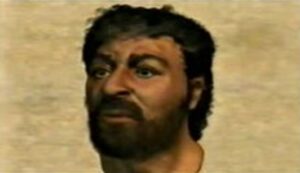
I wonder how many souls inside and outside of America could be brought to Christ if he were viewed as a medium brown skinned male with coarse black hair and Middle Eastern features?
Arguably (even objectively) this image of Jesus is more Biblically accurate. Western culture should not define the racial heritage of the Hebrew people of the Bible – the Bible should.
So, to answer the title question: No, Jesus was not black. Nor was He white.
He and his ancestors were indeed Middle Eastern, much closer to an Arabian person than we in the West care to admit. Isaiah still rings in my ears, “He was despised, and we esteemed Him not” (Isaiah 53:3).
I hope some who read this long for Unity and I hope many long for Diversity.
But I really hope that we, even us Americans, can learn to embrace the Bible and learn to love this truer image of Christianity. It matters, in more ways than one.
A forensic science CGI-produced image of Jesus Christ (in contrast to Renaissance art)
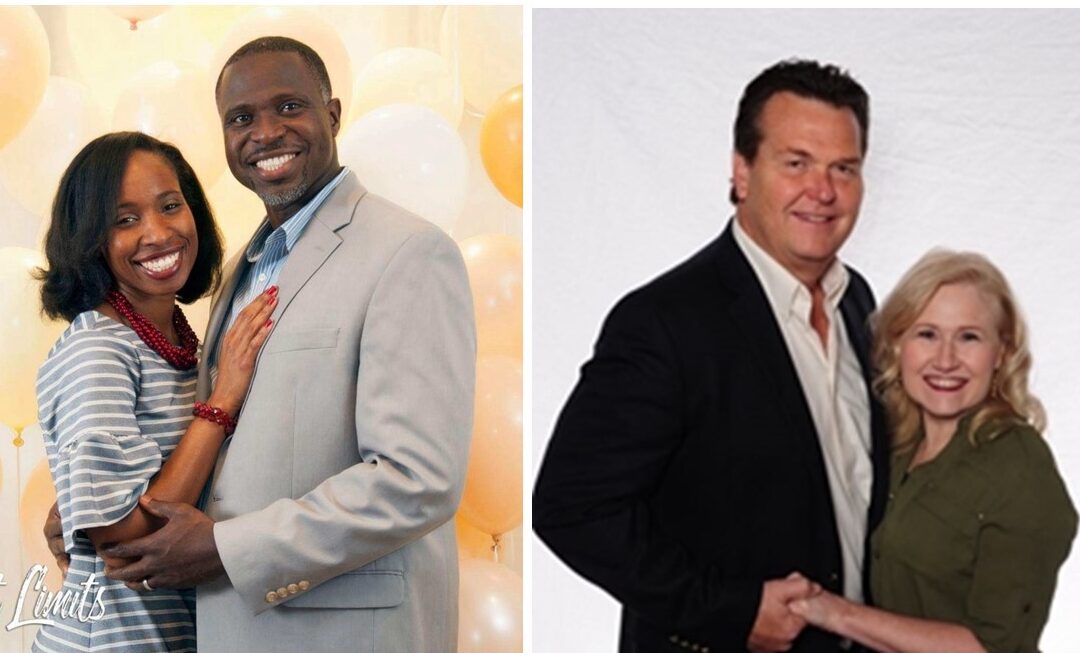
In 2014, the Asaads saw the need for our congregation to celebrate the diversity among us while deepening the love we have for each other. Todd asked the Sagets to help meet this need by looking into a training model on the topic of diversity that would be appropriate for our fellowship. After a traumatic string of unjust killings of black individuals around the country and the unjust killings of police officers in Dallas in 2016, our need to develop a training grew into so much more. We saw the need to establish a team that could help us deepen our love and unity while we processed the harsh realities of the world through a spiritual lens and while still being a light to our communities. The team consisted of Todd and Patty Asaad, Pierre and Shara Saget, and Marcos and Kinny Pesquera.
Beginning in 2016, we were able to use the expertise of Marcos, who is the System Vice-President for Health Equity, Diversity & Inclusion at CHRISTUS Health, to put together a workshop that started the conversation around diversity in the body. This workshop was facilitated by the Pesqueras and the Sagets and was conducted first with the staff of the DFW Church. We then conducted the workshop with all of the Bible talk leaders, the singles ministry, and then with each worship center. In total, it took about a year to complete these workshops. Following the workshops, the entire staff was directed to read Michael Burns’ book, Crossing the Line: Culture, Race, and Kingdom. In June of 2019, Todd invited Michael to come to Dallas to conduct a mini-workshop based on his book. This event was held on a Sunday, during a congregational worship service. Michael also provided a time of teaching the next day to help further equip the church staff in our task of leading a diverse congregation.
To date, we have continued to expand our team to include two representatives from each of the six worship centers of the DFW Church. We did this because we recognized that the work in this area is vast and important, therefore, we needed more disciples involved. We also took on the name Cultural Connection Team because we felt it communicates, in a broad but adequate way, the objective of the team. The team has met regularly since 2020 and seeks to provide educational opportunities that will equip our brothers and sisters to talk about our various cultural and racial differences in a way that promotes greater understanding and value for each other and those we are reaching out to who are different than ourselves.
One of these educational opportunities was born out of a meeting with Dr. George Yancey, Baylor University Professor of Sociology. After reading Dr. Yancey’s book, Beyond Racial Gridlock, and finding out that he lived in the Dallas Metroplex, Todd and Pierre invited him to have lunch with a number of the staff and elders of the DFW Church. We explored his thoughts and ways on helping multiracial churches develop greater love and unity because this is an area that Dr. Yancey is particularly interested in himself. We then asked for a second meeting to discuss the possibility of him presenting some of his research to leaders of our Texas family of churches and leaders of the Chicago, Kansas City and Nashville churches who joined us. Dr. Yancey’s presentation of his research was refreshing and timely as he discussed a viable way for us to fulfill our calling to be like Jesus as we navigate the divisive times we live in.
Our relationship with Dr. Yancey has led to an invitation for the DFW Church to participate in a new research project which will help teach and inform us on how to better love all nations. Dr. Yancey is set to provide a training session that will teach us how to have collaborative conversations with each other. This training will be followed by six separate small group sessions that will test the effectiveness of the training and allow us to put into practice what we have learned. The potential for growth in our fellowship is tremendous as we anticipate each of us learning how to come together and love each other deeply in a way that values the diverse perspectives we all bring to the body. We also anticipate that participation in this research project will better equip us to be about our mission of sharing the gospel with others who are different from ourselves. Our prayer is that God will be honored and glorified as we strive to sincerely love each other deeply and be a light to our world.
Pierre Saget — DFW Evangelist
Todd Asaad — DFW Congregational Evangelist