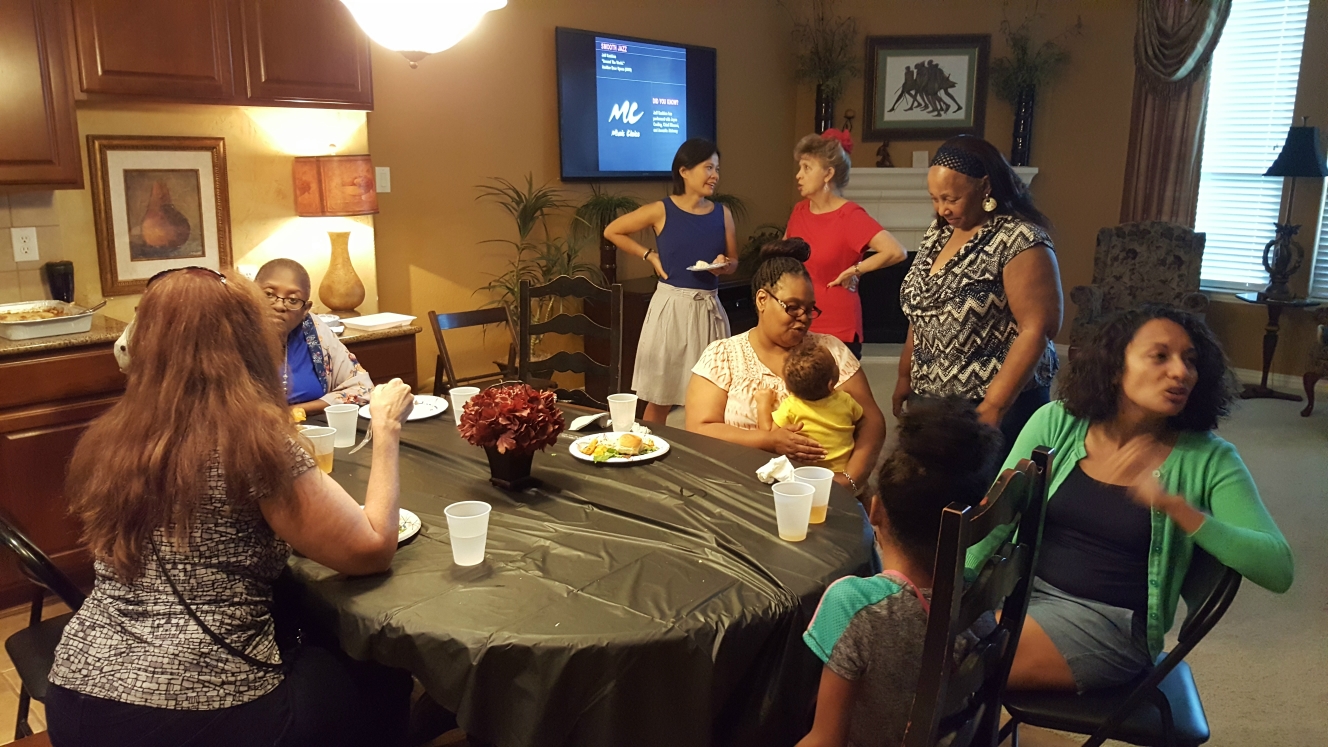
Love listens. Agreed? Ask any wife whether she feels loved or not by her husband, and her answer will likely be tied to how well he listens to her. No one can be described as a loving person who is not a good listener. A quick glance at a concordance demonstrates abundantly how much God has to say about listening to him and his Word, and about just listening in general. Here are a few biblical passages to consider:
Proverbs 1:5 – “let the wise listen and add to their learning, and let the discerning get guidance…”
Proverbs 18:13 – “To answer before listening— that is folly and shame.”
Proverbs 19:20 – “Listen to advice and accept discipline, and at the end you will be counted among the wise.”
James 1:19 – “My dear brothers and sisters, take note of this: Everyone should be quick to listen, slow to speak and slow to become angry…”
Listening is a prerequisite for obeying many other biblical directions. How can we show compassion without first ascertaining what another’s problems are? How can we bear one another’s burdens without knowing what they are? How can we encourage one another without knowing if they are discouraged, and if they are, then why? Such questions could be continued almost infinitely, but you get the point. Listening is foundational to loving others.
Listening To and For Your Members
Being a loving listener not only means that you are willing to listen when approached; it also means that you approach others first because you are interested in knowing them and their story. Church leaders, of all people, should exemplify the fine art of listening – listening to their members and listening for their members. The idea of listening to them is easy to understand, but listening for them is a broader topic. This concept means that we listen to anything that might be of help to them. In other words, how can we serve them better? Leaders are, after all, to be the greatest servants of all according to Jesus (Matthew 20:20-28).
Since I am using my home church as an example, let me recount a series of incidents that make the point well. Although I am not on the ministry staff of our congregation, I do get together with our lead evangelist Todd Asaad occasionally. He is interested in my perspective as an older person with a background in ministry and leadership. A couple of years ago, he and I were having coffee together and he asked what I thought could help the church. I mentioned the idea of just seeking more input from the grassroots membership. I likely mentioned several ways that this might be accomplished, but brought up the idea of using a church survey to better understand the needs of the members.
A Great Example of Listening
I shared about my “adopted” spiritual daughter in Seattle having developed such a survey for her home congregation and the praise that one of the evangelists there had shared with me about it. (See my article, “Another Kind of Adoption” on my teaching website, gordonferguson.org, to better understand who Kelly Flores is. She currently is the Dean of a college in Seattle that grants Doctorates in “Applied Leadership.”)
I just threw out the idea as one of several, not really expecting Todd to follow up on it. However, by that night, he had called Daren (the evangelist in her local church) and Kelly, arranging for her to come to Dallas to help explore the possibility of doing something similar here with a survey. Suffice it to say, I was once again impressed with Todd. He was listening for ways to help those whom he served. Long story shorter, Kelly came in for several days and met with various leaders. She developed a survey for the Dallas church, and Todd administered it – with a very high degree of participation among our members. Kelly later came back and taught the staff more about how to interpret it and follow up on it. Input groups were appointed to give the leadership regular feedback in several different areas the survey results indicated as important to the church.
A Second Great Example
Another example of listening and looking out for better ways of serving the flock came much closer to my wheelhouse as a teacher. Todd had heard about several churches who were providing more in-depth Bible knowledge through a series of lessons taught by teachers other than the regular minister. Some of those churches had these lesson series taught during the regular Sunday services, followed by a shortened but otherwise normal worship service. In one of our coffee times, Todd asked me to help develop six series of six lessons each. Since I have a teacher development group, that we call “Digging Deeper,” I took the task to them as a way to not only get help with the project, but to use the experience to help them learn more about curriculum development. Two of our main region groups in Dallas have completed the series and the third is in the process of having it taught now.
Todd had several from our DD group do the teaching at his region first, as a sort of pilot program. Afterwards, he asked for input from us in designing a survey for his region to find out how effective they thought the series had been. Since the feedback was very positive, he then asked me to use the DD group in developing the next six lesson series, which he wants to have taught in the fall of this year. He also came to our last DD group meeting (we meet at various intervals, depending on the needs before us, and we have teachers from each of the ministry regions). To use his term, he likes to “touch” all sorts of different groups in their regular settings just to get a feel for how they are doing. His input into this meeting was very helpful. He has a Master’s degree in Bible himself and is a good student of the Word.
So there you have it – good examples of both listening to others and listening for others. The shepherds must know their sheep. As already stated, the results of the congregational survey led to the development of several input groups. After the increased emphasis on racial issues just over a year ago, another input group was formed for giving feedback in the racial relationship realm. But there is more, and a very exciting addition to be sure.
Diversity Workshops
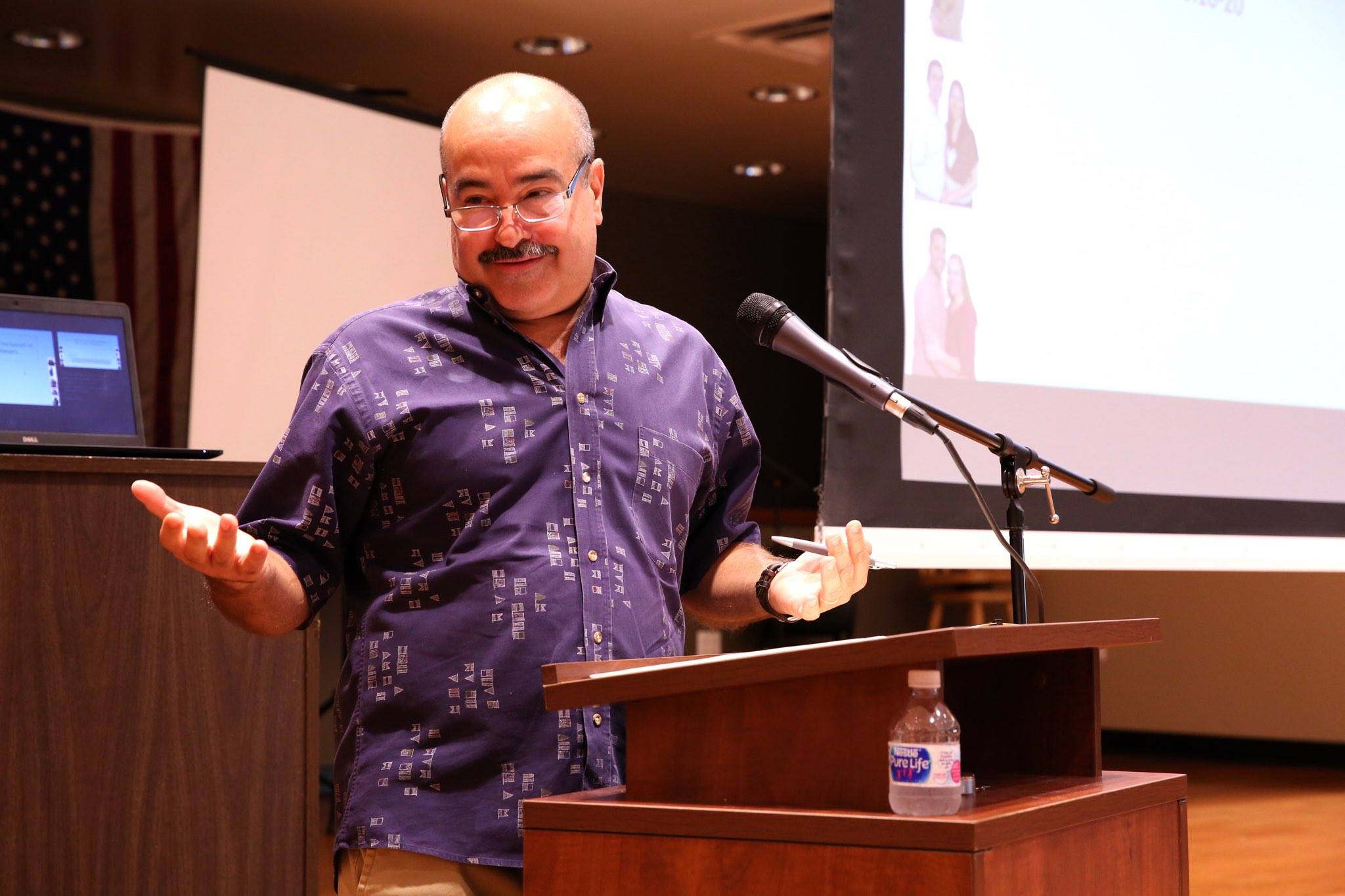
The Dallas church has been especially blessed in two ways regarding this latter realm: one, our leadership is proactive in helping our interracial relationships; and two, we have an expert in racial diversity training as one of our members. Marcos Pesquera is the primary racial diversity trainer for a health organization, CHRISTUS Health, which has 60 hospitals operating in a number of states in the US and in several countries in Latin America. He is thus responsible for helping their 45,000 employees know how to best serve their patients, most of whom are either racial minorities or financially disadvantaged or both.
Marcos’ task is to help his organization understand the data from a number of sources in order to assess the chronic conditions that are decreasing life expectancy and quality of life in the communities that they serve. He says that they always find that racial and ethnic minorities are the most affected by chronic conditions, such as black stress, lack of organizational resources as well as a lack of health literacy and lack of trust. These are but a few of the causes of health disparities that his organization faces and must find solutions for. Additionally, his department also focuses on increasing the number of minorities in the executive suites, as well as helping teams work more effectively through inclusion of diverse employees, thoughts, levels of education, etc.
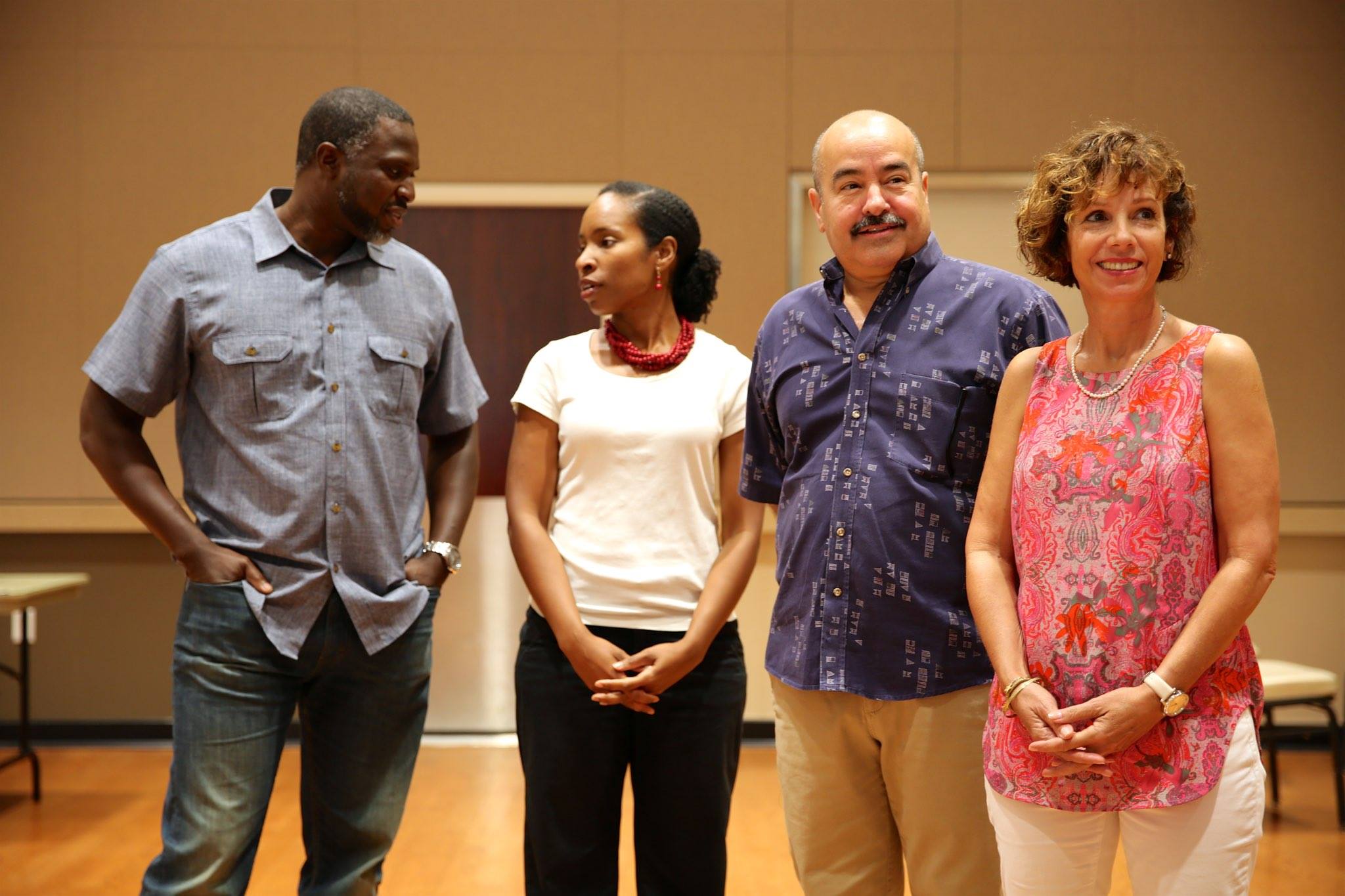
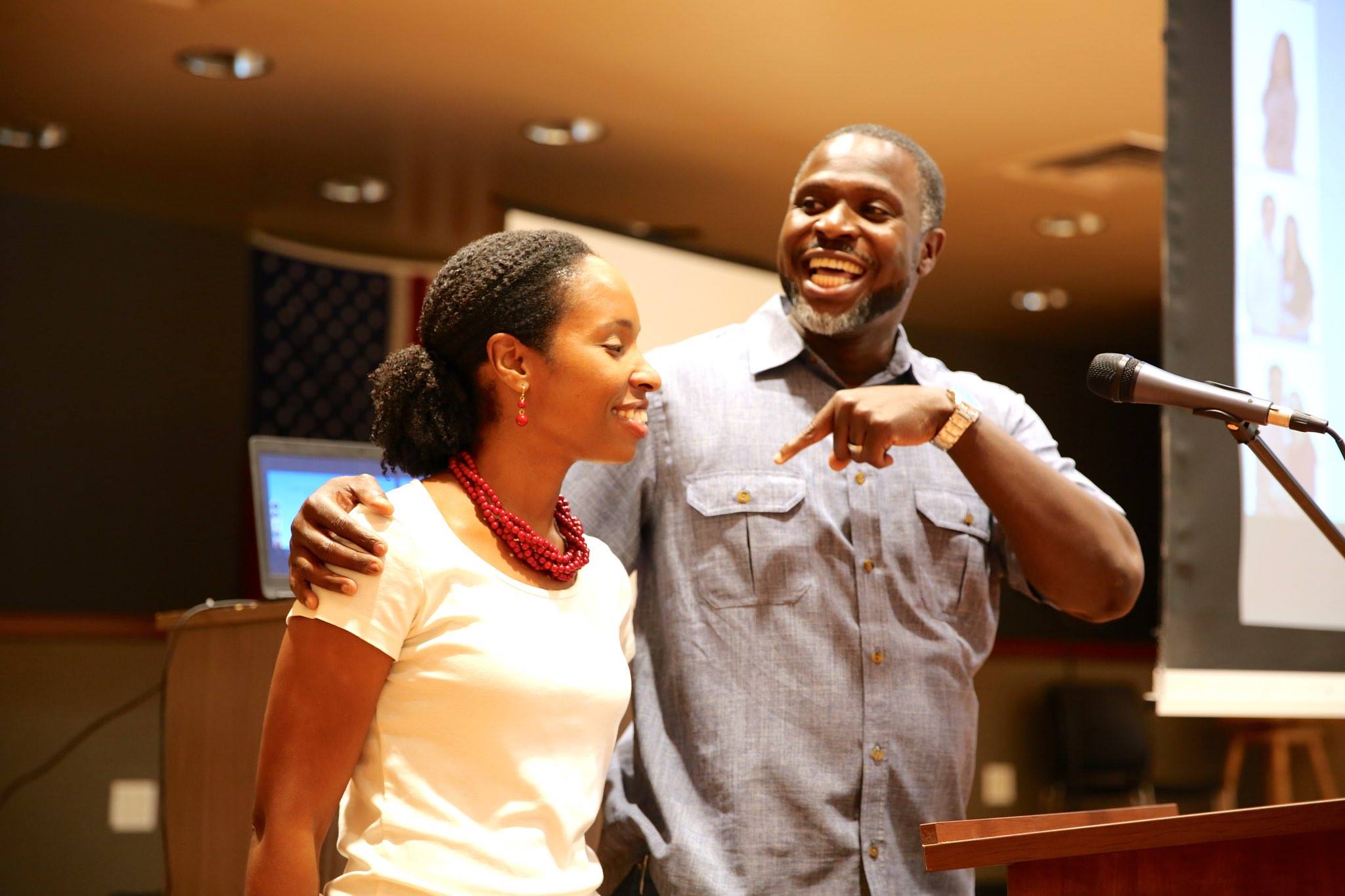
He and his wife, Kinny, have teamed up with one of our staff couples, Pierre and Shara Saget, to help train disciples. Marcos is Puerto Rican, Kinny is of German descent, Pierre is Haitian and Shara African American – quite a diverse group themselves. Interestingly, Todd Asaad had approached Pierre about forming a diversity group about four years ago, which was made more urgent by recent developments in our nation. Two sessions of these diversity workshops have already been held thus far in our congregation, and a larger meeting of all of our small group leaders is scheduled for September 23. Todd expects between 250 and 300 attendees for this “Oneness Workshop,” and he has invited some key leaders outside our congregation to take part as well. Here is Marcos’ description of those sessions that were already held:
Pierre Saget and I were privileged to run two practical workshops for the church, starting with the leadership. This group included evangelists, interns, women’s ministry leaders, as well as elders and church office staff. A month later we did a training for all our 120 singles in the singles ministry as their monthly devotional gathering.
We shared what the healthcare field is currently doing in order to mitigate the effects of racism and discrimination that affects our communities’ healthcare outcomes. We explained the personal unconscious biases that can affect the way care providers care for people, and also the institutional racism that needs to be identified and changed. These barriers must be removed for all our communities and populations so that they can experience equal access to opportunities that will enable them to live healthy lives.
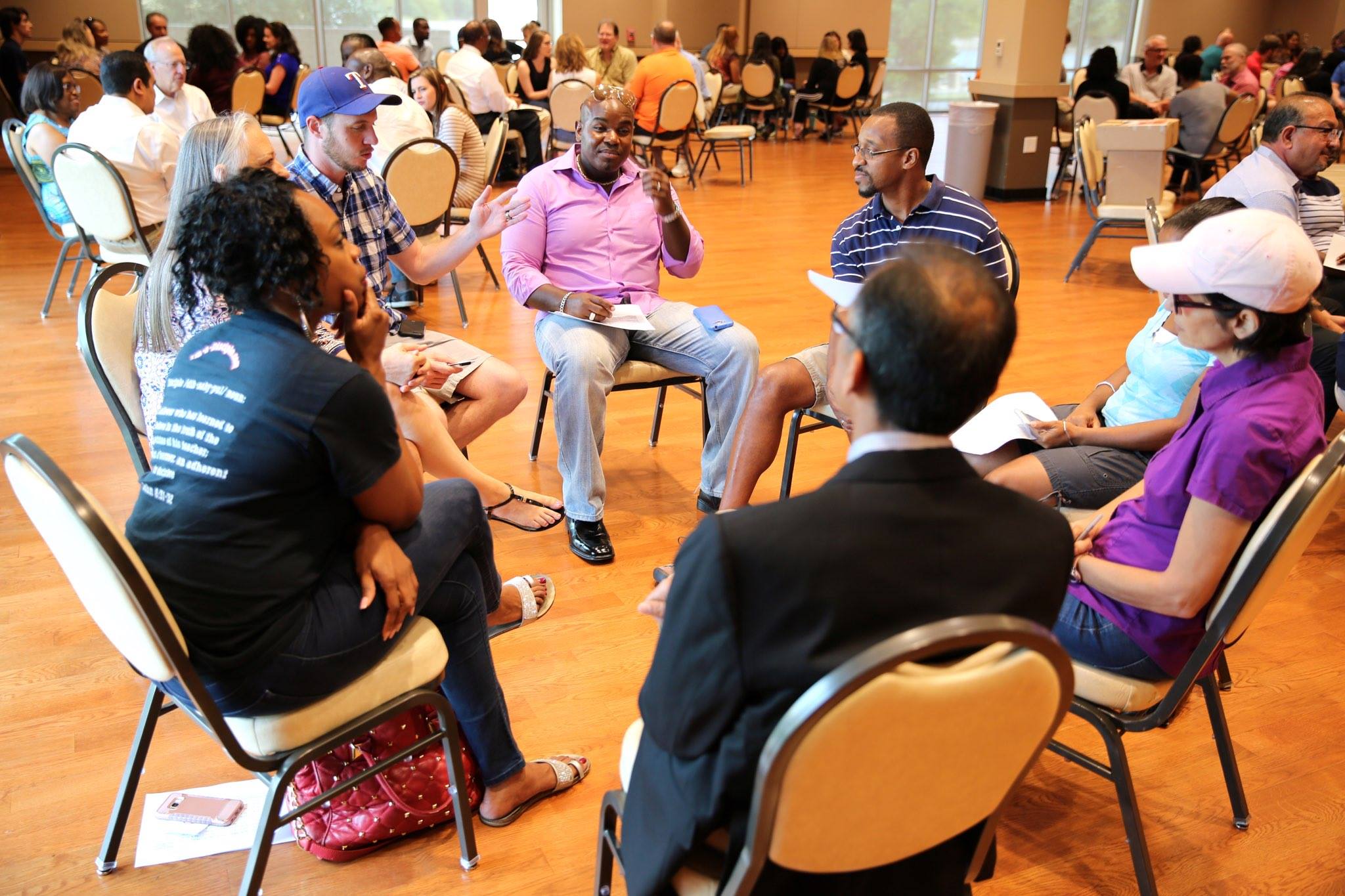
I split the church groups into small teams that were diverse in terms of race/ethnicity and gender. I gave them a set of questions that promoted very deep conversations around these issues and how they view them, affecting them and how they felt from both sides of our racial differences. We touched on white privilege, and also on how both sides need to provide a safe/therapeutic environment for all to freely express the impact of these issues in their lives. While it got emotional, it was extremely therapeutic and all groups were able to express themselves in a safe environment. We concluded in the end that addressing these issues is a journey, and that a lot more communication, understanding, humility and trust needs to be built as we come a step closer to being more like our Jesus.
The Bottom Line
The bottom line is simple. Talk is cheap if all that we do is admit that our members of color may be feeling far more than we may yet realize. They need to know that we care enough to take action – actions that provide more education for our white membership and more opportunity for our members of color to feel understood. Love listens and love shares from the heart. I’m not saying that everything our black members feel is accurate, but I am saying that it is real.
Whatever they may need help dealing with from a biblical perspective will be much easier to accept if we have first listened and seriously sought to understand their “world.” The racial realm is one of the most sensitive among us right now, and we all need help. That help begins with a mutual understanding of where we all are in our grasp of the issues and continues with growing in our abilities to apply the principles of Jesus to them. Thank God that he put me in a place where our leaders are not only listening; they are taking action and making an impact. Please join them in seeking ways to strengthen interracial relationships in your congregation!
I have one more article to follow in this current series, one that describes what can happen when we take that honest look at our membership diversity of which I spoke in another recent series. I think you will be much encouraged. Until then…
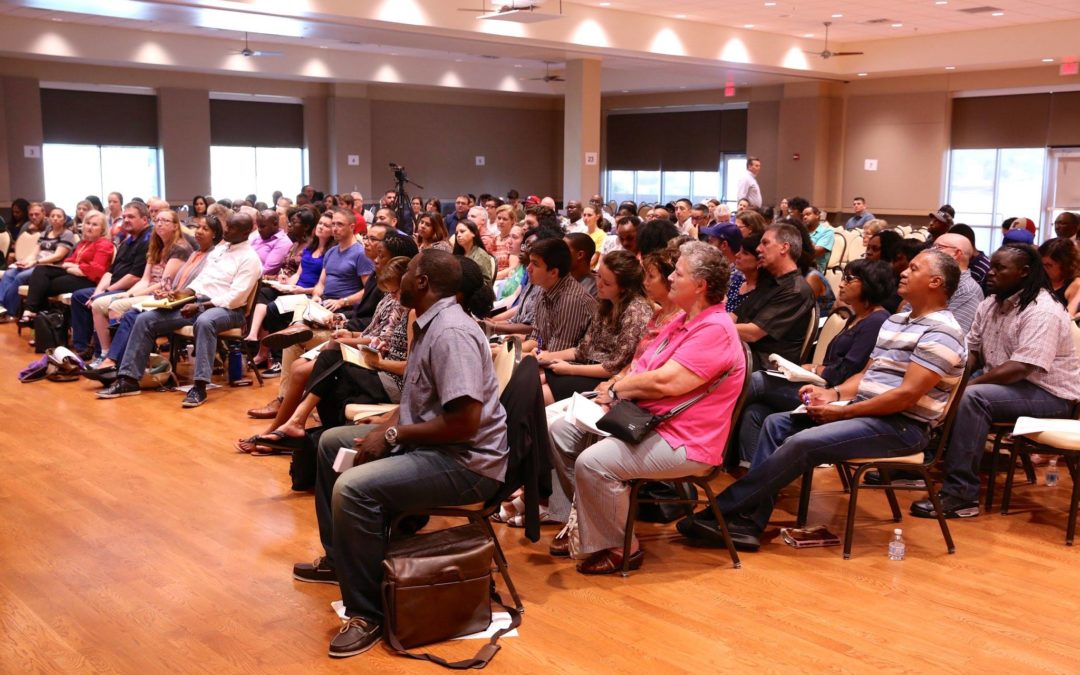
As mentioned in my previous blog post, the DFW church conducted their third Diversity Workshop last Saturday as a part of an ongoing series. The first was for the ministry staff; the second was for the singles ministry; and the third was for all small group leaders (plus some others). As expected, we had at least 200 in attendance at this most recent one. From here, the workshop will be taken to the membership as a whole. Since I am including details as a way of encouraging other congregations to offer similar workshops, I will simply walk you through what we experienced Saturday.
A Biblical Foundation
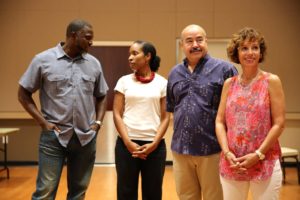
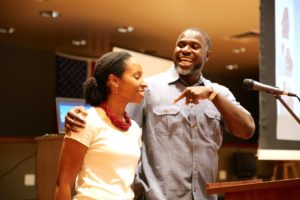
After Todd Asaad introduced the workshop leaders, Marcos and Kinny Pesquera, and Pierre and Shara Saget, Pierre provided us with some important background Scriptures. He began with Jesus’ prayer for unity in John 17:20-23. A very compelling point from this passage can be made using a marriage analogy. Just as a husband and wife become one, Jesus and his bride, the church, must become one. Unless the church really embraces complete unity among the entire membership, our spiritual marriage to Christ will never answer his prayer of John 17.
Next, Pierre used 1 Peter 1:22 to show that the unity for which Jesus prayed is one that encapsulates a deep love from the heart for each another. This depth of love presupposes that we know one other really well and accept each other completely. It obviously must go much further than a brief greeting at church assemblies, especially with those who are different from us. Loving is caring, and caring is desiring to know as much as possible about our fellow disciples, certainly including the burdens that they feel and need help carrying.
Ephesians 2:19-22 was read and explained, making the point that if we are no longer foreigners and strangers within God’s family, then we should never feel like we don’t fit in. We cannot feel like we are on the outside looking in, not really being a part of God’s building and temple. We are all fellow citizens of his kingdom, on level ground with one another at the foot of the cross.
Then came 1 Chronicles 12:32, a most interesting passage. This verse is in the midst of a listing of those from the different tribes of Israel that joined David at Hebron, prior to him becoming king of the whole nation. It says of those from Issachar that they “understood the times and knew what Israel should do.” They were a part of a successful effort to unify God’s nation, and similarly, we must have among us leaders who understand our tumultuous times and know what the church should do. I am most grateful that we have leaders in our congregation who are clued in to the fact that racial harmony, even in the church, will not just happen – it must be orchestrated and nurtured!
Enter the Puerto Rican!
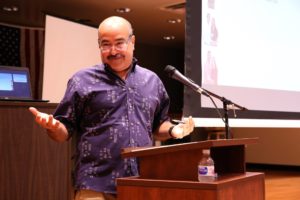
Marcos, our resident diversity training expert, began his segment talking about the striking cultural differences between him and his wife, Kinny. Suffice it to say that it was hilarious! Their backgrounds made it essential that they work hard to understand and accept one another in those differences. He used the iceberg illustration to show that unless we eradicate what he called “the culture of silence,” we will never understand the 90% that lies beneath the surface. Conversations are a must. He helped us to see just how important real communication is between our brothers and sisters. I cannot possibly explain all that he did in this part, but he laid the groundwork to help us be more comfortable talking about the normally uncomfortable topics relating to race.
Sharing to Deepen Relationships
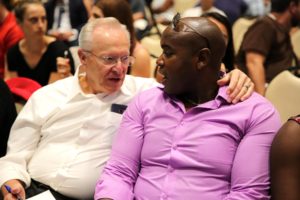
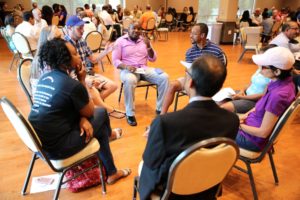
Participation of the audience had three phases. First, we just talked to someone near us that we didn’t know or didn’t know well, and shared what was important to us as persons. Then we broke up into groups, based on random numbers that we chose as they were passed around through the whole assembly. This resulted in groups with a good mixture of racial backgrounds, gender, and age differences. In this setting, we were given questions to discuss about our backgrounds: family, schools, neighborhoods and friends. The most important question addressing the point of the workshop was to share who “those people” were in our family as we grew up.
On the latter, we heard some unexpected responses. One black brother shared that he was discriminated against by other blacks in his neighborhood because he had a father in the home whereas others didn’t. Pierre, having come from Haiti, found out that he wasn’t really black in the minds of some. He also learned that HBO didn’t just apply to a media source, but stood for “Haitian Body Odor!” It became obvious fairly quickly that prejudices come in many forms and that we all have some, whether we are conscious of them or not. For me, “those people” on the radar screen of my family were the uppity rich, highly educated folks who saw us for what we were: “rednecks from the wrong side of the tracks!” As I say, prejudice is far broader than racial categories and it is often systemic much like racial prejudice is – under the surface of our consciousness. We all need help – from God and from one another!
The Finale
The last part of the workshop included further material from Marcos with some audience participation. Marcos knows his stuff, no doubt about that. He is not only an excellent speaker, but he combines his expertise with humor to make vulnerability about sensitive issues much more natural. In the atmosphere created, people of all races were anxious to share feelings that in other settings might not have been shared at all.
The last topic he raised was “white privilege,” and it was really encouraging to me that almost everyone seemed to understand what that was and was not. It certainly doesn’t mean that every white person is born with a silver spoon feeding them the finest baby food. That was not my experience, for sure! On the other hand, it doesn’t mean that every person of color is born into dire circumstances and denied all opportunities. It does mean that our cultural setting in the United States is such that white people as a whole will enjoy some benefits that those of color in general will not. The biggest challenge for many white folks is that they simply do not understand what systemic racism actually is, since for most of them it is outside of their awareness. A lack of overt racism does not mean that racism in less obvious forms is absent. I was just rejoicing that we could talk about this topic without awkwardness and weirdness. Thank you, Marcos!
What’s Next?
The fellowship was abuzz after we were dismissed, and the comfortability level in discussing racial issues was raised significantly. It was only a beginning, but it was an observably excellent beginning. The next stage is to include the congregational membership as a whole in the process. I’m not sure just how that will be carried out, but Todd made it clear that this third segment was to help our small group leaders be more equipped to pass on what they had learned and then to be prepared to further help their group members learn from subsequent workshops and put into practice what they will learn.
My own suggestion will be that we have a three phase workshop. The first would be similar to what we experienced Saturday. It was great, but too brief to accomplish what needs to be accomplished. I would suggest following meetings like this one with assigned discussion questions for each member to talk about with several others of different races than they. This could be done as individuals or within small racially diverse groups. Then the final phase would be another large meeting which would consist of sharing the results of the previous discussions, followed by breaking into small groups once again. This would provide a good comparison of what had been accomplished since the small group discussions in the initial workshop setting. Anyway, those are my ideas at this point.
One thing is for certain. We are living in some tense times regarding racial and other differences. Our society has all but lost the ability to disagree without becoming disagreeable. The subject of politics alone illustrates this loss all too well. Freedom of speech is a constitutional right; hateful reactions when it is practiced are Satan’s delight. (Hey, that rhymes!) In God’s plan, diversity is to a beautiful thing. In man’s fallen condition without Christ, it is just the opposite. More and more respected members of our society are speaking up about these issues and encouraging unity and love as the solution. We in the family of God can do no less, certainly within our congregational families. Let’s do it!
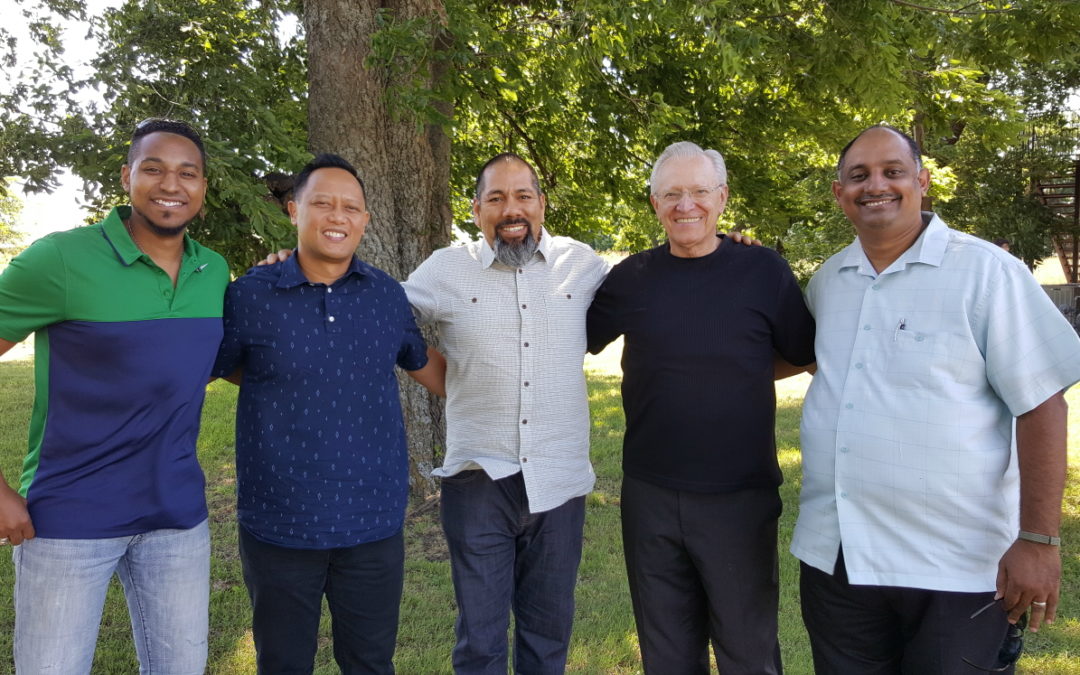
Okay – this is the last article in the series about the DFW Church, my home church! There will be at least one more article in the series, one that shares what another congregation has been doing to promote better understand and closer ties between those of different races in their fellowship. If others would write me about what they are doing in their churches, we could continue the series even more, sharing ideas and helping disciples to deepen their relationships within their local fellowship. You have my email address at the top of the page – please use it!
The reason I have written as much as I have about my Dallas church is because I think it provides a good example that will hopefully encourage others. I do not believe that we are perfect in what we are doing, but I do believe that we are making significant efforts that should be imitated. Two details are exciting to me about what is happening here. One, it has nothing to do with me. Some might assume that since I started this blogsite on racial issues, I must be a catalyst for what is being done in Dallas. Not true at all! The reverse is true. What the leaders started here was my catalyst to begin the blogsite. If you start at the first blog post and read the early ones, you will understand just what the sequence has been.
Two, the impetus to begin dealing openly with racial issues in this church predated the current strong emphasis on racial issues in the United States. As I mentioned in a previous post, Todd Asaad, our congregational evangelist, started the ball rolling on the topic at least four years ago. Since then, much has happened to garner attention to all things racial in our society. The problems were clearly there prior to the last couple of years, but now it is receiving national attention in a way I’ve not seen since the Civil Rights Movement in the 1960s. I’m proud of Todd for realizing the need and being proactive, although the focus here has been sharpened and made more urgent through these current events.
Speaking of these current events, I just watched a video of my good friend, Guy Prince, addressing these issues in a sermon delivered in South Carolina. Among his many good observations and spiritual applications, he described a group discussion he had participated in as the only white person present. He said it reminded him of what must have been taking place around dinner tables in black families for decades where racial issues were the topic. In other words, the discussion he was included in was an unfiltered and totally honest session about what life really felt like for the black population in the US.
He then commented that our present rapid escalation of such discussions in every imaginable venue was the result of our black friends taking those table talk sessions out of the house and into the public. Astute observation, that. He then pleaded for Christians to seek education and participation designed to promote understanding and empathy among us. It was an excellent sermon, and certainly well worth the 38 minutes of listening. You can watch and listen to it under “Media” on this church website: http://www.colachurch.org. You can also find a number of other lessons by different speakers on the same general topic there.
An Overview of a Foundation
The DFW Church is planning to continue with the Diversity Workshop approach, taking it next to the general membership. Just when and how that is to be done has not yet been announced. However, when it does occur, it will simply be the latest layer added to a foundation that has been built much earlier. Making real diversity a part of a diverse membership has been an ongoing process for some years. The rest of this article will call attention to several aspects of that foundation for diversity.
Some time back, I wrote a three part series for this blogsite entitled, “Racial Diversity in the Church – An Honest Look.” The first part candidly noted that our fellowship of churches began as “white church,” and in many ways is still that in spite of having a membership that is diverse racially. That being true in our earlier days is understandable, but it is no longer understandable or acceptable. We have to keep learning, growing and changing.
Diversity in the Church – An Honest Look
Probably the primary focus of that first article was on having a diversity that reflected the population where a given congregation is located. We should not be mainly one color, whatever it may be, unless such is a reflection of the population itself. On that note, the DFW Church has a fair mix in its racial makeup, although it is not totally reflective of the surrounding population. That being said, one of our three regional groups is a great example of a diverse makeup. Not surprisingly, it is the group into which I was first invited to speak on the topic of race. Our Southwest Region is led by Mark and Connie Mancini, and according to Mark, is about 50% white, 40% black and 10% other non-white in composition.
The second article in the series addressed the need to have our racial diversity reflected in the leadership of the church, plain and simple. The third article addressed several aspects of diversity: fellowship in the church assemblies; diversity in our worship music; and fellowship after our assemblies are dismissed, inside and outside our meeting places. It would be worthwhile going back to reread those three articles (or read them if you haven’t yet).
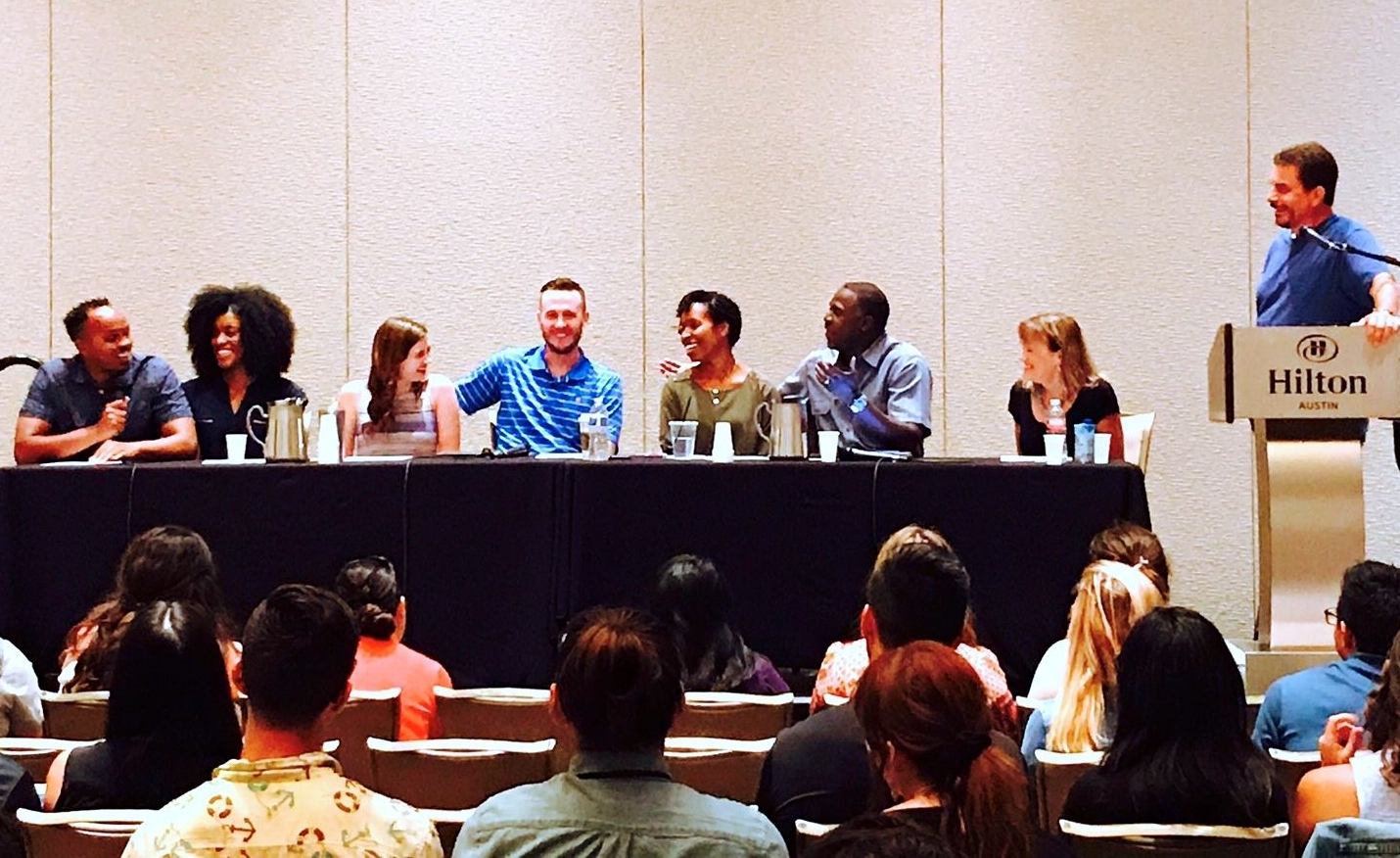
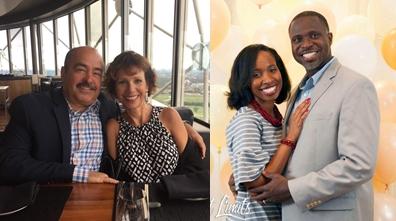
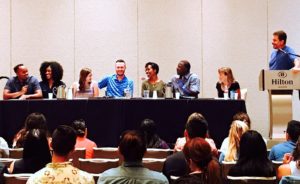
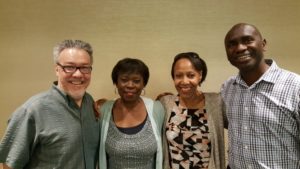
The SW Region of the DFW church is an excellent example of the points in the first two articles. Here are photos of their ministry staff and of their eldership. The ministry staff is shown here forming a panel for some sort of a leadership program, and the shot of the two elders and wives is one I took after a service in which I did the teaching. Interestingly, the elder families were in Boston during many of the years that I was, and now we are all together in Dallas. In both photos, the racial balance is almost exactly 50/50 (one less white person, actually).
The Southwest Ministry Staff
The Southwest Elder Couples
Diversity in Worship and Fellowship
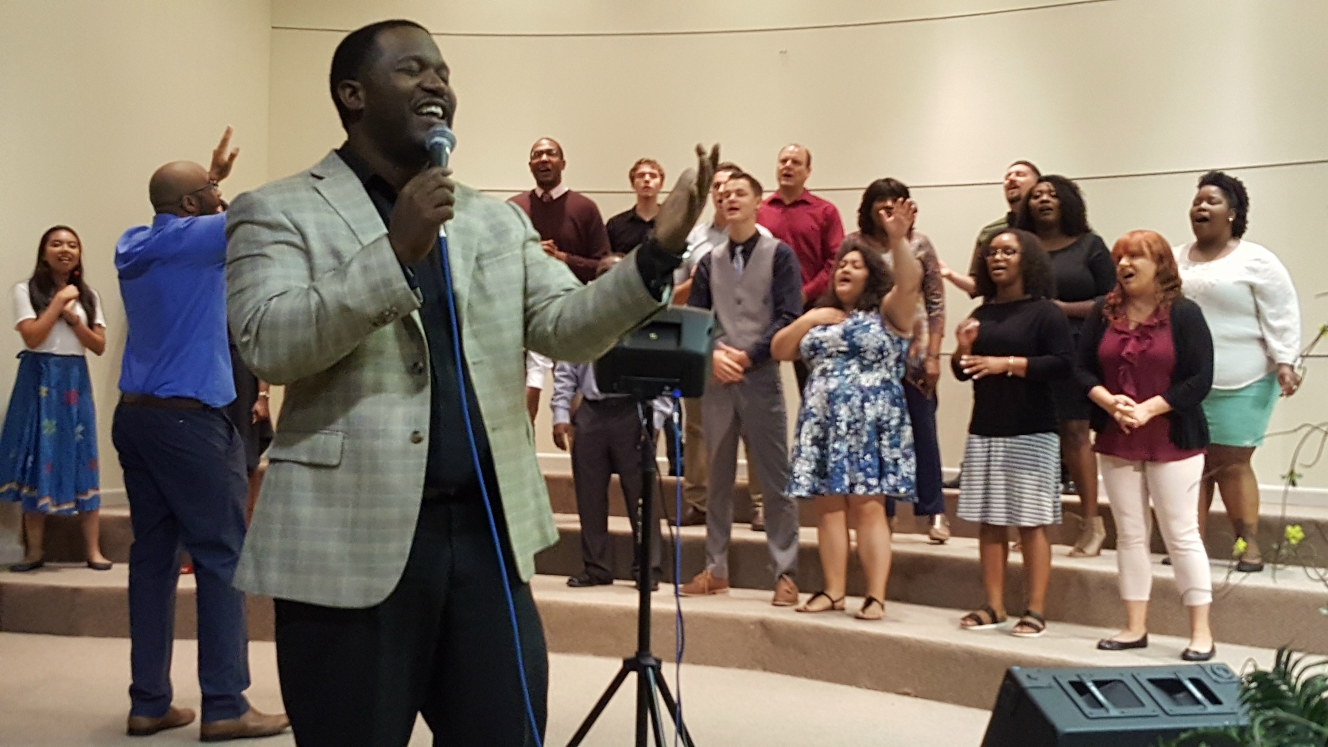
My observations here come from my own experience in my home church region, Dallas East. These observations address part three of the article series mentioned above. Our worship leader in the Dallas East Region is Stan Hallowell. His mother is a professional gospel singer in Chicago for predominately black churches. Needless to say, he is quite conversant with this style of church music. In my earlier article, I mentioned that we typically have three styles of music in our churches: traditional hymns, contemporary popular style (Michael W. Smith and Chris Tomlin being examples of this style) and gospel choir. I failed to include what I call the “clappy-happy” type, which I often label “gospel aerobics” (not my favorite type, in spite of its popularity)!
The gospel choir approach, with small groups or solos (having more “soul” in them) added in, are characteristic of the music in many predominately black churches. Thankfully, this type of music is also a part of our worship services in both the DE Region services and in our occasional full congregational services at the Irving Convention Center. Thank you, Lord, for sending Stan and Nita our way! (By the way, my oldest grandson took their daughter to the prom – she’s a cutie!)
Although I posted another picture of Stan leading the DE Region singing, complete with gospel choir, here’s a more recent shot. The choir is much larger in the combined congregational services.
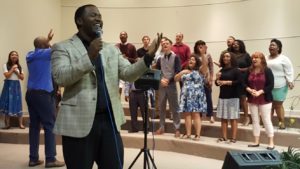
I once asked Todd if any of the older white members ever complained about some of the music not being “reverent” or “worshipful.” He said no, which shows that whatever foundation for diversity in music had been laid, it had been laid long ago – thankfully!
Diverse Fellowship?
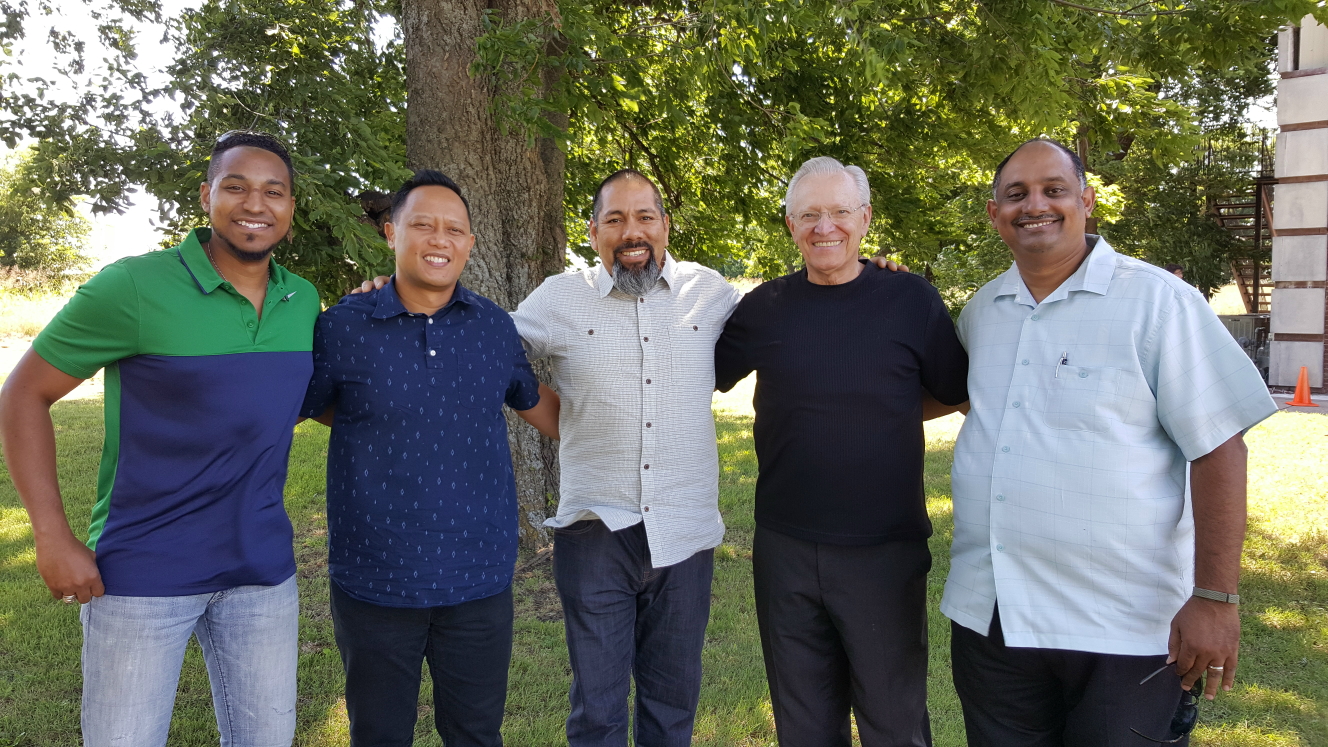
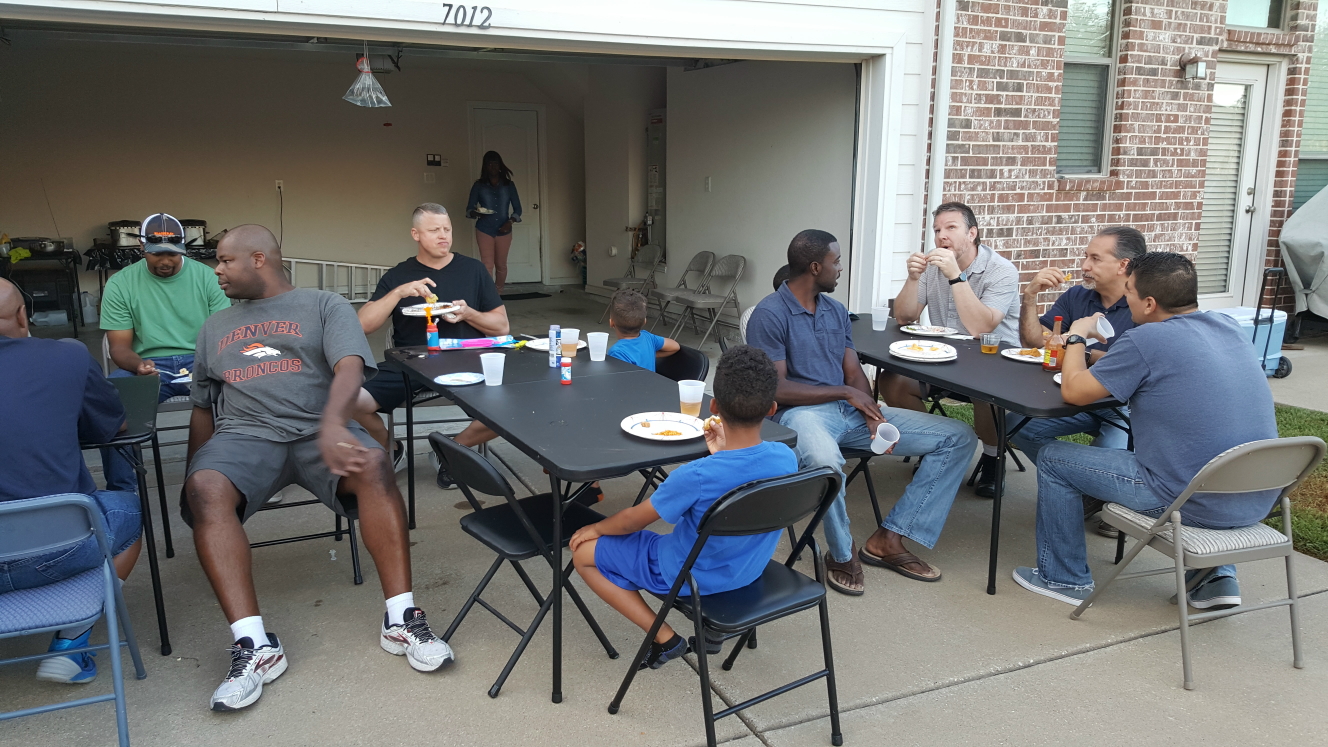
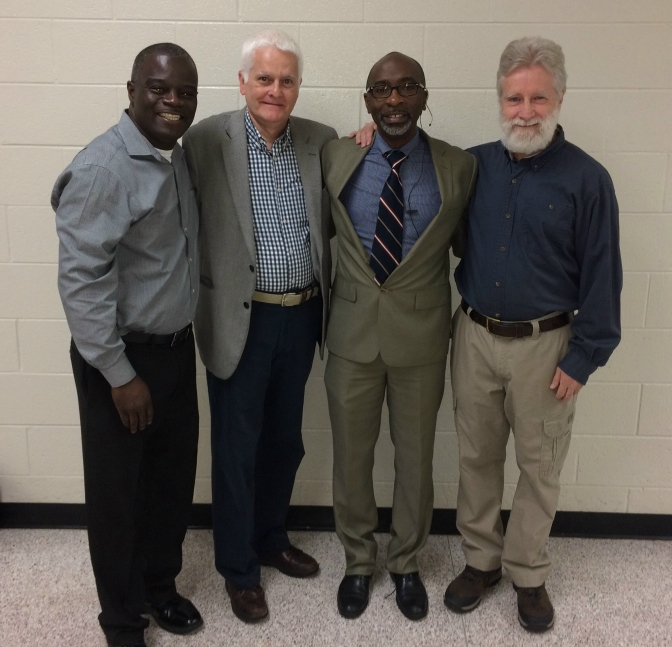
Then we have the issue of fellowship before and after worship services – do we only hang out with “our” kind, or are we truly a family? The old adage, “birds of a feather flock together” is quite accurate in prisons, so I’m told, but if it is true in our fellowship, we are failing to appreciate God’s creation of diversity and are thus failing to be like God. One day after church services ended, I just grabbed a good racial representation of my church friends and had this next photo taken. I think it captures most of the racial variations in our group pretty well. I have either been in each of these brothers’ homes or they in mine or both. If you don’t have friends like these, you are missing out on so much fun, and are not reflecting the family of God as he intended it.
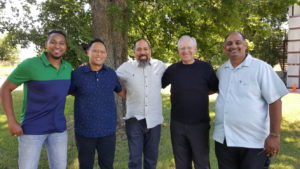
Fellowship, Fun and Love
You can never develop close friendships just by attending church together. We are called to “love one another deeply, from the heart” (1 Peter 1:22) – and that is a learning process. It will not happen unless we spend meaningful time together, having honest dialogue and also fun. I have so many exciting stories about my relationships with non-white church brothers, but I cannot take the space to share many of them. I’ll just stick with a couple of recent ones.
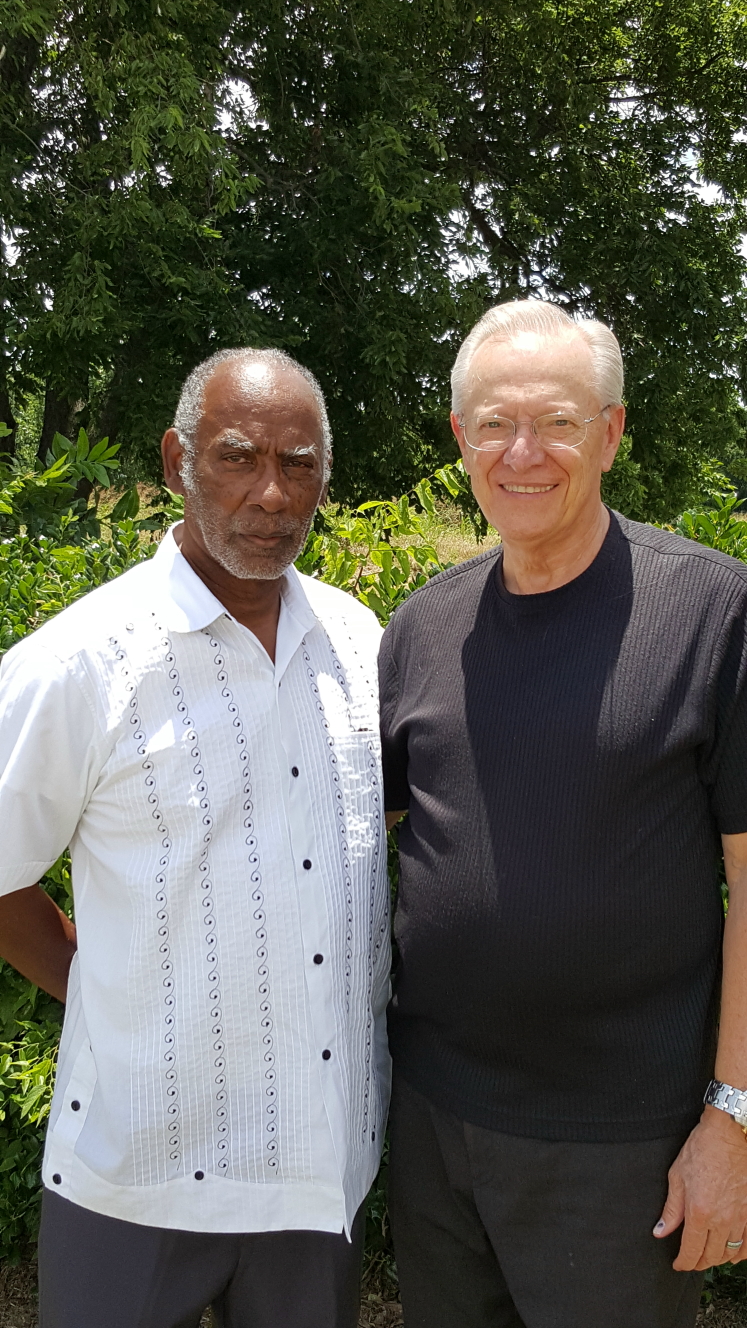
Here is one story about my relationship with a greeter at church named James Williams (affectionately called Mr. James or Mr. Williams by the younger folks). I’ve always had fun talking with him before and after church, but after I started my blog, I realized that I really didn’t know his life story much at all. Knowing he was an Oakland Raiders football fan, I called him one evening last fall to ask if he were planning to watch them play a game on Monday Night Football. He said yes, so I asked if I could join him, and he said yes again.
Once I arrived at his place (he lives alone), we started watching the game and sharing our life stories, particularly as it applied to racial issues. It turned out to be his 70th birthday, so I’m glad God had me invite myself along that very night. Anyway, he was raised in Mississippi and then taught middle school there until he retired. His experiences as a black man during those horrid Jim Crow days were about as I had observed them in my home state of Louisiana. James didn’t pull any punches about such issues, nor did I. We had an open, honest, very helpful and enjoyable conversation. It was a memorable night for me, and I think for him too. He looks a bit serious in the photo, but he is a very warm, friendly guy!
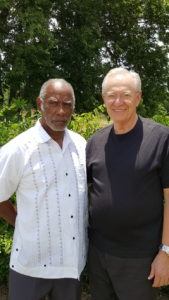
When a white guy initiates a conversation about race and is really concerned, that willingness communicates quite clearly almost without words. I have such a difficult time understanding why some of my white brothers and sisters find doing such scary. How can you love deeply without first knowing deeply? Conversion stories move the heart when shared; life stories, complete with their challenges, move the heart as well. Why not have yours moved – often?
Don’t Forget the Fun!
Stan, our music director in my part of the church, loves fishing. I kept inviting myself along and finally our schedules meshed. He takes five at a time (counting himself) on a pontoon boat to fish for catfish. The day I went, the other white guy scheduled to go had to cancel. I asked the other brothers if I were a “token white” that day! Then I caught the first four or five fish, so I asked if that were another example of white privilege! No, that type of verbiage probably isn’t politically correct, but among friends and brothers, it works just fine. I wouldn’t begin to share some of what went on in the Big Black Brothers Club days in Boston. Most outsiders who heard us were shocked, Christians and non-Christians alike. Being real friends breaks down many barriers and removes weirdness.
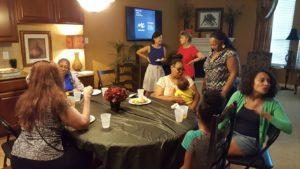
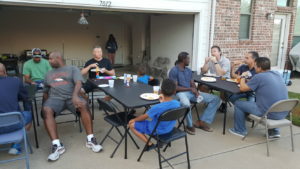
We caught lots of fish that day and Stan cleaned them all while we talked and just enjoyed being brothers. Then, as is his custom, he has an annual fish fry which is attended by people from in and out of town. Although I ate too much and had indigestion most of the night, it was a blast! I couldn’t imagine life without my brother brothers (black brothers who are Christians). Here are the photos of the guys on the fishing trip and then of some of those present at the fish fry.
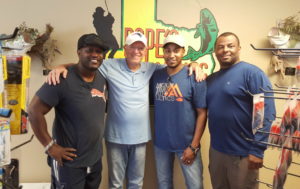
I am so grateful for God’s amazing creation of diversity in nature, but even more grateful for the amazing creation of diversity in his supreme act of creation – humans. Satan hates everything good, and he hates love most of all. When he is able to make us humans hate, he has accomplished his ultimate damage. When he is able to keep us from developing and enjoying the deep love for which we were designed, he is almost as successful. It has been said that the opposite of love isn’t hate; it’s apathy. Let’s make some decisions and do some repenting and take action. After all, it is by our love for one another that the world is impacted most! Let’s help answer Jesus’ prayers of John 13:34-35 and John 17:20-21!
In early September (2017), Theresa and I had the privilege of conducting a Marriage Retreat with the couples of the Atlanta Church of Christ in Gwinnett. As the following article from their leadership team indicates, they have a diverse membership. They have more members of color than white members, as a matter of fact. The retreat was held at a beautiful retreat center outside of Atlanta and the group was very warm, loving and flat-out fun!
As I told them near the end of the retreat, I expect this was our last such event to teach as a couple. Theresa loved every moment of it, but it showed us both that her physical condition made it wise to conclude our retreat teaching with that one. Although crossing such events off of our list for the future is difficult, we both felt good that this beloved part of our ministry concluded with such a wonderful group as this one. (I do pray that we can continue to teach about marriage through my book, “Fairy Tales Do Come True” – from Illuminations Publishers, IPI.)
Prior to the retreat, I met with the three elders and also had a great mealtime with their evangelist and his family. The elders wanted to discuss racial issues and share what they were doing in that regard. I was impressed with their hearts, their plans and what they had already done. Like my Dallas home church, they are ahead of the curve when compared to most congregations in addressing the need for more teaching from the leadership and more honest sharing between church members. I asked them to write an account of what they had done, which follows below. I was very impressed, as I expect you will be also. They were proactive, Bible-based in providing answers, and very thorough in the study provided to the church. May their direct and biblical approach in addressing this timely subject encourage many, many more churches to follow similar paths. Enjoy the read!
Discussing Diversity
By Steve Collier, for the Leadership Team
Like most ICOC churches, the Atlanta Church of Christ in Gwinnett is a diverse church, and we frequently mention our diversity publicly. However, until this year, we rarely talked openly about racial/ethnic controversies in society and how they affect us. Discussions about racial issues occurred among our members, but these were private conversations and usually only between members of the same racial group. This created undercurrents of misunderstanding.
As Tensions Mounted, Reading and Teaching Increased
In 2016, the racially charged shootings by police and against police, and the Presidential election, created a new level of tension. At the beginning of 2017, we announced a goal to address these issues publicly. We started by having discussions among our leadership team. We read articles and blogs, including Gordon’s, and talked about them. At the same time, our lead evangelist, Steve Mukenya, suggested the whole church read the book Safe People by Cloud and Townsend, and discuss the book in our family group meetings. The Scripturally-based book helps us have safe and authentic relationships that foster spiritual growth. This foundation prepared the church to tackle the emotionally laden issues of race relations.
We next decided to teach an adult Bible class for the summer based on a survey of the letters of Paul. Our focus was the Jew/Gentile controversy, and how Paul’s teaching helps us deal with the racial/ethnic issues of today. As we were planning our class, Michael Burns book, Crossing the Line, was published – a tremendous help in our preparations! One thing Michael suggests is teaching about the Kingdom of God. Back in 2015, we taught a 6 month adult Bible class on the Kingdom of God. As prologue to our new Paul class, we held a 2 week review of the Kingdom of God. We read Old Testament Scriptures prophesying that all nations will be part of the Messianic Kingdom. We looked at the Sermon on the Mount, especially the qualities held up in the Beatitudes, as essential to how we should conduct ourselves as we discussed difficult issues.
Galatians
Our theme Scripture for the class was Galatians 3:28. There is neither Jew nor Greek, there is neither slave nor free, there is neither male nor female, for you are all one in Christ Jesus. As backdrop to Paul’s mission and letters, we looked at the reluctance of the early Jewish church to reach out to and accept “those people” – the Gentiles. By contrast, Paul embraced the mission God gave him as apostle to the Gentiles despite his background as a strict Pharisee, having been trained not to associate with Gentiles. Within our church, we have both supporters of the Black Lives Matter movement and supporters of President Trump’s call to “Make America Great Again.” Similar to the early church, are we willing to accept “those people” in our church? And are we willing like Paul to reach out to “those people” in our evangelism?
In Galatians, Paul emphasized that we are family – sons of Abraham (Galatians 3:7) and sons of God (Galatians 3:36). The Galatian church was divided between the Jewish camp advocating circumcision, and the Gentile camp emphasizing freedom in Christ. Addressing these two contentious groups, Paul’s list of sins is heavy on relational conflict – enmity, strife, jealousy, fits of anger, rivalries, dissensions, divisions, envy (Galatians 5:20-21) . Conversely, the fruit of the Spirit is heavy on relational harmony, love, peace, patience, kindness, goodness, faithfulness, gentleness (Galatians 5:22-23). We can have conversations with fellow disciples about racially sensitive issues (i.e., how could a disciple of Jesus vote for Trump/support BLM?), but we must avoid the sins, and instead listen to each other with the fruit of the Spirit.
Romans
In Romans, we studied how to deal with matters of opinion and matters of conscience. Jews and Gentiles differed strongly on what you could eat and drink, but Paul wrote the kingdom of God is not a matter of eating and drinking but of righteousness, peace and joy in the Holy Spirit (Romans 14:17). The Kingdom of God takes priority over our opinions – even strongly held opinions. Paul also taught “let us pursue what makes for peace and for mutual upbuilding” (Romans 14:19). Matters of conscience should not come between disciples – peace and building one another up are more important. We must always aim for peace when expressing our opinions – even deep matters of conscience, including those concerning racial/ethnic issues in American society.
Ephesians
With Ephesians, we took a frank look at the dividing wall of hostility (Ephesians 2:14) in our own society especially between White Americans and African Americans. What are the Biblical solutions? Jesus destroys the dividing wall and makes us one; he makes us family – members of God’s household; he makes us fellow citizens in the Kingdom of God (Ephesians 2:14-19). Like Paul, we prayed our church would know the full extent of the love of God (Ephesians 3:14-19) . We must make every effort to maintain unity (Ephesians 4:3), and to forgive as God in Christ forgave us (Ephesians 4:32). These principles enable us to overcome the racial conflicts in our society that threaten to pull us apart. We taught this lesson one week before the tragic events in Charlottesville.
Philippians and the Pastorals
In Philippians, Paul wrote “whatever happens, conduct yourselves in a manner worthy of the gospel of Christ” (Philippians 1:27). 1 Timothy calls us to pray for all people including those in authority (1 Timothy 2:2). Titus calls us to be submissive to rulers and authorities and speak evil of no one (Titus 3:1-2). Our final class was 2 Timothy, where Paul urges us not to become involved in civilian affairs, but to please our commanding officer Jesus (2 Timothy 2:4). What pleases our commanding officer? “The Lord’s servant must not quarrel, but be kind to everyone” (2 Timothy 2:24). Quarreling about racial issues is so common on the internet and in the news, but the Lord’s servant must not quarrel. We must be kind and gentle – even with those captured by Satan to do his will (2 Timothy 2:25-26).
The Sermon on the Mount
We closed out asking what should we do about injustice? How do we respond to evil people like white supremacists who advocate injustice? “You have heard that it was said, ‘An eye for an eye and a tooth for a tooth.’ But I say to you, do not resist the one who is evil. But if anyone slaps you on the right cheek, turn to him the other also. . . . Love your enemies and pray for those who persecute you, so that you may be sons of your Father who is in heaven. For he makes the sun rise on the evil and on the good, and sends rain on the just and the unjust.” (Matthew 5:38-39, 44-45). We cannot respond to hate with hate or to violence with violence. We cannot stand with groups who advocate a violent response to evil and injustice. We must love our enemies and pray for them. These are hard teachings – the hardest teachings of all time! But that is what Jesus calls us to do and to be. We prayed for Neo-Nazis and Antifa.
The class was well received by the congregation, and has spurred many cross-ethnic conversations among our members. We’ve invited Michael Burns and his wife to visit us for a weekend in November to explore ways we can continue to grow in this area. May God lead us!

I started this blog last November, so it seems reasonable to end this November with some self-examination and self-evaluation. So, just why did I start this blog and why am I still writing segments for it? Good question, don’t you think?
I am not writing it because I think I am an expert on the subject. I am a learner and am thankful to have learned a lot about racial issues over the past year, but I’ve still much to learn. I am not writing it because no one else is writing about the issues. It seems likely to me that more has been written and spoken on this subject in the past year than in all of the years preceding it. Articles, podcasts, interviews, books, documentaries, movies and all kinds of other formats have provided a very large amount of resource material, much of it very helpful. I am not writing it because others haven’t written anything worthwhile about these issues from a biblical perspective. For one example, the book “Crossing the Line: Culture, Race and Kingdom” by Michael Burns is the finest thing in print that I have read, certainly eclipsing anything I’ve written or will write. (Order it from ipibooks.com) Once again then, why am I writing this blog?
Writing Helps the Soul
I admitted early on that my writing certainly included my need for something of a personal catharsis. I had too many images etched in my memory banks that were too painful not to share openly. As I said in one early blog post, I discovered some years back that my memories were more painful to me than that same historical era was to younger black friends who had only heard about what I saw but had not experienced it. Sure, events in their own experiences of racial prejudice were painful, but learned history wasn’t near as impactful to them. Keep in mind that my pain was produced only by observing how others were treated, which means that the pain of those I observed must have been enormous.
Prior to starting the blog, I often pictured myself speaking to younger audiences, particularly to African American audiences, about these racial issues that I had experienced and they had not. I know that those of the younger generation have heard the stories and seen these tragic times portrayed in movies, but I always thought it might help to hear them from an older white man from the South who could corroborate what they had heard about and was deeply hurt by what he saw. Not enough white folks in America have owned the history of their race and their country in a way that has freed them up and helped free others up.
One of the many videos I watched in the past year featured a white female professor, I think from Houston, who understood the need for such ownership. Although her language was a bit too colorful at times, she had great insights into the subject of systemic racism and white ignorance of same. I lost that link, by the way, so if you have it, please pass it on to me (again)! One of her points was that until and unless we take ownership of our past (individually and corporately), we cannot have real freedom in our future. That is a truth that applies to our overall health, for hiding from our pasts is deadly – emotionally, spiritually and physically. “When I kept silent, my bones wasted away through my groaning all day long” (Psalm 32:3).
Perhaps all of this helps you understand better why I am so intent (and intense) about promoting opportunities for my black friends to be able to share their pain with my white friends. Sharing our hearts with others, regardless of the medium used, does help the soul. I know that I have emotional challenges. I often wake up feeling down and not knowing why. Without my (almost) daily long prayer walks, in which I pour out my soul to God, I would likely not stay within shouting distance of normal (whatever that is!). Plus, I do the same with close spiritual friends, and often with those who aren’t so close. God made us with a need to share our hearts, and we simply must recognize that need in others if we are to be as Jesus to them.
Writing to My White Church Friends
Although my original intent was to address white and black racial issues in an even-handed manner, I have written more to my white church friends than to my black ones. In time, that will balance out, but one obvious truth has become more and more apparent to me. Those of us white folks in churches with racially diverse memberships too often feel that we have true diversity and everything’s just fine. Michael Burns hit the nail on the head in his Crossing the Line book with this observation (page 235):
It is quite possible for a church to be multiethnic but not multicultural. That means that they are visually diverse, with people from many different nations or ethnic groups, but with a cultural life that is dominated by one group, who are almost always unaware that this is the case. In the introduction, I mentioned that a number of black brothers and sisters have commented that they love their brothers and sisters but often feel that they must act white to be comfortable in church life.
I have approached this need to educate my white brothers and sisters in about every way I could think of. I have spelled it out as a crying need for interracial conversations in which we listen and ask questions more than speak, although everyone should get their turn to speak after listening well to the other. I have addressed white church leaders specifically about their need to help promote such opportunities within their church fellowship. I have given examples of white church leaders who are doing this, along with the specifics of what they are doing. I’ve about exhausted my list of ways to try and help us deal with our ignorance, of which we may be unaware and in which our motives are not necessarily bad.
Honestly, it’s a bit of a puzzle to me. We know that we are to bear one another’s burdens in Christ (Galatians 6:2), have equal concern for one another and to suffer with those who suffer (1 Corinthians 12:25-26). We have that heart and show that heart to those experiencing pain in so many other circumstances: death, disease, abuse, poverty, etc. Why not in the area of racial concerns? This is one of the biggest issues in our American society (and in most others as well, although in different forms perhaps). How can we ignore it and even relate to those in our society, to say nothing of relating to those in the church? White Christians – your silence must end, particularly with your black brothers and sisters in Christ! Love is not silent!
If we know that to be a genuine need (or even think that it might be) and don’t act on it, what does that say about us? My biggest concern is that we may be clutching our comfort zones so tightly that they have become more important to us than being committed disciples – followers of Christ. Comfort zones are not what Christ’s life was all about, to put it extremely mildly, and it cannot become what our spiritual lives are about (for then they would no longer be spiritual).
Writing to My Black Church Friends
I know that your world is not an easy one. I believe that you want to deal with your challenges biblically, as Christ calls us to, and that you don’t want to have a victim mindset. I know you get frustrated with your white brothers and sisters who don’t seem anxious to understand your perspective of the world you live in. You know that I’m frustrated along with you, as I try my best to understand your world better and to thus empathize with you better.
I also know that your world influences your feelings for sure, and often your thinking processes, perhaps in ways that you don’t fully realize. We are all influenced by those around us, in and out of the church. Hopefully we are influenced more by those in the church than those outside. Either way, we need help to keep our spiritual foundation and focus in tune with Jesus.
The frustration and anger of those in the black community is more than obvious. It has been there for centuries, but never quite so out in the open as it is now. When Barak Obama was elected president, those in both the black and white communities thought that progress in the racial realm was certain to come, and come quickly. It has come in some ways, but not without pain. A big part of the current climate of unrest is tied in to unmet expectations. There are not many types of pain that match the pain of unmet expectations.
It is an interesting fact (so I have read) that our citizens of color who have made the most progress economically and in career advancement are among the most frustrated. Why? They are more aware of what it should be like for all others of their race, and they are tired of waiting. Progress has been made, but not enough of it and what has been made has taken too long. Does that resonate with you? It’s that unmet expectation thing.
When our patience starts to wear thin, we can easily show our impatience in ways that don’t align with God’s teaching. I believe that many disciples of Christ are on the cusp of giving in to that impatience like never before. It is easy to justify logically what we feel needs to be done when our frustrations are about to erupt. We can find plenty of Bible passages about injustice and feel the urge to fight back in ways that we have previously avoided. I understand the temptation. I also understand what Jesus taught in the Sermon on the Mount. The power of Christ is going to be shown not in a focus on changing society, but on showing society how God has changed us. I will have more to say in future posts about this topic, but I want to help us all to be more connected to the example of Jesus, whether we are white or black.
Writing to the Church as Family
I love the ethnic diversity in our family of churches. We have a ways to go to fully embrace cultural diversity, but I believe we will get there. I feel pain when others feel pain. I feel uncomfortable when others feel uncomfortable. The pain part is a necessary one in following Jesus’ teachings about relationships in his family, for otherwise we cannot bear one another’s burdens. The uncomfortability part is not good and it is not necessary. We are one in Christ and designed for embracing many different types of diversity. I have to be comfortable with who God made me; you have to be comfortable with who God made you; and we all have to be comfortable with one another.
Political correctness gone to seed will increase our discomfort with each other, not decrease it. While I understand the need to eliminate true racist comments, along with sexist comments, ageist comments, body type comments and all other comments that communicate negative stereotypes, we can go too far with this – especially in our spiritual fellowship. God created us with a strong sense of humor, and I don’t want to stifle the fun part of that.
Just for the record, I don’t mind you making jokes about me being a hick from Louisiana or having an unusual southern accent (at least it’s somewhat unique!). God could have had me born to better educated parents from a different part of the country. He didn’t, obviously, and I’m good with that. The physical things that once bothered me about myself are a part of who I am. “The better to smell you with, my Dear” is a line from a child’s tale, but it speaks to the size of my nose as well! My point is that we can be too uptight about too many things. I don’t think any of us want to live in a state of feeling that we must walk on eggs around virtually everyone.
On the racial front, I use terms to describe white folks that some would think offensive, such as honky, gringo, cracker, saltine, whitebread and so on. I call myself the son of a redneck bricklayer from the wrong side of the tracks. I understand that these terms are those sometimes used in bad ways, and that whether good or bad, they will generally be perceived less negatively than they would if white folks were a minority (or especially a badly mistreated minority). On the other hand, terminology aimed at those in minority groups will usually be taken much more negatively, and we all have to realize this and take care accordingly.
That being said, I would like to think that we are not overly sensitive in our spiritual family, the church. After the diversity workshop I described in a fairly recent blog, a white brother expressed his disapproval of our workshop’s leader using a term directed at me. I knew Marcos was making a funny, and frankly, I didn’t even notice it at the time. I’ve long been comfortable with my black friends using terminology in jest that wouldn’t be suitable around others who didn’t share the same relationship with me.
In one of these recent blogs, I mentioned a fishing trip with a group comprised of me and three black brothers in the church. I asked them if I was the “token white” of the day, and asked if “white privilege” was the reason I caught the first several fish. If we didn’t know each other and didn’t share a special relationship of understanding, that wouldn’t have a wise choice of words on my part. Some of you reading this won’t like the idea of such banter under any circumstances. If so, I think you need to loosen up and you think I need to tighten up. I’m cool with us having different views on that, and I hope you are – or learn to be.
If you are uptight about such matters even among close friends and brothers, you probably wouldn’t approve of what went on in the “Big Black Brother’s Club” of the Boston church (see the article on gordonferguson.org if you haven’t already). What happened in my basement would perhaps best be kept in that basement as far as you are concerned, but it was all fun and brotherhood. The (other) black brothers felt perfectly comfortable calling me the HNIC (although they rarely pronounced the words represented by the letters). I know that the mention of this one will raise some of your blood pressures, but I am appealing to you to join in my long standing effort to build comfortability in our spiritual family to the point that we can be a bit crazy in our enjoyment of our diversity. Our craziness has to be applied in discerning and wise ways, but let’s please not lose it!
In a nutshell, those are the reasons I started this blog and I’m not done yet. I’m not sure how long I will continue writing for the blog, but I know I’ve not addressed all of the sub-topics that are on my heart. I also know that I’m not receiving the number and types of responses that I anticipated a year ago, and will have more to say about this soon. It has made me ask myself whether I am really hitting the center of the bullseye of this topic or not. Maybe I’m not, and maybe I am and yet people aren’t really interested in hearing it. Maybe it’s some of both. Anyway, for those who are reading the blog posts regularly and asking others to do the same, I thank you! I am enjoying traveling with you on this important road. Have a great holiday season!