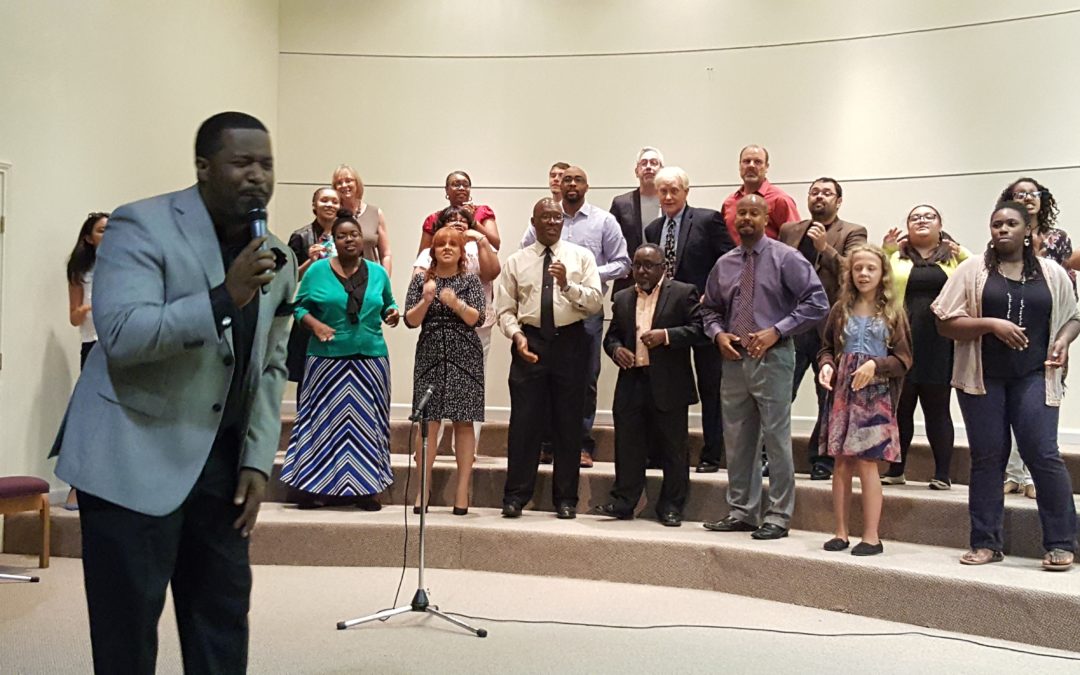
Many years ago, a then-young Doug Arthur addressed our sin as a movement (and often as individual disciples) in not caring for the poor and needy much more than we were. Our sin was in the broad sense, a two-fold sin. One was that of indifference to the physical plight of millions of our fellow humans on this planet. It wasn’t like the Bible was unclear in its directions to serve the poor and needy. Who of us had not read the latter part of Matthew 25 many times and felt the weight of its plain teaching? Indifference is always a sin, because it is in the end a lack of love.
Our other sin was one of biblical ignorance in just failing to grasp the theological and practical implications that we were missing in our presentation of the gospel of Christ. Helping the sick, the hungry, and the downtrodden was central to the ministry of Jesus on earth. He taught and preached, true enough, but his ministry triad included love for the poor and needy. Matthew 4:23 puts it this way: “Jesus went throughout Galilee, teaching in their synagogues, proclaiming the good news of the kingdom, and healing every disease and sickness among the people.” Matthew 9:35 uses almost the same terminology in describing this gospel triad. We have thankfully come a long way since our eyes were opened those years ago. HOPE Worldwide has been a great tool to help us in that process, both locally and globally.
The Current Challenge – and Opportunity
Today, we as a movement have a similar two-pronged sin crying for attention and repentance, also involving a sin of indifference and one of ignorance. In this case, our eyes have not been suddenly opened as they were in the former case with the poor. Our eyes need opening, but the nature of the sin and the way in which it is embedded in our very culture in this country means that this sin is not easy to see and even harder to want to see.
Of course, I am addressing what I believe to be one of the biggest issues facing the American society and one of the biggest issues facing our movement of churches called the ICOC – true harmony in the realm of racial diversity. This issue needs to be addressed as directly and honestly as were our failures in helping the poor. Then we were at a very important juncture when God moved to define our movement differently than we had defined it. He intends to do exactly the same now in yet another area, and we must listen to him.
As to our sins as a movement in this current area, the biggest sin is simply not caring enough to get involved in the race-related burdens that our brothers and sisters of color are carrying at this very moment. Indifference is still a sin. If you are white, you likely do not understand just what is boiling beneath the surface of our outwardly diverse spiritual family – and I include myself in that number. I have been dedicating myself to trying to understand and to helping my white brothers and sisters understand – for the past year and a half. Of course, I am also dedicated to encouraging our members of color to respond spiritually to unfair and hurtful prejudicial treatment. On a personal level, I understand far more than when God launched me on this mission, but the scary part is that increasing my knowledge has served to show me how much I have yet to learn. That learning process cannot take place without a serious commitment to both raising our awareness and increasing our actions.
Somehow Saul of Tarsus became Paul the apostle to the Gentiles. No other apostle would have had as far to go in developing an understanding of the Gentile world as did Paul. But because he understood by revelation the centrality of the Jew/Gentile blending into one family as the means to carrying out the mission of Christ, he dedicated his total life to becoming all things to all men. Jewish blood may have coursed his veins, but kingdom blood was somehow transfused into those same veins so that nothing of his former culture was allowed to interfere with his mission to make Christ known in the way that Christ wanted to be made known; in the way that Christ had to become known if the Great Commission were to carry the day.
A Missing Piece
We have been planting churches all over the world for many years now, a wonderful thing. We have taken the Great Commission seriously in some ways, but we have not necessarily understood one fundamental part of it. Going into all nations to convert their citizens is vital, but many nations like America have a citizenship that is a broad blend of races and ethnicities. We are not carrying out Jesus’ marching orders if we fail to purposefully reach out to all nationalities and cultures within a given nation, and that speaks to those of us in the United States in a special way. From the beginning of this country, we have prided ourselves in being a “melting pot” of many cultures.
The mixing of races and cultures is not just a nice idea; it is central to the gospel message in an unbelievably important way theologically, as we shall see. In our movement, we started off with a diversity in the Crossroads church in Gainesville, Florida – even though that was not the case within the mainline Churches of Christ out of which this movement sprang. We have continued to have racially diverse congregations, perhaps more out of tradition than by design. We started with diversity, a blessing for which our gratitude goes to those earliest leaders, and have continued it because that’s rather natural. From the beginning of creation, the seed reproduces after its own kind. Thus, we could expect that our membership composition would follow that same principle.
That being said, we are still missing something, and that something is bigger than you might imagine. Let’s allow the inspired pen of the Apostle to the Gentiles speak to us – to show us why the word “centrality” is the only correct word choice when looking at racial diversity from God’s point of view, and its fundamental importance to the mission. Our failure to see (and act on) this theological centrality of the blending of cultures, ethnicities and races directly affects our effectiveness in carrying out of the Great Commission.
Demonstrations of the Divine
Just as Jesus was the flesh and blood demonstration of Deity (Colossians 2:9 – the fullness), we are the flesh and blood demonstration of Jesus (Ephesians 1:22-23 – his fullness). Through the spiritual body of Christ, he is revealed and thus God’s heart is revealed. Without this demonstration in the flesh of Jesus, God would not have been fully known and without the demonstration in the flesh (via the church), Jesus will not be fully known. God chose to reveal the gospel in writing, but also to reveal it in flesh and blood – Jesus first in a physical body and then in his spiritual body, the church. Thus, we continue in the revelation process of making God known – through the holy writ and in flesh, our flesh.
In the Gospel accounts, Jesus said several times that the world would come to believe in him based on demonstrations of these key qualities: unique love (John 13); unique unity (John 17); and, unique fruitfulness (John 16). I say unique, because the comparisons to Jesus when demonstrating these qualities take them to another level indeed. The latter would include the fruit of the Spirit as a part of the fruit of converting souls – bringing those of all nations and ethnicities into one family (Matthew 28).
The number of times that this principle of Jesus bringing all peoples into one family is mentioned in the Bible is impressive. The Great Commission was Jesus’ greatest directive given as he prepared to ascend back to the Father. It could be identified as the ultimate demonstration of God’s plan to promote love, unity and a world-changing effect. The importance of diversity is quite a huge one, considering how it ties in to some of the most fundamental aspects of the whole Christian religion. Do not our hearts thrill at words like these from the prophets?
Daniel 7:13-14 — “In my vision at night I looked, and there before me was one like a son of man, coming with the clouds of heaven. He approached the Ancient of Days and was led into his presence. 14 He was given authority, glory and sovereign power; all nations and peoples of every language worshiped him. His dominion is an everlasting dominion that will not pass away, and his kingdom is one that will never be destroyed.”
Isaiah 66:18 — “And I, because of what they have planned and done, am about to come and gather the people of all nations and languages, and they will come and see my glory.”
The Greatest Demonstration – True Diversity
The greatest demonstration in the first century was the ability to blend two cultures, Jew and Gentile, who absolutely hated one another. It doesn’t take a rocket scientist to make the application that the ability to totally blend (not just mix a bit on Sunday morning) black and white cultures is the greatest possible demonstration of Jesus in our day. Further, if working out the kinks between two groups of Jewish culture in Acts 6 produced a response of converting large numbers (even priests), just what could happen if our movement led the way in having true spiritual diversity? It is not being done in other church groups. Those with some diversity are actually losing it, based on recent reports. We have a tremendous opportunity in going far beyond the outward mix of our assemblies and making the principles of Ephesians 2, 3 and Colossians 1 an obvious mystery fully revealed for the world to see!
What is the biggest deterrent to love, unity and growth (spiritual and numerical)? Hate – Satan’s greatest tool to produce the kinds of horrific actions taking place in the world today and in world history. What is the greatest demonstration of love, unity and growth? Whatever defeats hate – the greatest kind of hate. Surely overcoming racism would be near or at the top of that list. So how did God choose to do that, thus setting up a demonstration that would have the potential to affect the world?
Easy answer: the Jew/Gentile form of racism and hatred. Hence, we are not surprised to read that the biggest threat to love and unity in the early church was how to get Jews and Gentiles into one family and to get them to understand, appreciate and love each other against all odds. God calls it his mystery to change the world. Thus we read:
Ephesians 2:14-22
14 For he himself is our peace, who has made the two groups one and has destroyed the barrier, the dividing wall of hostility, 15 by setting aside in his flesh the law with its commands and regulations. His purpose was to create in himself one new humanity out of the two, thus making peace, 16 and in one body to reconcile both of them to God through the cross, by which he put to death their hostility. 17 He came and preached peace to you who were far away and peace to those who were near. 18 For through him we both have access to the Father by one Spirit. 19 Consequently, you are no longer foreigners and strangers, but fellow citizens with God’s people and also members of his household, 20 built on the foundation of the apostles and prophets, with Christ Jesus himself as the chief cornerstone. 21 In him the whole building is joined together and rises to become a holy temple in the Lord. 22 And in him you too are being built together to become a dwelling in which God lives by his Spirit.
In the next chapter, Paul elaborates about this ultimate demonstration, calling it the mystery of Christ – once hidden but now revealed.
Ephesians 3:2-6
2 Surely you have heard about the administration of God’s grace that was given to me for you, 3 that is, the mystery made known to me by revelation, as I have already written briefly. 4 In reading this, then, you will be able to understand my insight into the mystery of Christ, 5 which was not made known to people in other generations as it has now been revealed by the Spirit to God’s holy apostles and prophets. 6 This mystery is that through the gospel the Gentiles are heirs together with Israel, members together of one body, and sharers together in the promise in Christ Jesus.
In Colossians 1, he states the same principle in a slightly different way. The word of God in its fullness was this defeat of hate and racism – comprising the very hope of glory.
Colossians 1:24-27
24 Now I rejoice in what I am suffering for you, and I fill up in my flesh what is still lacking in regard to Christ’s afflictions, for the sake of his body, which is the church. 25 I have become its servant by the commission God gave me to present to you the word of God in its fullness— 26 the mystery that has been kept hidden for ages and generations, but is now disclosed to the Lord’s people. 27 To them God has chosen to make known among the Gentiles the glorious riches of this mystery, which is Christ in you, the hope of glory.
Bottom line, the more our goals on earth reflect our vision of heaven, the greater our fellowship will be and the more effective our evangelistic efforts will be. The church of the living God is the ultimate demonstration of Jesus and the heart of God, but it has to have as a major goal what Scripture defines as the mystery of Christ. If we want God’s kingdom in heaven to look like Revelation describes it, then we must pull out all of the stops to insure that it looks like this in his kingdom on earth. God – open our eyes and hearts!
Revelation 7:9a
After this I looked, and there before me was a great multitude that no one could count, from every nation, tribe, people and language, standing before the throne and before the Lamb.
It is a fact that the Bible does not forbid any and all slavery, but rather regulated it among God’s followers in both Old Testament and New Testament settings. That fact is especially difficult to accept for those who have even a reasonably good understanding of how slavery was practiced in the United States for centuries. It was, with relatively few exceptions, applied in the harshest and most damaging ways imaginable. Further, the Bible was used to justify the institution, no matter how harsh these practices were. Just how are we moderns to view all of this?
Giving Credit Where Credit is Due
I recently saw a short piece that Michael Burns wrote about this subject, and thought it contained some very valuable insights. That wasn’t surprising to me, since in my estimation he wrote the best book on racial issues from a biblical perspective that has ever been written (Crossing the Line: Culture, Race and the Kingdom) Since I started my blog, I have known that I needed to address the issue of slavery and the Bible. Thus, when I read the brief piece that Michael had written, I asked for and received his permission to use it within my article. The following article is a mixture of his material and mine, and as one of my trusted advisors, he has read this whole article, given me input on it and approved it. I will soon post an additional article (or articles) that addresses more issues related to slavery, at least one of which will address how biblical principles should affect our view of key figures in American History who owned slaves.
Biblical Interpretation
There is an important precedent in modern biblical interpretation and application that is very helpful in guiding us toward a goal of consistency in how we read, interpret, and apply biblical guidance. If we focus in on the 17th, 18th, and 19th centuries, we will find a consistent belief across much of Christendom that viewed slavery, and specifically, Trans-Atlantic slavery, as justifiable and defendable by proper biblical interpretation.
This misuse and abuse of scriptures not only did unimaginable damage in furthering the cause of slavery in the United States; it has done further damage through a more modern reaction to it. This reaction occurs when those reading what the Bible says about slavery do not understand the bigger picture we are about to paint. They look at these passages as though they approve of slavery rather than only condoning it temporarily due to the cultural settings in which it existed. To avoid erroneous interpretations, we must understand that God has an ideal will and also an allowed will, the latter being designed to give way to the former as time and circumstances change through Divine providence.
God’s Word is aimed primarily at those who have, or develop, a willingness to listen to it. Hence, God is addressing in the sacred writ what his followers should do, and only by implication what all others should do. In other words, to command an end to slavery in settings where the true God was not accepted as the ultimate authority would have been fruitless. The same principle applies today. Unbelievers are simply not affected much at all by what the Bible says, whether we are discussing sexual morality, materialism or any other subject. Since God gave humans freedom of choice, we can choose to reject him and all that he says, and the fact is that most people always have done exactly that. Even in addressing those who claimed to follow God, Jesus made it abundantly clear that most of them were ultimately going to reject his will for their lives and be lost (Matthew 7:13-14).
For those reasons, Jesus never tried to dictate what the broader society in which he ministered should do or not do. He taught those who were willing to listen what they should do, and as they accepted one at a time, greater segments of society became affected. By the time the United States was founded, most of those early settlers accepted the Judeo-Christian principles of morality, although through greed, the principles that should have eliminated slavery were rationalized for a long, sad time. God’s toleration of slavery in ancient cultures was used to justify what should have long before ceased to exist among those who claimed to be followers of Christ. The Golden Rule alone should have sounded the death knell for this sordid practice, especially as it was practiced in this country.
Regulation, Not Simply Prohibition
While God did not forbid slavery among his people in either OT or NT settings, he did most certainly regulate it. How other peoples may have treated slaves is a matter of history, and a great deal of absolutes in that historical information is not readily available. We would have to assume that the majority of slaves were in fact mistreated, but how that mistreatment compared to that found in American slavery is mostly a matter of conjecture. Given the fact that slavery in the US was inseparably connected with financial greed, it could hardly have been better than slavery in any other historical setting and was likely worse.
In that regard, I have seen some writings in which slavery in the first century was made to sound almost positive. Slaves were said to be much like employees and even treated like members of the family. Certainly some may have been thus treated, but to claim that most were treated kindly portrays an ignorance of both human nature and biblical history. When you read the Old Testament carefully, you see some of the cruelest treatment of fellow humans anywhere to be found – in various contexts, including within Israel. In the New Testament, Paul describes non-Christian (pre-Christian specifically) relationships as “being hated and hating one another” (Titus 3:3).
He further described the Gentile (non-Jewish) world of his day in quite an in-depth manner, beginning in verse 18 of Romans 1. After mentioning sexual sins quite graphically (we would do well to study carefully what he says there), he gives a list of what life was like in the Roman Empire. “They have become filled with every kind of wickedness, evil, greed and depravity. They are full of envy, murder, strife, deceit and malice. They are gossips, 30 slanderers, God-haters, insolent, arrogant and boastful; they invent ways of doing evil; they disobey their parents; 31 they have no understanding, no fidelity, no love, no mercy” (Romans 1:29-31). The Greek term translated “no love” in the NIV is literally “without family love.” Some versions translate it “without natural affection.”
If slaves really became like a part of the family, it was not a pretty sight anyway. That being said, in 1 Peter 2:18, both good and harsh slave masters are mentioned, so both were to be found. My point simply is this: it is not helpful to whitewash and sanitize first century slavery in order to make slavery in America look worse. Our slavery was absolutely horrific and that segment of history we know with certainty, in spite of the rare exceptions found with slave owners whose hearts had been affected more than others by biblical principles. As I said earlier, it could hardly have been better than slavery in any other historical setting and was in all probability far worse.
What is helpful, though, is to consider briefly what the Bible says about slavery, how that was interpreted and utilized in previous eras to justify slavery, and how the Bible is now interpreted to deny slavery as an acceptable position for the Christian. No disciple today would argue that the Bible condones slavery in the modern cultural context. It is the interpretive method of how we arrive at that conclusion that is important for us. Once we see how to correctly interpret the passages on slavery in a modern context, it would seem incumbent upon us to then consistently apply that same method of interpretation to all other biblical issues. After all, any method of biblical interpretation and application that is inconsistent is problematic on many levels.
Prior to the Civil War, the American Church was split on the issue of slavery in the Bible. Some argued that the Bible did not allow for the Christian to approve of such a blight against humanity. The majority, however, felt that there were four clear points in the Bible as it relates to slavery.
- Christian masters were instructed about how to treat slaves (Colossians 4:1; Ephesians 6:9; 1 Timothy 6:2).
- Christian slaves were instructed about how to respect their masters (Ephesians 6:5-6; Colossians 3:22; 1 Timothy 5:1; 6:1-2; Titus 2:9).
- Scripture dictated that slave and master be treated equally in access to salvation, but no other manner of equality is expressly dictated (1 Corinthians 7:21-23; 12:13; Galatians 3:28; Colossians 3:11).
- The Bible allowed slaveholders like Philemon to be church members. Thus, most churches argued that without express condemnation of slavery and slaveholding in the Bible, and because it was societally legal, the church could not rightly do anything stronger than give lip service to denouncements of slavery based on personal dislike of the institution.
What the interpreters of the time seem to have overlooked was the larger trajectory of God’s will and broader scriptural principles. They failed to consider the implications of Jesus as the full revelation of God’s will (Hebrews 1:3); a will that was only partially visible prior to Christ (Hebrews 1:1-2). They neglected the new world that was created by Jesus’ words to do unto others as they would have done to them (Matthew 7:12) or the Christ-like call to put the interests of others ahead of one’s own (Philippians 2:1-5).
Prohibition, Not Simply Regulation
They overlooked the trajectory towards which Paul was aiming, to call them past their cultural bindings when he declared that there was no distinction in Christ between slave or free (Galatians 3:28; Colossians 3:11), or what Paul was truly insinuating when he discipled Philemon to receive Onesimus as a brother (Philemon 16) and hinted that he should even free Onesimus if he understood fully what it meant to be in Christ (Philemon 21). These culturally-bound supporters of slavery even managed to all but ignore the consequences of 1 Timothy 1:10 when it lumped slave traders in with other forms of lawbreaking sin. As Paul shot the arrow of the gospel through the cultural morass of his day, those who would later read his words and wish to justify slavery focused on the arrow itself rather than the target that it was speeding towards.
The facts are the facts. There are verses that direct slaves and masters, seemingly supporting the whole concept of slavery if read at no more than face value. There are no verses that directly call for the end of slavery. Yet, when we follow the trajectory of where the gospel was leading the Christian community, it becomes clear that we cannot just read the Bible “literally” in this case. The gospel itself calls for a nuanced understanding of how Paul was carefully addressing his cultural situation and leading the disciples out of their cultural biases, while at the same time avoiding turning Christianity into a social movement bereft of the true power of the gospel to transform.
Modern interpretations of the slavery passages in the New Testament seem to have settled on four principles to direct our interpretation.
- The cultural situation of slavery was very different in the 1st century, so it is necessary for us to read biblical passages considering those differences.
- The New Testament never explicitly bans slavery and seemingly tacitly condones it in places, but those passages must be understood in light of the larger principles of the gospel.
- Paul was carefully but consistently moving the believing communities to understand the implications of where the Kingdom of God was taking them.
- Thus, clear directives in favor of slavery in the New Testament are no longer applicable if we read past the cultural conditions that Paul had to deal with, and correctly apply the larger principles of the New Covenant to our situation in which we find ourselves today.
God’s Legislation, Not Simply Government Legislation
As we have already said, these conclusions will be accepted by those who accept Christ as their authority. He cannot force others to accept any conclusions and he will never try. Christianity is an inside/out religion, and the heart must direct our attitudes and actions. This is precisely why I do not trust political change to ever fully satisfy us. In my opinion, expecting those in the world to accept what Christians know the Bible teaches is a disappointing road to follow. Unrealistic expectations can easily lead us to trust politics to have more power to effect change than the gospel of Christ. One is the quick-change approach aimed at legislation of one type or another, and the other is the long-term approach aimed at the heart. While politics may well change laws, it has never been very effective at changing hearts. Thus, the legal system may reduce overt racism, which is a step in the right direction, but it will never seriously affect hidden racist attitudes. Only the gospel of Christ can do that, and the more his people spread that message, the more heart-felt changes will occur in society.
Think of it this way: love and acceptance are near the top of our human needs list, making it impossible for outer changes in society to ultimately satisfy our basic emotional needs. We want to be loved and accepted, and this world is not going to love us. Could Jesus have made it any clearer than this? “If the world hates you, keep in mind that it hated me first. 19 If you belonged to the world, it would love you as its own. As it is, you do not belong to the world, but I have chosen you out of the world. That is why the world hates you” (John 15:18-19). We have already quoted Paul’s description of pre-Christian experiences as “being hated and hating one another” (Titus 3:3). Just be thankful that in Christ your spiritual family can love you. If we are waiting for those in the world to accept us, we will die waiting. Adjust your perspectives and your expectations, for therein lies contentment and peace. “I have told you these things, so that in me you may have peace. In this world you will have trouble. But take heart! I have overcome the world” (John 16:33).
Two Extremes to Avoid
To sum it up, two serious mistakes must be avoided. One is to soften the horrors of slavery in this country through appealing to passages in the Bible that were intended to only be temporarily in force. The second mistake is to look at those temporary regulations and view God in a very wrong way. This is my greatest concern in our current setting. Jesus once told his disciple Phillip this in John 14:9: “Anyone who has seen me has seen the Father.” It is impossible to study the heart of Jesus in the Gospel accounts and believe that his agenda was anything less than a full acceptance and practice of the Golden Rule. The second greatest command of loving your neighbor as yourself (Matthew 22:39) and to “in humility value others above yourselves, to count others better than yourself” (Philippians 2:3) needs no further explanation. What the unbelieving world may do is their choice; what followers of Jesus must do is clear. The arrow of ultimate truth as it relates to slavery may have flown somewhat aimlessly at times from man’s vantage point, but it finally landed in the middle of the bullseye of agape love, for “God is love” (1 John 4:16). Amen!

My last post on this blogsite was on the subject of slavery and the Bible. Interestingly, one of the members of our Diversity Committee in the ICOC churches is quite the expert on the subject. Richard Rodriguez, a brother in the South Florida Church of Christ, wrote both a thesis for his Master’s degree in History and a dissertation for his PhD on related aspects of American Slavery.
I asked him some time ago to write an article or series of articles about the main themes of his academic studies to use on one of my online sites. The end result was a seven-part series, which was too long for this blogsite, but fine for my teaching website (gordonferguson.org). I am posting this biographical sketch written by Richard as an introduction to Richard and to his longer material. After reading this, you will likely be interested in reading that longer material on my teaching website. Enjoy!
Biographical Sketch – Richard Rodriguez
I was baptized into Christ at the Crossroads Church of Christ of Gainesville in 1981. There I studied the Bible with Dan Davis out of Reese Neyland’s bible talk and counted the cost with Sam Laing. As God would have it, Sam also performed my marriage to my lovely wife Debonaire nine years later in Davie, Florida. We’ve been married for 26 years and have 4 children. I grew up spiritually in what is now called the South Florida Church of Christ.
I am African American and Puerto Rican. I grew up on in a Puerto Rican home and have throughout my life felt comfortable in several cultures, whether Latin, black or white. I did not grow up angry about being black or under the heavy glare of racism, though I knew it was there and was peripherally affected by it.
Captivated by US History
I did, however, study history in college and earned my B.A. in the subject. I was drawn to the Civil Rights Movement in my studies and that interest stayed with me after I finished school. In 2005, I found myself going through a spiritual dry season and felt the need to draw near to God. I decided to go through the book of Genesis to better understand the personality of God as displayed in that book. My love for God was renewed and I went through a personal spiritual revival of sorts. I decided to write a book on God entitled “Reintroducing God from Genesis: Can He be this Good?”
It was in Genesis 15 that I got the idea about God and slavery. In that chapter, God predicts to Abraham what would happen to his descendants in a foreign land, how they would be enslaved and mistreated for 400 years, and how God would punish the nation they served as slaves. It was there that I was struck with the parallels between the Israelites in Egypt and African Americans in the U.S. Africans first reached North America in 1619, almost 400 years ago. I began to wonder if God felt so strongly against chattel slavery that he would be willing to punish a nation over it, and whether that was a possibility in the U.S. in view of the parallels between Israelite slavery in Egypt and African American slavery in the U.S.
A Unique Study in Earning My Master’s Degree
As it would turn out, I had the opportunity as a teacher to enter graduate school to continue my education in U.S. History. It was there that I asked one of my professors if there is any evidence that anyone in U.S. history believed that God would punish this nation for slavery. Sure enough, she emphatically asserted that none other than Thomas Jefferson was “haunted” by the possibility that God would punish the United States for its system of slavery. It was then and there that I decided to do my 2010 master’s thesis on the subject: “The Spirit of 1776: Abolitionists and the Ideology of Divine Retribution for Slavery.”
In my research for my master’s degree, I found that starting in 1776 and continuing all the way to the Civil War in 1861 there were several abolitionists and public figures who believed that God’s wrath would come on the U.S. for its system of chattel slavery. Further, I discovered that ultimately Abraham Lincoln himself believed in 1865 that the Civil War was divine retribution for slavery. All the while, I was amazed at how professors I heard and books I read blamed Christianity for American slavery. They had a point. They cited the many proslavery apologists who used the Bible to justify American slavery. I felt, however, that such arguments did not agree with my understanding of God, Christ and Christianity, especially as my understanding of the real nature of American slavery became clearer to me through my research.
The Bible and American Slavery – My PhD
When the time came for my dissertation, I realized I needed to broaden my topic. It was at that point that I decided to track the biblical arguments of abolitionists against American slavery. Though the topic has hardly been addressed by U.S. history scholars, the primary source literature was so abundant that I had to cut my time period of study in half so that I could finish my dissertation. I originally planned to track the subject from 1776 to 1865 but decided to stop in 1837 and then add an epilogue that tracked antislavery doctrine during the Civil War years (1861-1865).
My research has shown that the Bible was the cornerstone of the abolitionist argument against American slavery and galvanized the American movement against slavery, a key part being the Women’s Movement against American slavery. In October 2017, I successfully defended my dissertation thesis, and graduated with a Ph.D. in U.S. History. My dissertation committee, which was made up of 4 university PhDs, most of whom are published scholars, believe my dissertation will be published for the academic community. One, a scholar in the field of Religious Studies, told me “I have become your student on this topic.” I have been hired by Florida International University to teach a course on American slavery and the Bible this year.
My Church and Its Growing Diversity
Getting back to the church, when I first visited Crossroads in 1981, I remember seeing a white and black man hug. I knew right then that this church was special. A year after my conversion, I returned to South Florida and placed membership with the then Plantation Church of Christ in Broward county in 1982. When I placed membership, I noticed that out of a congregation of roughly 100 members, there were only 6 blacks. I felt that needed to change and so I devoted myself to reaching out to blacks to build diversity in the church. I felt we were a Bible church, but we just needed to work on our diversity.
Since that time God has done amazing things. We are now the South Florida Church of Christ and one of the most diverse congregations in the ICOC. I certainly don’t claim any credit for that, but I share only to say that I love the church and want to see it grow spiritually, numerically and in its diversity. In the time I’ve been in the church, I have built great relationships with white, black, Latino and Asian brothers and sisters. When I begin to share about many of my brothers and sisters from all racial groups and what they mean to me, I get choked up. I love them deeply.
It’s All About Honoring God
Most importantly, I love God. My readings in the book of Genesis and the rest of the Bible prepared me for my research. I am convinced that the notion of American slavery being approved by God, who is Love, is a direct smear on his character based on revealed scripture. The more I studied American slavery, especially in the light of scripture, the more I understood that the enemy, who is known as the father of lies, has deceived many to believe this most heinous falsehood that is spread across the universities and colleges of the land. Unfortunately, many Christians have believed this slanderous accusation against God. The very idea should make us shudder. God’s honor is at stake. This is ultimately why I have spent the untold hours researching, reading, and writing. I believe that my labor will not be in vain. As Jesus himself said, ironically while addressing the issue of spiritual slavery, “You will know the truth, and the truth will set you free.” (John 8:32)
I believe it is on this last point, defending God’s honor, that we have an opportunity to stand out as a movement. We are after all, his children and ambassadors who hold out his Word in a dark, racially divided and deceived world. I look forward to once again contribute to the growth of our family of churches by sharing my research to the glory of God.

James 3:13-18
Who is wise and understanding among you? Let them show it by their good life, by deeds done in the humility that comes from wisdom. 14 But if you harbor bitter envy and selfish ambition in your hearts, do not boast about it or deny the truth. 15 Such “wisdom” does not come down from heaven but is earthly, unspiritual, demonic. 16 For where you have envy and selfish ambition, there you find disorder and every evil practice. 17 But the wisdom that comes from heaven is first of all pure; then peace-loving, considerate, submissive, full of mercy and good fruit, impartial and sincere. 18 Peacemakers who sow in peace reap a harvest of righteousness.
In my recent blog post, “Slavery and the Bible,” I had a few things to say about the inability of political solutions to effectively deal with the problems of society that are rooted in sin, and that includes the sin of racism. My reasoning was that while politics may well produce legislation, it cannot produce love (often quite the contrary). Hate cannot be outlawed, although acts of hate can. Nor can love be demanded by law. Further, since our most basic human emotional needs are all about love, respect and acceptance, politics will always come up short in providing what the human soul most desires.
In spite of that truism (a very obvious one, it seems to me), what I read on Facebook demonstrates that many people who identify as Christians are still very involved in politics and have very strong feelings about their involvement. The more I read, the more convinced I am that we are looking for answers in the wrong places (just like human nature looks for love in all the wrong places, as the lyrics of an old song put it).
More of Michael Burns
In that recent article, I used some material written by Michael Burns, adopted and adapted from an email. As I prepared for a trip to the East Coast to teach about racial issues, I spent much time re-reading his book, “Crossing the Line: Culture, Race and Kingdom.” To be honest, my human nature would like to legislate the reading of this book by all disciples of all colors! Of course, that urge is not realistic and not particularly spiritual either. I think it does illustrate the fact that our very strong feelings to make something happen often go in the wrong direction and are not very effective in bringing about the desired results at the heart level.
As I finished reading chapter 4 of Michael’s amazing book, a chapter entitled, “Dual Wisdom.” I highlighted much of it and will include some of it in this article (with Michael’s permission). This one chapter would be worth the price of the book. I think our brother’s conclusions are (or should be) virtually incontrovertible and unassailable. Read his quotes and see if you can disagree. I can’t. Before and after reading his material, please take the time to read the James 1 passage above with which my post is introduced.
The War on Poverty
In 1964, the President of the United States, Lyndon B. Johnson, declared a war on poverty… Since Johnson’s plan was rolled out, America has spent $22 trillion on the war on poverty. When adjusted for inflation, economists argue that this is more money than the United States has spent on the combined cost of all its military conflicts and wars since the American Revolution… Virtually the same number of Americans are listed as poor today as in 1964. (pages 67-68)
The War on Drugs
In 1971, President Richard Nixon declared a war on drugs. Since that time, the United Nations decided to join in and declare a worldwide offensive against drug proliferation… Drugs are actually cheaper now than twenty years ago and are of higher quality. Drug activity, drug cartels, and drug usage are all bigger problems now than they were when the war on drugs began. It seemed like the answer, but it has proven to be another dismal failure. (page 68)
The Eradication of Violence
No country, society, or government in the world has been able to eradicate violence among their people. It just has never happened. Some societies are more violent than others or have higher crime rates; some have done a better job than others in curbing crime and violence; but the world simply does not have the answer. According the United Nations, nearly 500,000 people are victims of violent homicide each year, and that does not include deaths caused by wars between nations. (page 68)
Worldly Governments Cannot Solve the Sin Problem
It almost doesn’t matter what major societal problem we look at, the kingdoms and systems of the world do not seem to have an answer, whether it is poverty, substance abuse, violence, or any other large issue. This is especially true when it comes to the problem of division among humans. Look into any epoch of history and any corner of the globe, and you will find no answers to the division caused by sin. (page 69)
One political party gains power and puts their solutions into place that may have some effect on the problems they are focusing on, but they create a new set of problems. Then the other party comes into power and they go after fixing what the previous group did, but create a whole new series of failings. It’s a never-ending cycle. (page 70)
One of the main complications of earthly wisdom, however, is that it comes in many shapes and sizes because it comes from more sources than we could count. Thus, one person accepts one source of worldly wisdom and becomes convinced that all others are wrong, stupid, ignorant, and misinformed, while at the same time, someone else embraces a different source and becomes equally convinced that the problem is the other people and their ignorant beliefs. Because there are many sources of worldly wisdom, by its very nature it divides humanity. (page 72)
The Bottom Line Conclusion
Here is the conclusion of the matter: When worldly wisdom is applied, it very often produces conflict somewhere else or creates new problems. When God’s wisdom is applied, it may come into conflict with the evil of earthly wisdom, but if followed, it will produce peace and righteousness. Here is what this means for us when it comes to topics like culture and race: We are the people of God. We cannot be swayed by worldly wisdom. We cannot become so convinced of one ideology or political mindset that we can no longer distinguish between earthly and heavenly wisdom. (page 74)
Quite frankly, when it comes to the big problems in life, I am uninterested in political solutions, community activism, and the like. If the solutions don’t emanate from God’s rule and his kingdom, they are doomed to failure. I wholeheartedly believe that. My hope is that you do too. (page 74)
I Agree, I Agree!
Well, Michael, I certainly wholeheartedly believe what you wrote. Man’s wisdom has failed for centuries and will always be doomed to failure on the issues that matter most. (I will mention here that chapter 6 of Michael’s book, “The Beautiful Revolution,” lays the deeper spiritual foundation for what is said in this article. It is a vital read, if you want to truly grasp what the Kingdom of God really should look like in our day.) God’s wisdom and man’s wisdom are diametrically opposed as are the results produced by each. However, the real answers for which we search are not hidden. They are found in the imitation of Christ – his attitudes, his heart, his outward focus, and his eternal perspective. You can have a life of peace and joy by seeing life as he saw it and living it as he lived it. Nothing else will work.
It Is a Question of Love
Within the spiritual body of Christ, the ultimate consideration is love for one another and the willingness to sacrifice for one another. Jesus is clearly the model for us to follow in this vital endeavor. In Romans 14 and in 1 Corinthians 8-10, Paul applied the principles of love and sacrifice to very sensitive issues within those two congregations. Their issues were not our issues, but they were huge issues in the first century churches. The same principles apply to our huge issues today, and it is imperative that we study and understand these principles and their application. Michael’s fabulous biblical explanations and applications in chapter 12 of his book, entitled “For the Glory of God: Sacrifice” can help you greatly. Here are some of his astute observations from that chapter.
While admitting that we have certain rights, Paul argued that these rights must not have the final say in how we treat one another. Love had to trump personal rights – then and now. Here are some quotes from Michael’s very excellent exegetical work in these passages.
Paul gets directly to the point as he says, “Be careful, however, that the exercise of your rights does not become a stumbling block to the weak” (8:9). The family of God and loving others are far more important than the rights that we suppose we have. Allegiance must be to Jesus, not our opinions or preferences. The main thing was that they needed to build each other up in serving Christ. Cultural, ethnic, and political issues must always take a back seat to that. (page 191)
There is inherent responsibility involved in this, of course. One brother must be sensitive and aware of what could truly be damaging to others. But the others must not abuse that and claim injury on every little thing that they don’t like or prefer… In contemporary society, we believe that we have the right to be heard, to speak our mind, to espouse our political beliefs, to see the world how we want to see it, and to declare what we think is true. Do we have those rights as Christians? I suppose. But what if our beliefs genuinely hurt other brothers and sisters? (pages 191-192)
What if I am a Democrat and I discover that some brothers and sisters are genuinely hurt by this. They do not see how I can be a Democrat and support some of the things that Democratic politicians espouse. It becomes a stumbling block to them to the point that they consider leaving the church or are holding private grudges against me in their hearts. Or, what if I am a Republican and I discover that some brothers and sisters struggle with all those same things regarding my beliefs and actions?
Would I be willing to lay that down? Would I be willing, like Paul, to say, I’ll never have another political thought in my life if it is going to hurt a brother or sister or impede someone from coming to the gospel? But wait, you might, say. We have a right to have political opinions and engage in politics. No doubt. And the Corinthians had a right to eat meat if they were hungry. Should they be more loyal to the gospel or to their stomach? Should we be more loyal to the gospel or to our opinions and ideologies? Are we willing to approach our rights with the same sacrificial heart that Paul had toward his? (page 192)
Why Am I Apolitical?
Michael’s line of reasoning from the biblical principles in these four chapters of the Bible explain pretty well why I describe myself as apolitical. I do not vote any longer, although I once did. My wife exercises her right to vote and I exercise my right not to vote. Neither of us is going to get involved in discussions regarding political party issues or political figures, because such discussions are based on personal opinions and not absolute facts, and they thus often produce disunity. Further, I refuse to cut the following passages out of my Bible and as a disciple of Jesus, and I will not dismiss them via rationalization. I see many who identify as Christians on Facebook going in quite the opposite direction.
1 Timothy 2:1-3
I urge, then, first of all, that petitions, prayers, intercession and thanksgiving be made for all people – 2 for kings and all those in authority, that we may live peaceful and quiet lives in all godliness and holiness. 3 This is good, and pleases God our Savior.
Titus 3:1-2
Remind the people to be subject to rulers and authorities, to be obedient, to be ready to do whatever is good, 2 to slander no one, to be peaceable and considerate, and always to be gentle toward everyone.
Some have been disturbed by my apolitical position. They often argue that the right to vote is my right as an American citizen and that I should exercise that right. But as an American citizen, I also have the right to abstain from voting. Most of those who are disturbed by my choice of not voting assume that the political issues are so clear that any spiritual person with a reasonable amount of intelligence would vote as they do. If they thought that I would vote for a party other than theirs, probably 95% of them would be happy that I didn’t vote! Perhaps the other 5% would see the need to vote only as a matter of principle, a right to be exercised regardless of the party for which I would choose to vote.
This is Very Serious Business!
I have been told by more than one source that some have left our movement of churches because of the adamant political stances some members in our churches have expressed on Facebook. I don’t doubt it. For example, if I were to simply mention that I was aligned with one political party or the other, it would affect the respect many of my readers would have for me and what I write, and cause some to quit reading anything I wrote. That is how strongly too many among us feel about politics. You will put up with me when I claim to be a New England Patriots football fan, although you may be a “hater.” But many of you would not put up with me if I said I was a strong supporter of either the Democratic Party of the Republican Party.
Some of us are more American than Christian, to put it bluntly. Some of us are more political than Christian, to continue being both blunt and honest. What those I’m describing desperately need is to examine Romans 14 and 1 Corinthians 8-10 and apply those principles to areas like nationalism and politics.
I’ve already written a blog post comparing systemic nationalism to systemic racism. And right here and now, I am identifying a third systemic sin – that of systemic politicalism. Are you willing to examine your own heart and attitudes in this realm, or will you just dismiss the issue through emotionally based rationalism in the same way that others dismiss the existence of those other two systemic ills?
The Jesus Answer
We live in two worlds at once, but disciples of Jesus, while in the physical world with all of its elements, we cannot be of that world (John 17:16). We sing the stanza of an old hymn, which goes: “This world is not my home, I’m just a-passing through; my treasures are laid up somewhere beyond the blue.” Is that true of you – really? Only you and God know the answer to that, and maybe only God at this point. Are we willing to learn about the nature of all systemic types of sins? If we are focused on Jesus, the example that he set and the life that he offers us, the answer will be yes.
Don’t you think it’s about time for us to put this passage fully into practice?
Colossians 3:1-4
Since, then, you have been raised with Christ, set your hearts on things above, where Christ is, seated at the right hand of God. 2 Set your minds on things above, not on earthly things. 3 For you died, and your life is now hidden with Christ in God. 4 When Christ, who is your life, appears, then you also will appear with him in glory.
The Jesus Test
How can we know that our hearts are set on things above and not on earthly things? How can we know if our involvement in the things of this world have become too important and are interfering with our true priority? Many things of the world are overtly wrong; others become wrong because they capture too much of our hearts and attention. On that latter list could be things like career, education, entertainment, money, questionable relationships, accomplishments, recognition, and in our focus in this article, politics. Here is the acid test. Does your involvement in these potential priority problem areas leave you feeling and living in accordance with the following passages? If not, it is time to quit rationalizing and start repenting!
Galatians 5:22-25
But the fruit of the Spirit is love, joy, peace, forbearance, kindness, goodness, faithfulness, 23 gentleness and self-control. Against such things there is no law. 24 Those who belong to Christ Jesus have crucified the flesh with its passions and desires. 25 Since we live by the Spirit, let us keep in step with the Spirit.
1 Corinthians 13:4-8
Love is patient, love is kind. It does not envy, it does not boast, it is not proud. 5 It does not dishonor others, it is not self-seeking, it is not easily angered, it keeps no record of wrongs. 6 Love does not delight in evil but rejoices with the truth. 7 It always protects, always trusts, always hopes, always perseveres. 8 Love never fails.
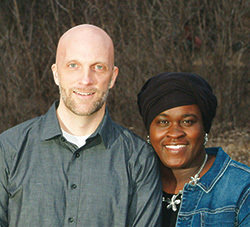
If you have been keeping up with this blogsite at all, you know that Michael Burns has become one of my heroes. I have repeatedly urged everyone who claims to be a Christian to read his amazing book, “Crossing the Line: Culture, Race and Kingdom” – published by Illumination Publishers (ipibooks.com). I have posted at least one of his articles on my blogsite, plus quoted from him fairly extensively in several of my own blog articles.
Today, I have posted another of his articles, one entitled, “Conversations That Can Unite or Divide Us” (Blog 37). The title encapsulates the focus of the article. His grasp of all aspects of racial issues is astute and his ability to exegete Scriptures is to me quite captivating. Michael is a full-time Bible teacher on the staff of the Minneapolis-St. Paul Church of Christ. He is a graduate of Wesley Seminary of Indiana Wesleyan University (MA). In my opinion, he is one of the finest teachers among us.
He taught high school history in the central city of Milwaukee for nearly ten years. He is a national and international biblical teacher at churches and workshops. He is the founder and director of the Ministry Development and Training Academies centered in Minneapolis, Minnesota, and serves as an instructor in the Ministry Training Academies in Africa. He is the author of the C.O.R.E. series of books, which he uses in his training. There are seven volumes in this series, each of which numbers around 200 pages in length. Not too many people are aware of this wealth of material, so I’ll give you the titles of each of the books (also available from IPI).
- The Word of God
- The Life of Christ
- The People of the Coming Age
- Life as God’s Family
- A Life of Worship
- The Kingdom of God
- The King’s Church
He married his wife, MyCresha, in 1997. They have two sons and reside in Roseville, Minnesota. They have done over 40 “Crossing the Line” workshops and teaching days on race and culture on multiple continents. As mentioned above, he takes annual teaching trips to Africa to strengthen and educate the churches across the continent and helps direct and teach in the African Ministry Training Academies in Lagos, Nairobi, Abidjan, and Johannesburg.
Although Michael has not been as well-known as some teachers in our movement of churches, those days are quickly drawing to an end – as well they should. What he brings to the table is broad in subject matter and quite impressive in insightful depth. Plus, he is remarkably humble – a combination that makes him unique and a kingdom treasure. Now just read the following article that he authored! Thank you!
