Stories are incredibly important. Every person and group has a story. Stories help to shape and craft our identities even when we don’t realize it. The grand stories that shape our self-understanding and the way we view and interact with the world are often called meta-narratives. When it comes to groups and societies, these meta-narratives are passed down from generation to generation. The impact of embracing these meta-narratives can be felt by future generations even if they have lost all or part of the meta-narrative itself.
The Grand Story and Identity of God’s People
One example of an identity forming meta-narrative comes from the biblical text. Each generation of Israelite children heard and read the incredible story of the Passover. They thrilled as their parents and grandparents recounted the events that led their ancestors to the revelation that they were God’s special people. They marveled at all that God had done as he led them out from under the enslaving hand of Pharaoh. And this set their self-identity in stone. They were God’s people and would never again be slaves to anyone, regardless of circumstances that might seem to temporarily point to a different conclusion.
In John 8:32 Jesus challenges the identity created by the Passover meta-narrative. He implies that the children of Abraham need to be set free which elicits a series of protests and emotional responses. That response was, “We are Abraham’s descendants and have never been slaves of anyone” (John 8:33). Any other group of people would likely not have taken such offense at the implication of being enslaved, especially when Jesus explains that he is speaking of the universal slavery to sin (John 8:34). But meta-narratives and their ensuing identities are powerful. These identities become deeply held and we cherish them without typically fully realizing how important they are. The Passover meta-narrative had cemented in the nation of Israel’s mind that they were God’s children. No matter what tough temporary circumstances they might face, like the occupation of their homeland by the Roman Empire, they were still God’s family and would never be slaves. Jesus challenged both of those dearly held foundational identifiers. The pushback and vitriol were palpable.
Conflict is Unavoidable
Whenever two people are involved relationally to any significant degree, conflict is virtually inevitable. In this context, conflict is simply the incompatibility between two or more perspectives. Conflict itself is not necessarily sinful. You can have conflict without overt sin. Conflict will happen. The difference is in how we handle that conflict. The danger, of course, is that most human conflict does lead to sin.
In fact, it will happen often in a family of churches like ours. The more diverse a group is socially, historically, and culturally, the more opportunities there will be for conflict. We will have different perspectives, experiences, cultural expectations, history, preferences, and so on. This will be a constant challenge to our unity, especially when difficult subjects such as race and culture are being discussed.
Yes, conflict will happen. But when that conflict involves pushing up against one or more meta-narratives, that conflict can get passionate, and negatively so, rather quickly. That’s when conversations and even relationships can start to break down.
Healthy Families Talk
By way of example, let’s say that a Bible talk group sits down to discuss an incident that has been in the news involving a white police officer and a young man of color, resulting in the tragic death of the young man. As the group begins their conversation, conflict quickly erupts. Some in the group identify with the police officers and are prone to trust them and take their side without much in the way of questions. Others may or may not realize it, but somewhere deep down, they don’t trust police forces inherently. Even though we have a room full of disciples of Jesus Christ, tensions rise and before you know it there is a heated debate. Within twenty minutes, factions have formed, divisions have arisen, and hard feelings have developed. What’s even more pronounced and problematic is that these divisions are often (though not always) along racial or ethnic lines.
In situations like this, what often happens is that an awkward fear develops in one or both groups and they determine that the best solution is simply never to talk about these matters again within the body. This is deeply problematic. Healthy families talk. In fact, healthy families can talk about virtually anything. The degree to which there are off-limits or taboo subjects is the degree to which a dysfunction is bound to develop in that family.
Going Below the Surface
Here’s the real problem. In many situations, the different meta-narratives that we have lead to sharp disagreements. But we tend to not recognize that it is these underlying identity-forming stories that have led to our very different perspectives and resulted in severe conflict. Because of that, we stay at the level of the surface conflict and never get to the roots of it.
Let’s go back to the Bible talk group and see how this plays out. Some probably grew up in a middle class, predominantly white environment like mine where the police force was always presented as a positive thing. Every year we would have “Officer Friendly” come to our school and spend time connecting with the students. We looked forward to seeing police officers in town because they would hand out baseball cards to the kids. We were always told that they were the good guys; they would save us and help us if we ever needed it. This is why so many defend and support police officers before they may even know the specifics of a case. They just trust them naturally. That was my meta-narrative and many of you may identify with that. It formed a specific aspect of my worldview and identity in relation to those that are given the responsibility “to protect and serve.”
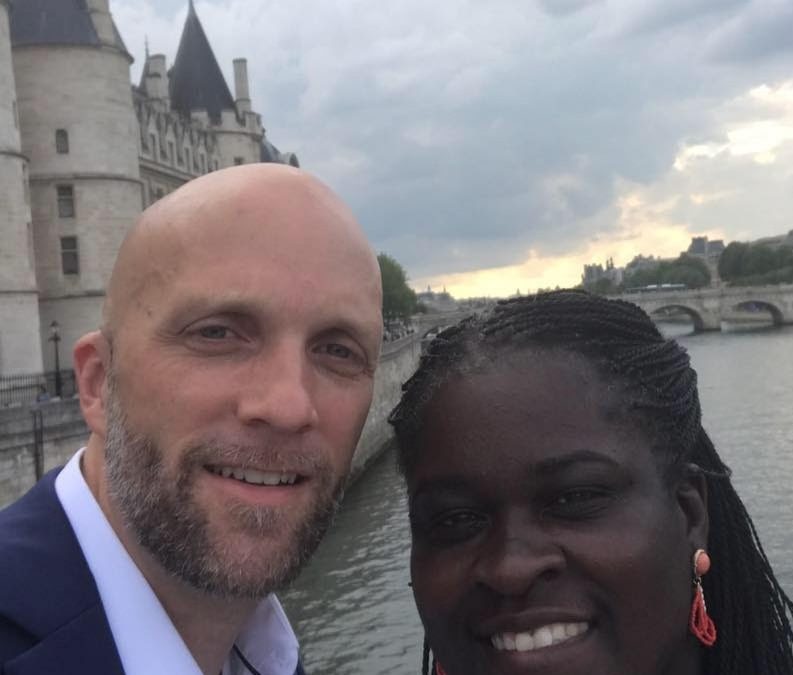
My wife is African-American and grew up with a very different community meta-narrative. The roots of many police forces, especially in the deep South where her family migrated North from, were as slave patrols. After slavery, those forces morphed into police forces, but they often had the objective of keeping black community members “in their place.” The lines of justice were frequently blurred and they often intimidated, brutalized, and terrorized the black communities. So, the meta-narrative formed that policemen were not a group that could be automatically trusted. They were to be rightly feared and meta-narratives like this are powerful and do not easily go away. They are passed down as wisdom from generation to generation. Even if a group is removed from the original context, the story and worldview often remain in place. And events that might seem like unfortunate, isolated incidents to those from one meta-narrative, serve as powerful reinforcements of the negative image for those from a different meta-narrative.
It can be incredibly destructive if we are unable to get down to that level of understanding one another in our church life. When we stay at the surface level of conflict, we simply argue. We waste our breath trying to convince one another but will very rarely be able to succeed. It is like two people staring at a white wall, one with rose-colored glasses on and the other with blue glasses on, who insist on arguing about what the color of the wall is. They will never get anywhere if they focus on the wall and fail to recognize that they have on different-colored glasses.
That’s how it is with these meta-narratives. We must go beyond the conflicts and seek to understand each other. Ask deep questions. Try to comprehend not just what a person believes or what they perceive, but why. They may not even fully grasp their own meta-narrative at first. There are many members in my wife’s family that were raised with an inherent mistrust of authority figures like the police but have little idea of why or where that fear comes from.
This is not taking sides on an issue or any specific incident involving police. If you’re focused on that, you’ve missed the point of this article. That was simply a relevant illustration to help us understand the powerful forces at work that can weave conflict into our relationships. The next time you find yourself in conflict with a brother or sister over a serious matter of this nature, don’t stay at the surface level of the conflict. Go deeper. Ask questions. Hear one another. Find out what some of their identity forming meta-narratives are (and we all have many). We may not ever fully agree on everything, but we can at least start to understand the different perspectives that others may hold, and we may learn a lot more about ourselves. When we understand one another’s meta-narratives, their perspectives start to make a lot more sense and we often feel empathy and a desire to reconcile rather than pull away or continue the conflict.
Practical Steps Forward
Here are some practical steps to help us begin to discover and navigate the waters of the meta-narratives of others. First, I have a big warning though. Don’t attempt to do this with others until you have examined your own meta-narratives and presumptions. Only then can you have a reasonable chance of understanding and empathizing with others.
- When a conflict occurs, don’t focus on the “what,” become curious about the “why”.
- Ask as many questions as you can to respectfully pull out someone’s background and story, where they might be coming from and why they see the world the way they do. Some sample questions from the above example involving responses to the police might be:
- Do you think you tend to automatically give the benefit of the doubt to police or official government versions? Why do you think that is?
- Do you think you tend to automatically mistrust police and people in authority? Why do you think that is?
- What has been the past experience of you or previous generations in your family with police officers in the past?
- Do you think you have had any pre-conceived notions or beliefs about those in power or the underdogs in society that might influence your thinking?
- Everyone’s worldview makes sense to them given their meta-narratives, so seek to understand as much as you can about a person’s views from the perspective of their meta-narratives rather than your own.
- Listen to other’s story without comment, objection, or rebuttal. You are trying to learn and understand not teach and educate at this moment.
- Try to avoid the “whats” in a conflict until you have a really solid grasp of the other person’s “whys.”
- Together you can examine, not the meta-narratives themselves, but the identities and presumptions that have resulted from them. Are they in sync with a kingdom worldview, a godly perspective of others and a biblical response?
- Together, do either of you see that perhaps some of your identities formed by your meta-narratives need to change in light of the gospel? How do you go about that?
- You may have to agree to disagree at times, but at least you now hopefully can better understand the perspective of your brother or sister and respect and understand their views rather than thinking that they are just “out of their mind”.
Deep Waters
Proverbs 20:5 says that “The purposes of a person’s heart are deep waters, but one who has insight draws them out.” Our meta-narratives are certainly deep waters and when we take the time to learn our own and draw out those of others, we move one step closer to the kind of unity in Christ that God desires for his people. A willingness to examine your own meta-narratives and identities and those of others, won’t solve every problem but it is a very healthy step in the right direction.

As noted in my recent post on Facebook and in the introduction to my new article regarding male and female role relationships in the church, the article grew out of a midweek outline for a lesson I taught. One sister who heard the lesson, Demerris Johnson, wrote me an email the next day that made my day! She has since read the much longer article now on my teaching website. Her heart-felt comments produced some special heart-felt emotions in me. She wrote about the racism and sexism she has experienced, of both overt and systemic types. More impressive was her description of how she has handled it all while fighting to maintain spirituality. She is an excellent writer and the contents of what she has written deserve a broader audience. I am posting it as an article on this site and also as a follow-up article on my teaching website (gordonferguson.org) – a follow-up article to “Male/Female Role Relationships in the Church.” God’s blessings as you read!
Hi, Gordon,
You may not know me by name, though you may know me by face. Your lesson, along with a few I’ve heard since returning to Dallas after 8 short years, really stirred my heart. I’ve been a disciple of our Lord for 18 years now, and I’ve had countless struggles and an equal number of victories. I’ve endured extreme harshness and wrestled with my own value. I’ve dished out my own share of harshness and probably caused others to wrestle with their value. I lived in fear of “man” (or people) for many years, most likely due to my own upbringing and times of victimization, so there was a part of me who believed that this was the norm and just how I was treated. I thought I just needed to toughen up, but I just couldn’t be that tough. I was bound by the rules of our tradition. Sometimes, I even “needed” them. They helped me not to sin. But obedience out of fear, is that godly? Or should my obedience be prompted by love? Obedience to God out of the fear of God is one thing, but obedience to God out of fear of man? I think that’s obedience to man, not to God, though my obedience may produce an outward appearance of godliness.
I have sought, for many, many years, to find my voice. I’ve been singing since nearly birth. I sometimes say that when the doctor spanked me after delivery, I sang rather than cried! I hid behind my singing voice for years. I didn’t ever think my words had any value. I mean, what would I say? And during a period of a few years, every time I was in a Bible study it was, “you didn’t say this, or you didn’t say that.” I wondered at what point the Spirit would intervene? Perhaps he was waiting for us to “need” Him—that is, to see our need for Him, but I digress. I wondered if I would ever share my testimony—tell what the cross has meant for me—but I knew that one day, God would give me a voice.
He has always surrounded me with people who love me, and in spite of the internal battle I was experiencing for all of those years, I always had someone to turn to. Why am I saying all of this? There are two things I really want to address in this email:
One, I am a black woman who has often felt inferior or has been made to feel so in a white male dominated society, and at times felt unloved and unappreciated by my black brothers and hated by my black sisters, culturally speaking. Though I don’t directly experience much of this anymore, I know that it’s something my culture suffers, and from time to time, generations of oppression slip through the creases of today’s fabric and it all comes flooding back as if I had been living in the 60’s or sooner when racial tensions were high.
When I got back to Maryland, in May, after having been away in Madrid for 16 months, I was in a movie theater with my brother in Christ and his son, who is like my little nephew. We got into the theater just as the movie was coming on, and the dad had gone for snacks. I knew nothing about the film, so trying to be discreet, I whipped out my phone to quickly find the name of the main character. As soon as the light hit the air, a man behind me rebuked me and told me to put it away, that this was a public theater and that he would get the manager if I didn’t. He was a middle-aged white man, and I wrestled in my heart with soooo many thoughts. Why did he think he could speak to me in that way? I wanted to yell at him, I wanted to tell him that he couldn’t talk to me that way, that I was a woman of God, worthy of respect. But more than that, I wanted to respond in godly way, and I resented my own anger. I hated that he would put me in a position to feel that way. But I resolved that if he were to ever see Christ in a woman like me, that the best reply was a quiet one. And I simply put the phone away, and prayed in my heart, because I was sad that our cultures are still divided.
Two, I’m also a woman who has fought for her relationship with God, and I’ve sought understanding of some biblical concepts like the roles of men and women. Recently, I learned prior to your lesson on relationships and roles that the same word for helper in Genesis 2:18 was used to describe the Holy Spirit, and I was floored. Hearing you teach it just doubled the impact! I was soooo encouraged because I knew that God is just so much bigger than we are, and we can’t begin to comprehend his heart and mind. See, God has slowly been moving inside of my heart, allowing me to grow through difficult times. He has been healing my heart; I’ve found my voice, and I’ve won over many people, disciples and non-Christians alike. I’ve gained the respect and trust of many men and women in God’s kingdom (and apart from it), and I’ve been honored in many ways by no doing of my own. He has placed me in roles where I’ve been teaching men and women, but I don’t deem that to be exercising authority over them. I’ve wrestled in my heart with this concept and tried to wrap my mind around it.
I’ve always been very cautious about this, and I’ve wondered, “God, is this okay?” But if God is opening up these doors, and I’m not seeking this role but it’s being given to me, could it not be God doing it? I’m still trying to navigate these waters, but I see how God has strategically placed me in situations, towns and countries, which has helped me find my voice and my place as a woman of God, a black woman, a single woman, a mentor, a worship leader and a performer. I’ve begun to have my own convictions based on the Bible, not on tradition, and I’ve begun to taste the freedom in Christ which doesn’t leave me bound by guilt and fear. But I use it with wisdom.
Your lesson brought these two parts of my heart healing, and it wasn’t just the words you shared – it’s you. Your heart and convictions and humility shone through. Your heart to continually follow the Bible over tradition, your honesty about how chauvinism comes through from time to time. I mean we have to be honest about all being prejudiced toward something or someone whether we realize it or not. There are things we will fight till we die, but we must see it, and we must fight to master it. Your truth is my truth. You are my brother, and I’m so grateful that we have men like you in our movement to help us grow. You are a man just like any other, but that doesn’t change the fact that God used you to help heal my heart regarding the man in the movie theater. He used you to help me feel okay about the role I believe God is giving me in leadership. I’m not being extreme with this, but think about it, in our movement sometimes the smallest notion of a woman leading in any form could be viewed as extreme. I’m not referring to studying out sin with a young man but something as simple as teaching the choir or sharing some biblical thoughts on worship and why we do it or whatever else falls in my lap to share.
I hope you get my point. I’ve sought healing and wholeness for a long time, and God has used you for many years to help with that in my life. Every time I’ve heard you speak, I’ve just felt the love of God. Your heart for God is wonderful, and the fact that you’re an “old white man” (giggling profusely) makes it all the better. I’m so blessed that in God’s kingdom, I can look into your eyes and feel the love of a father. It makes me well up in tears right now as I write this. I love you very much and don’t even know you. But thank you for your heart and for sharing your gifts with us.
Love your sister in Christ,
DeMerris
P.S. I would love to meet Theresa. She sounds like a PAW, a pretty awesome woman (I literally just made that up, so corny. lol).
Introduction to the Author
Within our fellowship of churches, we have a Diversity Committee that is devoted to improving relationships between different races and ethnicities in our churches. The majority of the group are people of color, both male and female. Currently, we have three active members on the committee who are white. One of them is Michael Burns, who is married to an African American. Michael is very informed about all matters racial, as demonstrated clearly and beautifully by his book, “Crossing the Line: Culture, Race and Kingdom.” The other two white brothers are Chris Jacobs and me. We are not nearly as informed as Michael is, but we have much in common. We have been in this movement of churches for many decades. We have both served as elders (and he is still serving in that role). And, we are both seriously dedicated to learning as much as possible about racially related issues in our fellowship of churches and in the world in general. We are in that sense disciples – learners who want to change ourselves and help others change.
In a recent Diversity Committee conference call, Chris shared a devotional thought with the group that was excellent, and he agreed to put it in written form for my blog. It will be followed soon by two other articles that he has written on the subject, articles that will show us the heart of God through his own heart. Chris is a wonderful Christian gentleman by anyone’s definition who knows him. Here are a few facts that he included to introduce himself: “I become a Christian while attending the University of Florida in 1975 and married my wife Alison in 1982. Prior to moving to Denver in 2001, we lived in Tokyo, Japan for ten years, where I served full-time in our family of churches around Asia, supervising administration for those churches. I have served as an elder for the Denver Church of Christ since 2002, and co-lead a diversity team for the church here for the past almost three years. I co-own and work as the CFO for a sports apparel business, Pactimo.” Obviously, Chris has a very impressive resume, both professionally and spiritually. Thank you, Chris, for your heart and for your articles! You are a blessing!
Chris Jacobs Article
What’s all the hubbub? You may be wondering, why are you being encouraged to talk about race with your brothers and sisters in Christ. Aren’t we past that? This is out of my comfort zone. I must confess, as a white American, I’ve had some of these thoughts in the past. Gordon Ferguson and Michael Burns have been tirelessly writing and speaking on this vital topic, with a few others adding to their voices – many are grateful, while some have an opposing view. It feels like an uphill battle, but that’s true for anything of value, anything that the enemy doesn’t want us to comprehend. I hope the following will help to motivate you to engage your friends of different races or cultures about their experiences and perspectives in order to love more deeply.
Now that you have purified yourselves by obeying the truth so that you have sincere love for each other, love one another deeply, from the heart.[b] 23 For you have been born again, not of perishable seed, but of imperishable, through the living and enduring word of God. 1 Peter 1:22
Peter, in his great first letter to the Christians, gives instructions to God’s elect, the disciples of Jesus. He says you already have sincere love for one another – the Greek here is “Philadelphian,” which we might translate brotherly love or brotherly kindness. Then he charges his readers to love deeply and uses the Greek word “agape,” which refers to a godly selfless, compassionate love, the kind of love God has for his children. One of the themes of Peter’s letters is the need for us to continually grow into the likeness of Jesus, to avoid complacency in order that we might “receive a rich welcome into the eternal kingdom of our Lord and Savior Jesus Christ.” Peter is urging us to progress and deepen in our love for our brothers and sisters. Brotherly kindness is good and even that kind of love requires God’s spirit working in us. My observation is that there is a great deal of brotherly kindness in our fellowship among many diverse groups and it is a beautiful thing to behold. But let’s be determined to grow in our love.
I wonder if Peter, when writing his letter, had in mind the words of our Lord Jesus, “A new command I give you: Love one another. As I have loved you, so you must love one another. 35 By this everyone will know that you are my disciples, if you love (all derived from agape) one another.” John 13:34
As I think about my own journey over the past few years, I am inspired by these verses. One of the things God has taught me is to try to see my brothers’ and sisters’ experiences and lives through their eyes rather than through my own. Ever since becoming a Christian many years ago, I think I’ve had a brotherly love for people who were different than I – for example, with my black brothers and sisters, I admired them, enjoyed their fellowship and called them brother and sister. But, honestly, it has not been until recently, at their urging, that I’ve taken the time to listen to their stories and understand their experiences from their point of view. And a greater understanding has helped me to grow in my love for many, with whom I’ve been able to converse. I only wish I had learned this lesson sooner.
At a recent midweek meeting, I had a great talk with a wonderful African American sister – she is successful in her career, happily married and is a great Christian mother to her children. As I engaged her on the topics of her background and of race, she shared with me her struggles of not only being black, but also a woman in a white male dominated world. These struggles have had and continue to have a profound impact on her life. She was grateful for the conversation, saying that she’s had precious few with white people in her 20 or so years as a disciple. She shared a story with me that has caused her to be guarded in the church, especially around those of a different race from her. Shortly after moving to Denver, this family had a white couple over for dinner. During their time together, the sister, who was the guest, said, I don’t know why black people don’t just “get over it.” As you might imagine, this, unfortunately, shut down the conversation, and reinforced the black sister’s fears about being able to engage white folks in a vulnerable way. We’ll say more about, “Getting over it,” in another article. Sadly, this is the not the first conversation of its kind between white and black brothers and sisters about which I’ve been told.
I shared these thoughts on a conference call with those on the International Churches of Christ diversity committee. Our quest is to unify the churches through greater understanding, and to help us to mature into a “church for all nations.” I believe Peter’s admonition to grow in our love must be at the center of our message. I know from personal experience, it is not easy (especially as a white person) to listen to a black brother or sister’s expressions of pain or anger without becoming defensive or dismissive. But I have also seen that when I do listen and acknowledge the pain and hurt, bonds are formed at a level far beyond what I’ve experienced in the past. We need one another. I want to echo the words of Peter and encourage you to love deeply enough to take time to humbly listen and understand another’s point of view. If you will, your conversations and relationships will be very different and much improved.
And isn’t this what Jesus did for us?
15 For we do not have a high priest who is unable to sympathize with our weaknesses, but we have one who has been tempted in every way, just as we are—yet he did not sin. Hebrews 4:15
Then all men will know that we are his disciples.

Another Article by Chris Jacobs
Those of us who are white and love our brothers and sisters of color want to learn to love better. I believe that. More and more of us are taking to time to read about race issues, watch videos and movies about the subject, and most importantly, engage in honest discussions with those of other races. I am one of those. Chris Jacobs is another, whose excellent article, “It’s Really About Love,” was posted on this blogsite last week (Blog 39). Today I am happy to post a second article by Chris, one that I would almost pay people of my skin color to read. It is a great read, a vital read, a spiritual read – and I literally beg you to read it! Please!
As I said in introducing his first article, Chris is an elder in our Denver church and a highly respected brother in both professional and spiritual circles. Like me, his heart has been touched by God to delve into this sensitive area of racially related issues. The story he tells in this new article is quite a captivating one, one that helped my heart. It will help yours as well. Read and prepare to be blessed!
Help Us, Chris!
Who are they anyway? If you are reading this, I suspect you have a picture in your mind. You may be saying to yourself, “It’s about time we talk about that question and it is high time someone tells them to get over it! Or you may just be wondering why it is so hard for them to “get over it.” Or you may simply ponder why people would ask that question in the first place.
48 He [Jesus] replied to him, “Who is my mother, and who are my brothers?” 49 Pointing to his disciples, he said, “Here are my mother and my brothers. 50 For whoever does the will of my Father in heaven is my brother and sister and mother.” (Matthew 12:48-50)
At the outset, I must confess this is a question I asked myself and did not understand until a few years ago. Probably the biggest reason I did not understand was that I had not engaged them as to reasons why it was so difficult to get over their history. I hope this can help those, who like me, want to grow in compassion and love.
Compelled to Write
I felt compelled to write this article, following a conversation that I shared about in a recent article entitled, “It’s Really About Love.” In it, I described a white sister having asked a black couple, “Why don’t they just get over it?” I shared that conversation with the ICOC diversity group in a devotional time, with the theme of loving one another deeply. After I shared the story, one of the black brothers inquired with a desire for understanding, “Why would someone ask that?” The white brothers on the call tried to explain, and as we did, it struck me how wide the chasm of perception is on these kinds of questions between our black brothers and sisters and the rest of the family. In this article, I’ll try to address this profound question.
I grew up in a predominantly Jewish neighborhood in Miami, Florida in the 1950’s and 1960’s. As baby-boomers, we lived in the long shadow of World War II, during which some six million Jews were killed at the hands of the Nazis, led by the infamous Adolph Hitler. As a child, I perceived Hitler to be universally regarded with the greatest disdain and unyielding condemnation, and characterized as the personification of evil, a madman and the single source for the massive destruction and loss on the European continent. Even today, I cannot think of any individual in recent history whose name brings a greater sense of revulsion than Hitler’s. Even more so in the Jewish community.
In our neighborhood, my brothers and I were the token Gentiles of our group of friends, not that any of that mattered to us. The subject of the Holocaust did not come up in conversation very often, but when it did, it was spoken of in reverent tones, with eyes cast downward until the uncomfortable silence passed. There was a respect, a sorrow, an understanding that some of our own had suffered unjustly in ways we knew we could not fully comprehend. One of my friend’s parents were both survivors of the holocaust; I recall seeing their identification numbers clearly etched on their arms, a silent, painful and permanent reminder of the unspeakable horrors they experienced. My friend confided that his parents had never spoken a word about this part of their lives to him or his sister. We tacitly understood that the memories were too horrible to express aloud, especially to their children.
The Jewish people, our spiritual ancestors, have historically suffered a great deal of persecution and discrimination. Even in America, there was and is a certain amount of prejudice and bigotry toward Jews as there are toward other ethnic groups. But when I reflect back on those years and even up to now, I cannot recall even once, someone saying to one of my Jewish friends, “Why don’t they just get over it?” In fact, the very thought of it seems absurd. Following the war, many Jewish people expressed their anger and outrage toward the Germans in various ways. Some, by actions as simple as refusing to purchase German made products, while others devoted their lives to a relentless pursuit of former war criminals. Whether or not we agreed with individuals’ responses, we understood, respected, and acknowledged their need to protest.
An Example from Abroad
I lived in Japan for ten wonderful years with my wife and three children. We love the people, the culture, the food and were inspired by the courageous faith of those calling on the name of our Lord Jesus Christ in a land where he is not known. Japan also has a history as one of the instigators of World War II, as well as perpetrator of heinous war crimes throughout Asia. As Americans, most of us are very familiar with the bombing of Pearl Harbor because that was a direct act against our nation.
However, many are not as familiar with the millions of civilian deaths throughout Asia at the hands of Japanese soldiers, the utilization of women as sex slaves and a plethora of other inhumane acts against their enemies. Today, many Japanese know very little about the war crimes; their government approved history books tread very lightly on the subject and from our perspective, they live in world of denial. As Americans, we were critical and somewhat appalled at their unwillingness to face the truth, which naturally leads to an absence of remorse and an inability to learn from their history. Those Japanese! Of course, we Americans would never do that.
We moved back to America in 2001 and I can recall being proud of how far we’d come as a nation in regard to racial equality. It seemed to me that opportunities for black Americans had increased significantly from the days of segregation, when discriminatory practices were accepted by the white majority with little challenge. Seven years later America would elect its first black President and would re-elect him again in 2012. In short, I thought America was post-racial; that we had grown beyond the need to confront racial issues.
Our Learning Curve in Denver
Our church in Denver is multi-racial and we are committed to the kind of unity for which Jesus prayed in John 17, “that all of them may be one, Father, just as you are in me and I am in you.” For the most part, we enjoyed wonderful fellowship and close relationships among diverse ethnic groups. When there were major events in the news, involving blacks who were tragically killed, our unity was tested. Names like Travon Martin, Michael Brown, Eric Garner, Tamir Rice and others prompted strong emotions in many of our black brothers and sisters – anger, fear, discouragement, frustration, exasperation, indignation, feelings of vulnerability, among others.
Many came to church seeking comfort and encouragement from leaders like me, but to be honest, I did not understand this need at the time. I pondered, “Why are they so upset?” I and many others of our non-black leaders felt badly about what happened, but it was not something we wanted to address in church. This lack of attention on our parts caused a divide between us and our brothers and sisters of color. How could our reactions be so different? After all, we are all Christians; we all love the Lord and desire to be unified. These conflicts have now resulted in much greater understanding and love among us as we’ve discussed these things at length, which has led to tears and the expression of many other emotions. We formed a multi-racial team to address these things in the church and there has been much healing.
Back to the Question
But I digress a bit from the central theme – Why don’t they just get over it? Before considering that question, I’d like to address the question asked on our conference call by one of the black brothers, “Why would someone ask that question?” Gordon Ferguson and Michael Burns were the only other two white brothers on the call and they, along with me, tried to offer some perspective.
One reason people ask this question is that they believe whatever it was that black people imagine they have to complain about happened a long time ago and in fact, they now have advantages over white people as a result of programs like Affirmative Action and racial quotas. White people are now the victims of reverse discrimination, which is why black people are getting all the good jobs. What do they want? Or so, the argument goes as off-base as it may be.
Secondly, some people are offended by the idea that hard work and effort are not sufficient to get ahead in America, the land of opportunity, where all men are created equal and have the inalienable rights to life, liberty and the pursuit of happiness. Their value system is based on the idea that if you work hard enough, you will be able to succeed, and their own experience has borne this out. So, when people complain about discrimination, bias or unequal treatment, which has caused them harm, it is dismissed as mere complaints by people who are lazy and eager to find an excuse for their lack of success.
Thirdly, people ask this question due to an ignorance of the vast meaning of “it.” Why don’t they just get over it? What is “it”? You mean slavery? Didn’t that end in 1865? God bless Abraham Lincoln (or was it George Washington? – many of us are pretty ignorant of our own basic history). And what about Dr. Martin Luther King, Jr.? Don’t we have a holiday in his honor? Our education system takes a subject that is an historical blight on this nation, the size of the sun, and reduces it down to a few pages in our U.S. history books, as if it were a footnote.
I’m a fairly well educated American and yet I knew precious little about this part of our history until the past few years during which time I’ve pursued gaining knowledge on my own. I’ve done so because I have many dear friends whose heritage traces back to the slave ships, to Jim Crow, to lynchings, to systemic discrimination and to daily reminders of the past.
So, Why Don’t They Just Get Over It?
As discussed above, it is important to understand just what “it” is. If someone insults me and hurts my feelings on a particular occasion, it might be appropriate to say, “just get over it.” You might quote Proverbs 12:16, “Fools show their annoyance at once, but the prudent overlook an insult,” and it would be helpful to me. But if you encounter someone who has suffered physical, emotional or sexual abuse over a period of years, it would not helpful to say, “just get over it.” The latter example is a complex issue, which affects every aspect of a person’s life and requires a deeper level of understanding and compassion to help them.
I don’t have space here to adequately cover the topic but will try to give a brief historical sketch to enrich your understanding. Legalized slavery existed in America for 246 years from 1619 to 1865 – two and a half centuries of government sponsored and enforced treatment of people, who happened to have dark skin, as property. These poor souls were originally transported from Africa in horribly inhumane conditions by ship in what has been termed the “Middle Passage.” Conditions were so bad that it is estimated that over two million people lost their lives during the journey.
An excellent, inspiring, yet disturbing movie to watch on this subject is “Amazing Grace” (2006), which focuses on the fight to outlaw slavery in England, led by William Wilberforce. This estimate of two million only counts those who lost their lives during the journey, not those who died while enslaved in America. Men, women and children were purchased at auction, rented out to other owners and had little to no chance of gaining their freedom without risking their lives to escape. Women were routinely raped by their owners with no recourse, men and women were beaten into submission, children were often taken from their parents and sold and working conditions were frequently inhumane. I can think of no greater acts of indignity toward a human being. An excellent, short, but revealing book on the subject is, “Narrative of the Life of Frederick Douglass.”
When Freedom Isn’t Freedom
We fast forward to 1865, when after the bloodiest of all American wars, the Thirteenth Amendment to the constitution outlawed slavery. Slaves were freed, initially with a promise of “40 acres and a mule,” to provide an opportunity for the former slaves to provide for their families and begin to restore a modicum of dignity to their lives – dignity that had been stolen from them for centuries. That promise by the U.S government was quickly broken, and these former slaves were left with very little ability to earn a living. In many slave states, it had been illegal to teach a slave to read or receive any education.
The attitudes, mores and culture in which former slaves were living had not changed. Blacks were still considered inferior and hated by many white Americans and were still not considered worthy of being citizens with full rights. And thus began the era of “Jim Crow,” where America existed as an apartheid state for 100 years. In many cases, blacks were denied the right to vote, denied the right to eat in restaurants, denied quality education, denied good jobs; once again every attempt was made to deny them dignity. A book I recommend that provides a good picture of this period is Gail Buckley’s, “The Black Calhouns.”
Every small bit of progress was earned through struggles in the courts, protests in the streets and various other conflicts, sometimes with the loss of human life. As I have read the history, it is clear to me that the white power structure did not give an inch without an incredible amount of opposition. It is important to note that both in the pre-war period and the period that followed, there were many white Americans who stood shoulder to shoulder with their black brothers and sisters, some even sacrificing their very lives. An example of the struggle is found when the Supreme Court, after years of expensive court battles, declared segregated education illegal in 1954 in the famous Brown vs. Board of Education decision.
In the years that followed, not much changed. Governors and other officials in places like Mississippi, Alabama and Arkansas blocked integration of their schools, despite the court’s decision, and it took the national guard with tanks and heavy armor to allow young black girls and boys to enter the schools. There are far too many examples to cite in this short article, but it is good to consider the question, “Why has it been so hard for our black citizens to obtain even the most basic rights as citizens?” Is it any wonder that some are a bit guarded when it comes to the way they are treated? Is it any wonder that some struggle with anger or distrust?
Still a Long Way to Go
Okay, okay! I get it; things were bad up until 1965, but with the passing of the Civil Rights Act and the Voting Right Acts, aren’t we past all that? Can’t we just forgive and forget and move on? That’s an important and difficult question and one that black people with whom I’ve spoken deal with in various ways, so there is no one right answer. It is my opinion that there have been significant positive changes in opportunities for our black citizens in the past 50 years, but that we still have a long way to go.
Even if one’s position were that the past 50 years have been perfectly equal for black citizens (and there are not many who believe that), does that negate the previous 350 years? Many black people with whom I’ve spoken have painful memories of personal experiences as a result of systemic racism. Others grew up with parents who suffered in these ways. I am thankful that many younger black people with whom I’ve spoken have less painful experiences to share, which gives me hope that perhaps 50 years from now, this article will no longer be needed. May God make it so.!
For me, the best answer to this question that I’ve heard came from the lips of one of my dearest and long-time friends, Carlos Clarke. It was a simple nine-word answer. Carlos is black man, who grew up in the Jim Crow south, a strong, wise Christian and loving husband and father. One day I was speaking with him about this question that some people are asking, “Why don’t they just get over it?” – not really looking for an answer, but rather trying to empathize with him. He looked at me, dead in the eye and spoke with probably more emotion than he intended, and said, “Because you won’t let me get it over it.”
I was a bit taken aback at first, thinking and hoping that he was talking about you (plural), as in white society, and not me in particular. As we spoke more, and as I’ve spoken with other black people, I’ve come to understand that they desperately, achingly, yearn for the day when they can feel secure to be judged not by the color of their skin, but rather the content of their character (adapted MLK). They would love to leave their painful memories in the past, but like a scab that is repeatedly ripped off, their daily lives make it impossible for them to fully heal.
I’ve known people who were victims of abuse as children (or adults), and their reactions to things that are said or done to them are sometimes difficult to understand. There are times when they seem to be overly sensitive and express emotions that seem out of place for that given situation. When I learn of their past, I am able to be more sympathetic and compassionate. When these souls are able to place a boundary between them and their past and process their thoughts and feelings in a safe place, healing can occur. But if the abuse continues, verbal or otherwise, it is very likely the individual will continually struggle to enjoy complete emotional health.
Put Yourself in Their Place
The blue flashing light appears in your rear-view mirror, again. You don’t think you did anything wrong but can’t be sure. The authority figure, with the gun at his side calls to mind images of slave patrols searching for your ancestors, but you struggle to stay calm, respectful, as your heart races, trying not to focus on the looming revolver. The reason for the stop seems dubious to you.
You get on an elevator to go up to work. There is only one other person on the elevator, a woman. She moves ever so slightly away from you, trying not to reveal it, as she clutches her purse. You sense her fear, searching your mind, “Do I know this woman? Did I do something to her?” “Why is she afraid of me?”
You enter a department store to shop. Security follows you. It’s not a problem really, but why, why, why? What did I do to deserve this?
You get your kids ready for school, praying as you always do, especially for your boys. “God, please keep them safe!” You’ve warned them many times of the dangers, but you know they don’t really understand – yet. You continue your prayer.
Even today in 2018, there are huge disputes over whether or not memorials to the Confederacy’s battle to keep slavery in place should be proudly displayed in public places. What are we trying to honor or celebrate? There are many black people living in places where these memorials stand. What message have we been sending for the past 150 years?
So, Who Are They?
Jesus said, the one who does the will of His Father are his brothers and sisters and mothers. He wasn’t just speaking of his fellow Jews, but all people. They are us and we are them. We are all one in Christ Jesus.
“There is neither Jew nor Gentile, neither slave nor free, nor is there male and female, for you are all one in Christ Jesus.” (Galatians 3:28)
“Rejoice with those who rejoice; mourn with those who mourn.” (Romans 12:15)
We need to mourn as family when our brothers and sisters are hurting. We need to hurt with them because we are family and because their pain is our pain. I want to encourage you to regularly speak with someone of another race or culture about their experiences – it will enrich your life and help them to know your love.
Now that you have purified yourselves by obeying the truth so that you have sincere love for each other, love one another deeply, from the heart. 23 For you have been born again, not of perishable seed, but of imperishable, through the living and enduring word of God. (1 Peter 1:22-23)
Gordon’s Introduction
Jesus had plenty to say about the relationship he and his followers were to have with the world. In John 18:36, he made it clear that his kingdom was not of this world. In John 17:14-16, he passed on this principle to his followers with these words: “I have given them your word and the world has hated them, for they are not of the world any more than I am of the world. 15 My prayer is not that you take them out of the world but that you protect them from the evil one. 16 They are not of the world, even as I am not of it.” In 2 Timothy 2:4, the Apostle Paul wrote that the soldier of Christ should not become “entangled in civilian affairs.” Thus, as disciples of Jesus, we have to figure out and follow that often thin line between being in the world but not of it.
One of life’s biggest challenges in this area for citizens of America is that of politics. Readers of Facebook hardly need to be reminded of that. As I read various posts of a political nature, I often think to myself that many who claim to be Christians come across as being more invested emotionally as citizens of America than they are as citizens of Christ’s kingdom, although Paul reminded us that our predominant citizenship is in heaven (Philippians 3:20).
Michael Burns has written one of my all-time favorite books, “Crossing the Line: Culture, Race and Kingdom.” He is working on another book with a similar title: “Crossing the Line: Politics, Nationalism, and Kingdom,” which is scheduled for a 2019 release. I have quoted what he wrote about politics in his first book, and eagerly look forward to reading what he will write in his upcoming book. I have posted on both my teaching website (gordonferguson.org) and this one the following article of his that deserves a careful and prayerful reading. I suspect that it will help you examine not only your beliefs politically and biblically but will serve as a good indicator of just how emotionally invested you are in politics.
Michael’s Article
I recently read an article online which mourned over the fact that millions of people claiming to be Christian voted for the democratic party again. How could they? The article assumed that this was an outrage and went on to blame this atrocity on the lack of biblical preaching from the pulpit. It rightly asserted that a vote is not just tying yourself to what you are against but also everything that you are for. The author goes on to lay out all the reasons, primarily the issue of abortion, that makes it impossible in his mind for a Christian to identify with and even vote for a Democratic politician.
Is he correct?
For me growing up in the late 1970’s and early 1980’s, politics seemed simple. I didn’t care that much about them until perhaps my high school and college years, but what I did know was straightforward and uncomplicated. If you cared about obeying God’s word at all, you were a Republican. There could be little debate about that in the parts of the world that I inhabited. It seemed so obvious that I never really questioned that.
As I grew older in years and in my discipleship to Christ, I began to question where that assumption came from, especially since it didn’t seem to be such a no-brainer anymore.
Evangelicals and Politics
If you’ll allow me to speak in broad generalizations at this point, it would seem that this began in earnest in the 1970’s. Evangelical Christians (particularly White Evangelicals) had largely retreated from the public square and the marketplace of ideas in the 1920’s and ‘30’s and resigned Christianity to something of a personal and private faith that need not interact with the world at large. This led to what most evangelicals saw as a sharp decline in public morals that by the 1960’s had reached alarming lows.
Although there was some movement in political parties in the 1960’s for various reasons that are beyond the scope of this article, this began to change drastically in the late 1970’s as far as the evangelical movement in America was concerned. The Republican party began to speak out more and more about the problems that they saw in America that needed to be fixed. America’s real problem, they argued, was a moral one. The nation that was “under God” had drifted sharply from its moral moorings and needed restoration. Many who were associated with the Conservative Republican party began to call out America’s problems and as a collective, evangelicals got excited because what they were saying sounded an awful lot like naming sin. They spoke out against things like abortion, immorality, divorce, crime, and the decline of the family. The Bible has much to say about these issues and the sentiment developed that it was about time that some politicians cared.
Finally! Someone in power was speaking the language of the devout and they were calling “sin” as “sin.” In droves, those that identified as Christian made their way into the Republican camp. That became so normal that if you were Christian growing up in my world, it was assumed you were Republican. The term “Democrat” almost became synonymous with “pagan.”
What never made it on to the radar for most was the fact that the Republican party held to many other positions that were not biblically rooted and even went in the opposite direction. But that didn’t seem to register. They were correctly identifying the problem, in the eyes of these Christ followers, and so this was their political home, their team. And they became active and powerful in the blink of an eye as a voting bloc.
What also escaped their attention was that the solutions to these problems that were being offered were decidedly not Kingdom focused or biblically derived. They may have identified some of the very real problems in society, but their answers were often not Christ-centric but trusted in the power of the state. The point of this article is not to wade into specific positions or solutions of parties that are unbiblical but to look at general trends. For now, I will leave it to the reader to do their own research to fill in those specifics.
Before long, most evangelical Christians had been drawn in by the siren’s song of identifying the problems and they had yoked themselves together with a political movement. This was now their identity and their passionate cause. And if I’m honest, as I look back on that time, it starts to feel a bit like the Israelites going to Samuel to demand a king.
History Repeating Itself
If we fast forward to the last ten years, I see a similar phenomenon happening. This time, though, it is the liberal Democrat party that has started to call out the problems in society, and to the ears of a growing number of Christians, it sounds like the real sins that plague us. They denounce racial and gender injustice, intolerance for others, mistreatment of immigrants and the economically disadvantaged, and a host of other similar justice-related issues. The ears of many have perked up. The Bible has much to say about these issues and it’s about time some politicians care.
Finally! Someone in power is speaking the language of devoted Christ followers that love their fellow man and are calling “sin” as “sin.” History is repeating itself, as droves of Christians are now making their way into the Democrat camps and identifying with the issues that they advocate for the loudest. (If I’m being honest, I believe there are also many that will claim to be independent but, in their heart, they have clearly placed their loyalties on one political side or the other).
And while they have now emotionally and politically yoked themselves together with this philosophy and party, they have failed to notice or care that there are many other things that this party (just like its counterpart) stands for that are opposed to the word of God.
They too have been drawn in by the siren’s call as they heard a party denounce the sins that they hate the most and want to see done away with. But just as a generation before, they have failed in many respects to discern that most of the solutions are not rooted in biblical thinking or coming from a Kingdom perspective. And like previous generation, there is a real danger of intertwining passions and identity with a political party that is not rooted in the ethics and solutions of God’s Kingdom. There is a danger in trusting the power of the state to fix the problems in society rather than the Kingdom of God being the only true solution to the real problems of humanity. Even if a political party could suppress certain sins from society, if they do so through non-Kingdom means, then what has been gained?
The Threat of Division
At the end of the day, the two sides have made the same mistake and neither one has recognized it. To make matters worse it has created a sharp division in the body of Christ and even in many local congregations. A generation ago, most evangelicals (although there were certainly some exceptions) identified as conservative Republicans, so there wasn’t much controversy. That didn’t make it right, but it was at least peaceful (not that this is always a good thing). It’s still probably true that most evangelicals are on the conservative side of the aisle (although I am not certain of that), but a growing number have walked over to the other side and that has created a massive amount of tension in the local church.
“How can they call themselves a Christian and support the Democrat party?”
“How can they call themselves a Christian and support the Republican party?”
And in unison: “Well if you think that way politically, you can just go ahead and unfriend me on Facebook.”
Do you see the problems? It’s not just the tension and division. What if they’re both right? What if the Kingdom-focused disciple of Jesus can find no true home in the world of a two-party political system? And how can we preach the gospel of reconciliation and unity if we are divided ourselves over the things of the world?
The author of the article I mentioned at the beginning makes some good points. It is difficult to see how a kingdom-minded Christian could yoke themselves together with some of the things espoused by the left side of the aisle. What he missed is that the same is equally true for those that would yoke themselves to the right side of the aisle. God does care about abortion, but he also cares deeply about issues of biblical justice.
It presents a real conundrum for disciples. If both sides champion some of the biblical causes but also both embrace many things that are opposed to the principles of God’s kingdom and solutions that are quite often rooted in worldly power and not remotely kingdom solutions, then which party should I attach my loyalty to?
Good question.
When Christians begin to yoke together with one side of the political spectrum or the other, we lose the ground of being prophetic to the culture. We become just another player in the partisan games. And it becomes easy to dismiss the gospel because there is no obvious distinction between the Kingdom of God and whatever political side we have tethered ourselves to. I believe we lose the ability to have the kind of influence on specific issues that we might have had if we had not invested our identity and passion into political partisanship.
The Kingdom of God has its own agenda in the world and utilizes weapons that are not of this world (2 Corinthians 10:3-4). Sometimes the Kingdom agenda will overlap with the rhetoric or concerns of one party and sometimes it will intersect with the rhetoric and concerns of the other party. Often, it will cut against both, and almost always the solutions of the Kingdom will vary greatly with the solutions of the world. Whichever party we consider, they are rarely rooted in the other-worldly approach that Christ callas us to as his followers. We can impact political issues without playing with the weapons of the world such as power over others. Wouldn’t it be just like God to impact the world through his people but to do so in a way that the world would never imagine could work?
Citizens of Heaven — Our Priority
The Kingdom of God will always be political from a certain angle. We are called to loyalty to Jesus as Lord. For the first Christians, that statement by itself was a strong political statement. It meant that Caesar was not Lord and that Jesus was the King of Kings. He held the highest authority. For the first three hundred years of Christianity they consistently and intentionally avoided yoking themselves together with politics. And even though they were roundly criticized for that position, they knew that it was their job to offer the world a true alternative to politics, not just one side of the political spectrum that agreed with them on some things. That is no true alternative at all. They knew that they were to stand up against injustice but not use the weapons, power, or politics of the world to fight that injustice. They grasped the reality that the Kingdom of God was the solution and they called people to come join them as they lived as an alternate society, guided by the values and standards of the Kingdom. They knew that the Kingdom of God, not political power, changed lives and communities.
I am aware that this raises many other questions such as how should Christians vote? Should we be Independents? Should we vote for the lesser evil or is that an entirely flawed way of thinking? How can a Christian fight for justice in this world? For now, I will leave those questions waiting with the hopes of considering a Kingdom approach to such important issues in my book-in-progress, “Crossing the Line: Politics, Nationalism and Kingdom.” The primary focus of this article is whether Christians should give their loyalties to any political party and trust in the solutions of that party. This is not about voting or not. It is bigger than that. It is about allegiance.
What would it look like if we understood our true identity to be citizens of the Kingdom and operated as a collective force, utilizing the resources and solutions of the Kingdom rather than tying ourselves to the two-party political fray and its weapons of choice? What if we were a true alternative to anything the world has to offer?
The early Christians resisted the temptations of latching themselves to a political philosophy for solutions. They stood up and spoke prophetically against any solutions or identification of problems that were not rooted in the new and otherworldly reality of the Kingdom. At the same time, they were working to bring the light of the new world of the Kingdom into every dark corner. Some might counter that our early brothers and sisters didn’t have the opportunity to take sides or engage in politics in the Roman Empire but that’s simply not accurate. They did and consistently chose not to for hundreds of years.
And they radically changed their world. The question is, will we change ours?
*Michael Burns is the author of Crossing the Line: Culture, Race, and Kingdom, and Crossing the Line: Politics, Nationalism, and Kingdom, which is scheduled for a 2019 release.
